Google seems to be testing a new feature that shows the travel trends in a specific city. Google is showing the percentage of flights operating in that area and the percentage of hotels with availability. I am not sure if this is a COVID-19 feature or just a generic Google Travel feature.
Here is a screen shot from Ramesh Singh that he posted on Twitter – note, I cannot replicate this:
Ramesh said Google is “showing COVID travel trends.” Again, it might be specific to COVID or it might just be a travel feature Google had for some time. But the percentage of flights operating does seem specific to COVID.
Google announced on Twitter it has added URL-level data in the example URLs within the Google Core Web Vitals report. Plus Google added that it made some textual changes to the report “to make it clearer.”
We’ve all been there: you plan, launch, and eagerly await the many returns on a content campaign, only to be disappointed when it falls flat. But all is not lost: there are clever ways to give your failed campaigns a second chance at life and an opportunity to earn the links you missed out on the first time. In this popular Whiteboard Friday from 2018, MozCon speaker Shannon McGuirk graciously gives us a five-step plan for breathing new life into a dead content campaign.
Click on the whiteboard image above to open a high-resolution version in a new tab!
Video Transcription
Hi, Moz fans. Welcome to this edition of Whiteboard Friday. My name is Shannon McGuirk. I’m the Head of PR and Content at a UK-based digital marketing agency called Aira.
Now, throughout my time, I’ve launched a number of creative content and digital PR campaigns, too many to mention. But the ones that really stick into my head are the campaign fails, the ones that got away from the link numbers that I wanted to achieve and the ones that were quite painful from the client-side and stakeholder-side.
Now, over the last couple of years, I’ve built up a couple of steps and tactics that essentially will help me get campaigns back on track, and I wanted to take you through them today. So, today, I’m going to be talking to you about content campaign comebacks and what to do if your content campaign fails.
Step one: Reevaluate your outreach efforts
Now, take it right back to when you first launched the campaign.
Have you contacted the right journalists?
Have you gone to the right publications?
Be realistic. Now, at this point, remember to be realistic. It might not be a good idea to start going for the likes of ABC News and The Daily Telegraph. Bring it down a level, go to industry blogs, more niche publications, the ones that you’re more likely to get traction with.
Do your research. Essentially, is what I’m saying.
Less is always more in my eyes. I’ve seen prospecting and media lists that have up to 500 contacts on there that have fired out blank, cold outreach emails. For me, that’s a boo-boo. I would rather have 50 people on that media list that I know their first name, I know the last three articles that they’ve written, and on top of that, I can tell you which publications they’ve been at, so I know what they’re interested in. It’s going to really increase your chances of success when you relaunch.
Step two: Stories vs. statements
So this is when you need to start thinking about stories versus statements. Strip it right back and start to think about that hook or that angle that your whole campaign is all about. Can you say this in one sentence? If you can get it in one sentence, amazing because that’s the core thing that you are going to be communicating to journalists.
Now, to make this really tangible so that you can understand what I’m saying, I’ve got an example of a statement versus a story for a recent campaign that we did for an automotive client of ours. So here’s my example of a statement. “Client X found that the most dangerous roads in the UK are X, Y, Z.” That’s the statement. Now, for the story, let’s spice it up a little bit. “New data reveals that 8 out of 10 of the most dangerous roads in the UK are in London as cyclist deaths reach an all-time high.”
Can you see the difference between a story and a statement? I’m latching it into something in society that’s really important at the moment, because cyclist deaths are reaching an all-time high. On top of that, I’m giving it a punchy stat straightaway and then tying it into the city of London.
Step three: Create a package
So this seems like a bit of a no-brainer and a really obvious one, but it’s so incredibly important when you’re trying to bring your content campaign back from the dead. Think about creating a package. We all know that journalists are up against tight deadlines. They have KPIs in terms of the articles that they need to churn out on a daily basis. So give them absolutely everything that they need to cover your campaign.
I’ve put together a checklist for you, and you can tick them off as you go down.
Third-party expert or opinion. If you’re doing something around health and nutrition, why don’t you go out and find a doctor or a nutritionist that can give you comment for free — because remember, you’ll be doing the hard work for their PR team — to include within any press releases that you’re going to be writing.
Make sure that your data and your methodology is watertight. Prepare a methodology statement and also get all of your data and research into a Google sheet that you can share with journalists in a really open and transparent way.
Press release. It seems really simple, but get a well-written press release or piece of supporting copy written out well ahead of the relaunch timing so that you’ve got assets to be able to give a journalist. They can take snippets of that copy, mold it, adapt it, and then create their own article off the back of it.
New designs & images. If you’ve been working on any new designs and images, pop them on a Google shared drive and share that with the press. They can dip into this guide as and when they need it and ensure that they’ve got a visual element for their potential article.
Exclusive options. One final thing here that can occasionally get overlooked is you want to be holding something back. Whether that’s some really important stats, a comment from the MD or the CEO, or just some extra designs or images for graphics, I would keep them in your back pocket, because you may get the odd journalist at a really high DA/authority publication, such as the Mail Online or The Telegraph, ask for something exclusive on behalf of their editor.
Step four: Ask an expert
Start to think about working with journalists and influencers in a different way than just asking them to cover your creative content campaigns and generate links. Establish a solid network of freelance journalists that you can ask directly for feedback on any ideas. Now, it can be any aspect of the idea that you’re asking for their feedback on. You can go for data, pitch angles, launch timings, design and images. It doesn’t really matter. But they know what that killer angle and hook needs to be to write an article and essentially get you a link. So tap into it and ask them what they think about your content campaign before you relaunch.
Step five: Re-launch timings
This is the one thing that you need to consider just before the relaunch, but it’s the relaunch timings. Did you actually pay enough attention to this when you did your first initial launch? Chances are you may not have, and something has slipped through the net here.
Awareness days. So be sure to check awareness days. Now, this can be anything from National Proposal Day for a wedding client, or it can be the Internet of Things Day for a bigger electrical firm or something like that. It doesn’t really matter. But if you can hook it onto an awareness day, it means that there’s already going to be that interest in the media, journalists will be writing about the topic, and there’s a way in for your content.
World events. Again, keep in mind anything to do with elections or perhaps world disasters, such as tornadoes and bad weather, because it means that the press is going to be heavily oversaturated with anything to do with them, and therefore you might want to hold back on your relaunch until the dust is settled and giving your content campaign the best chance of success in round two.
Seasonality. Now, this isn’t just Christmas. It’s also Easter, Mother’s Day, Valentine’s Day. Think about the time of year you’re launching and whether your content campaign is actually relevant at that time of year. For example, back home in the UK, we don’t tend to launch content campaigns in the run-up to Christmas if it’s not Christmas content, because it’s not relevant and the press are already interested in that one seasonal thing.
Holidays. Holidays in the sense of half-term and summer holidays, because it means that journalists won’t be in the office, and therefore you’re reducing your chances of success when you’re calling them or when you’re writing out your emails to pitch them.
So there are my five steps for your content campaign comebacks. I know you’ve all been there too, guys, and I would love to hear how you got over some of these hurdles in bringing your content campaigns back to life. Feel free to comment below. I hope you guys join me soon for another Whiteboard Friday. Thanks.
Four years after the launch of GDPR and one year after Apple’s App Tracking Transparency release, marketers are still grappling with the reality of the privacy-first era as it turns the marketing “best practices” of the last decade on its head and exposes a level of uncertainty.
In this on-demand webinar, BlueConic’s COO and President, Cory Munchbach, was joined by Forrester Analyst and guest speaker, Stephanie Liu, to debunk 4 myths of consumer data privacy that are holding marketers back.
The presentation covers:
The spectrum of consumer preferences about their data privacy
What you can change about your marketing operation to adapt
How marketers use a customer data platform (CDP) to support a mutual value exchange between the business and the consumer
Here is a photo from Google’s Instagram account with the G logo made up of different colored feathers. It looks so soft and fluffy, doesn’t it?
This was posted on Instagram with the comment “This #MySuperG by @rahilsgallery is light as a feather.”
This post is part of our daily Search Photo of the Day column, where we find fun and interesting photos related to the search industry and share them with our readers.
Facebook rolled out new brand safety inventory filters for Audience Network, Instant Articles and in-stream videos ads on Wednesday. The new filters — which include “Limited,” “Standard” and “Full” inventory options — will replace Facebook’s five exclusion categories: Debatable Social Issues, Mature, Tragedy and Conflict, Dating and Gambling. (In-stream video ads only had access to the Mature, Tragedy and Conflict, and Debatable Social Issues, while all five categories were available for Audience Network and Instant Article ads.)
“We are transitioning advertisers to the inventory filter over the coming weeks and plan to have the tool fully up and running by the end of May,” said a Facebook spokesperson, “We found that advertisers who used our category controls would tend to exclude all categories or none of them. This product change aligns with that behavior, helping to simplify the experience.”
How it works. Facebook’s new ad inventory filters come with three different options for Audience Network, Instant Articles and in-stream video ad campaigns:
Limited Inventory, which offers maximum protection.
Standard Inventory, which offers moderate protection and is the default choice when placing ads.
Full Inventory, which involves “minimal” protection with ads delivered to all eligible content.
To give more context to how the filters work, Facebook said ads with the “Limited Inventory” option would not be placed by content where there is strong language, but the “Standard Inventory” filter means there could be a few instances of strong language — or the “Full Inventory” where there is no protection from ads showing up in content with multiple instances of strong language.
Streamlined process, but at a cost. The ad inventory filters from Facebook could be seen as a way to help advertisers streamline their brand safety processes, but, by taking away the exclusion categories, brands are losing more control over the types of content they don’t want their ads to run alongside.
If things go according to Facebook’s schedule, advertisers will no longer have the option to exclude ads from the five specified categories by the end of next month. This could prove frustrating for advertisers wanting to control the content topic areas they want to exclude. For example, a brand may want to keep their ads away from content connected to Debatable Social Issues, but don’t mind if an ad shows up next to Gambling or Dating content.
Once the exclusion categories have been fully replaced by the inventory filters, selecting specific content areas to exclude will not be an option.
A good first step. Oliver Yonchev, the U.S. managing director said he still considers the new filters a step in the right direction.
“Social media channels have a responsibility to act to safeguard users. In a place where ideas should float freely, this can be a difficult task, so Facebook’s new brand safety measures are a smart introduction.”
Yonchev notes the added level of security the new filters will offer video advertisers on the platform.
“Facebook is increasing its programmatic offering and incentivizing creators to develop more long-form videos so it can provide more ad placements. It is taking the right steps to protect advertisers and provide them with more confidence that their ads won’t be shown amongst harmful content.”
Why you should care. While Facebook’s new brand safety inventory filters offers flexibility as far as protection levels, there is the loss of entire exclusion categories. For marketers wanting a broad swipe to remove ads from all questionable content — the new “Limited Inventory” filter is a good thing. But, for marketers wanting more control around the actual content topics where there ads may appear will not longer have that option. In fact, according to Facebook’s Excluded Categories page, the option may already be gone for some advertisers.
About The Author
Amy Gesenhues is Third Door Media’s General Assignment Reporter, covering the latest news and updates for Marketing Land and Search Engine Land. From 2009 to 2012, she was an award-winning syndicated columnist for a number of daily newspapers from New York to Texas. With more than ten years of marketing management experience, she has contributed to a variety of traditional and online publications, including MarketingProfs.com, SoftwareCEO.com, and Sales and Marketing Management Magazine. Read more of Amy’s articles.
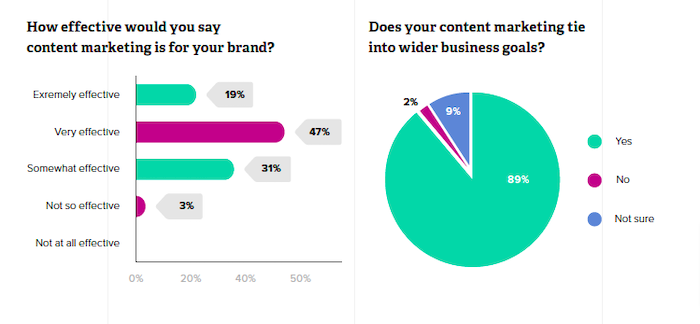
Dá só uma olhada nesses números. Impressionantes 98% de todas as equipes de marketing dizem que conteúdo escrito é sua modalidade mais usada, mas um em cada três profissionais de marketing admite que sua redação de conteúdo é só “razoavelmente” ou “não tão” eficaz.
Ou seja, tem muito mais conteúdo por aí que não está desempenhando bem sua função.
O objetivo deste artigo é ajudar você e sua equipe a melhorarem a qualidade da sua redação de conteúdo e seus níveis de sucesso.
Felizmente, escrever conteúdo é uma coisa na qual as pessoas podem melhorar com um pouco de estudo e prática. Aqui embaixo você vai ver os 10 ingredientes de uma boa escrita de conteúdo para te ajudar a melhorar.
1. Crie um Título Chamativo
Digamos que você consiga que 100 pessoas entrem no seu blog. Uma média de 80 vão ler o título, mas, somente 20 vão ler o resto.
Ou seja, seus títulos fazem a maior parte do trabalho.
Títulos fortes são aqueles que dão informações específicas e um pouco de detalhes para atrair as pessoas, mas não entregam a história inteira.
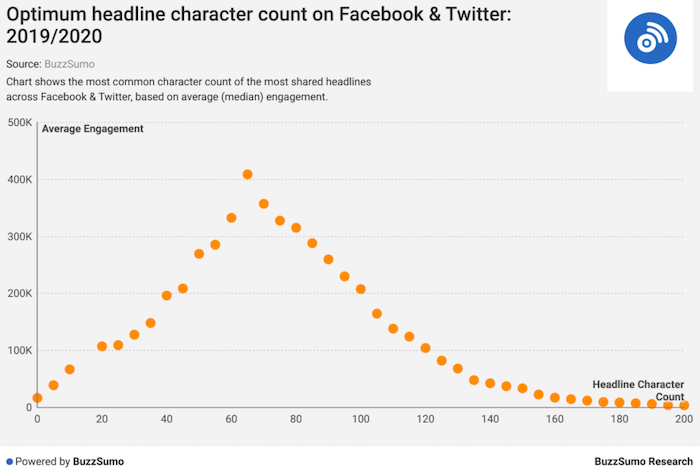
Dá pra ver isso na prática graças a uma análise do BuzzSumo de 100 milhões de títulos no Facebook e no Twitter. Eles descobriram que aproximadamente 65 caracteres (por volta de 11 palavras) é a extensão ideal para um título.
Claro, não se trata só do tamanho do título. As palavras também são importantes.
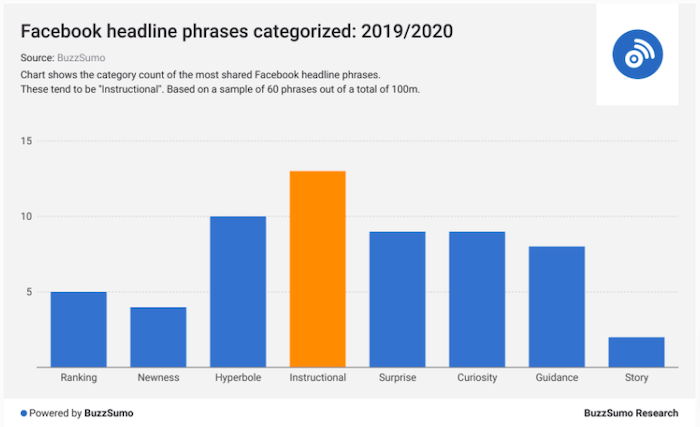
Títulos contendo frases instrutivas como “você precisa saber” e “por que você deve” têm mais chances de serem compartilhadas no Facebook.
As pessoas costumam querer ler conteúdo que as ensine alguma coisa, seja como melhorar sua escrita de conteúdo ou um resumo dos principais nomes do draft da Major League Baseball.
2. Fisgue os Leitores com uma Introdução Interessante
Seu título atraiu o leitor para clicar no seu conteúdo. Agora você precisa convencê-lo a continuar lendo.
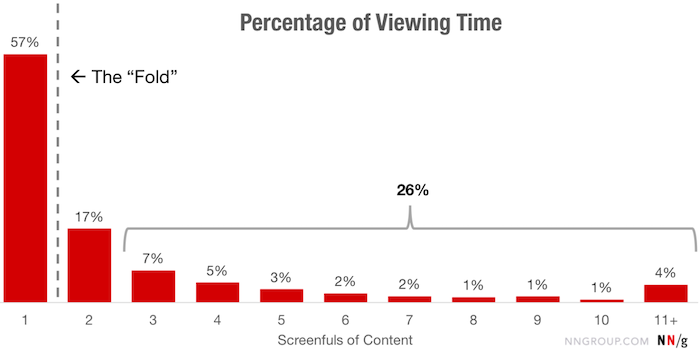
É mais fácil falar do que fazer. De acordo com o Nielsen Norman Group, aproximadamente 57% do tempo na página é gasto na primeira parte da tela (above the fold). Na segunda porção da tela, esse número cai para apenas 17%,e só os mais dedicados vão além.
Ou seja, se a sua introdução não fisgar a atenção dos seus leitores imediatamente, não espere que eles continuem por lá.
A melhor maneira de manter seu público lendo é ir direto para o conteúdo prometido no seu título.
Por exemplo, se você está lendo esse artigo, é de se imaginar que você queira escrever um conteúdo melhor. Então, na introdução, eu abordei o seu desafio e expliquei que esse artigo está aqui para te ajudar a encontrar uma solução.
Imagino que a introdução tenha funcionado, porque você ainda está lendo!
3. Escreva Para o Seu Público
Uma introdução inteligente pode ajudar a manter a atenção do seu público por mais tempo, mas não é uma bala de prata. Você precisa escrever tendo em mente seu público específico.
Ou, para colocar de outra forma, escreva para um subconjunto pequeno de pessoas, não para todo mundo.
Para dar um exemplo simples, é como a diferença entre um artigo sobre “escrever conteúdo de qualidade” e “escrever bem”.
Porque, se você está buscando dicas de escrita de conteúdo, eu já tenho alguns palpites sobre você. Por exemplo, é possível que você trabalhe com marketing de conteúdo ou esteja criando conteúdo relacionado com marketing.
Por outro lado, se esse fosse um artigo sobre “escrever bem”, você poderia ser qualquer pessoa, desde um estudante até um romancista sofrendo com bloqueio criativo. Se eu tentasse escrever para todos esses públicos, eu dificilmente acertaria com algum deles.
4. Restrinja o Foco do Seu Artigo
Cada artigo deve ter uma única ideia clara do título à conclusão.
Seguir essa abordagem pode te ajudar a formar argumentos mais lógicos, escrever um texto que flua mais naturalmente e oferecer conclusões claras aos seus leitores.
A não ser que você esteja escrevendo uma página pilar como ponto central para discussão de um assunto mais amplo, mantenha seu foco o mais estreito possível. For instance:
Ruim: Como melhorar seu marketing
Melhorando: Como fazer um marketing melhor para pequenos negócios
O melhor: Como fazer social media marketing para startups de SaaS
Seria impossível escrever uma peça de conteúdo de qualidade sobre o primeiro assunto, porque o público é amplo demais. Simplesmente não dá para oferecer uma orientação relevante para todo mundo, de uma startup com um único funcionário até uma marca multinacional.
Ao restringir seu foco, você pode oferecer valor genuíno sobre um assunto específico.
5. Seja Envolvente
Não importa o quão cativante o seu título seja, se o seu conteúdo não envolver seu público logo que eles entrarem na sua página, eles vão abandoná-la.
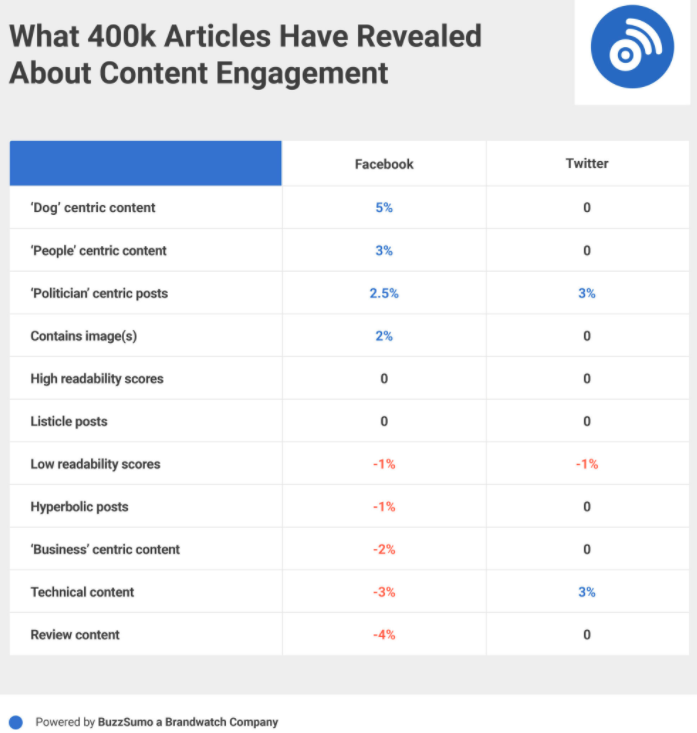
Vamos dar mais uma olhada na Pesquisa do BuzzSumo para demonstrar isso. Eles usaram modelos de machine learning para descobrir os caminhos para se escrever conteúdo envolvente.
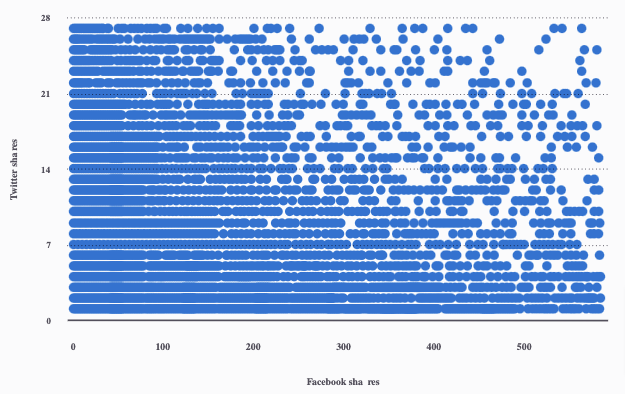
Dentre os artigos que os pesquisadores analisaram, apenas uma fração teve um bom desempenho tanto no Facebook quanto no Twitter.
Isso mostra que as pessoas em diferentes plataformas se engajam com diferentes tipos de conteúdo.
E aí, tem a escrita em si.
Como profissional de marketing, eu aposto que você já ouviu que uma escrita de conteúdo excelente se trata de usar uma linguagem simples.
No entanto, esse mesmo estudo do BuzzSumo constatou que conteúdo com altas pontuações de legibilidade (frases e palavras mais curtas) não costuma ter um desempenho muito melhor do que aqueles com pontuações de legibilidade mais baixas, de forma geral.
Ou seja, escrever conteúdo envolvente se trata de usar uma linguagem que seja compreensível e agradável para o seu público específico. Portanto, simplificar ou complicar demais só por fazer vai ser provavelmente menos eficaz.
6. Escreva com a Voz Original da Sua Marca
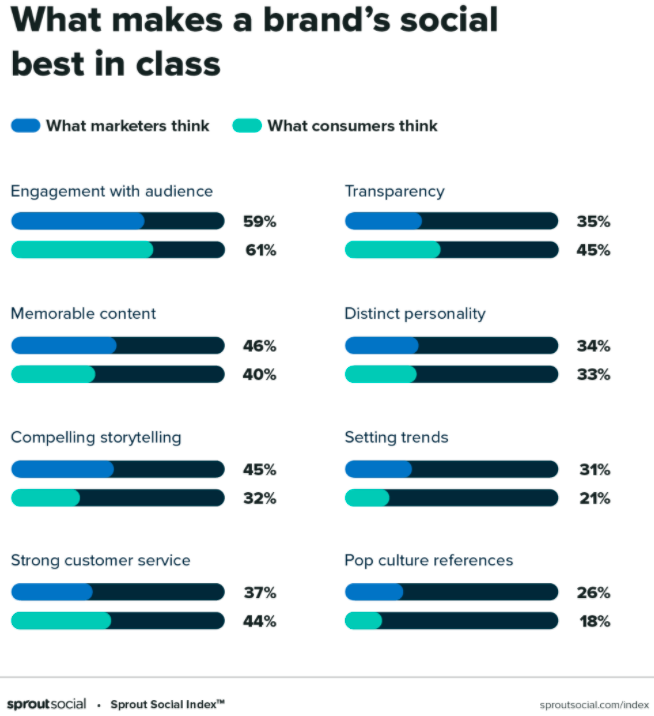
Por que algumas marcas se destacam mais do que outras através do seu conteúdo?
Graças ao Sprout Social, sabemos que isso se dá por diversos fatores, a maioria dos quais está diretamente relacionada à voz da marca, isto é, a personalidade que você acopla à sua marca.
Depois de entender para quem você está escrevendo e o que os mantém engajados, continue fazendo. Tudo se resume a consistência.
Claro, a não ser que você tenha uma pessoa dedicada a escrever conteúdo e lidar com toda a parte de comunicação, você precisa esclarecer a voz da sua marca com toda a sua equipe em um documento central e de fácil acesso. Caso contrário, você corre o risco de redatores diferentes usarem pontos de vistas e tons conflitantes.
O mínimo que o documento com a voz da sua marca deve incluir é:
os valores centrais e missão da sua marca
uma descrição do seu público e como eles falam
seu relacionamento ideal com seu público
exemplos de palavras e frases específicas que você usa (e não usa)
7. Ofereça Conhecimento Que os Leitores Querem
Imagine que você buscou no Google por dicas de escrita de conteúdo, achou esse artigo e encontrou um monte de informações sobre como criar melhor conteúdo em vídeo.
Ou imagine se, em vez de dicas específicas eu só tivesse escrito 2.000 palavras sobre por que é essencial ter conteúdo de qualidade mas nunca tivesse dito no que consiste esse conteúdo ou como fazê-lo.
Você provavelmente não voltaria ao meu site no futuro se isso acontecesse.
É por isso que é fundamental entender o que as pessoas querem do seu conteúdo antes de começar a escrever através da pesquisa de palavras-chave.
Felizmente, não é difícil ter acesso a dados. Usando uma ferramenta como o Ubersuggest, você pode encontrar perguntas frequentes sobre o assunto que você escolheu.
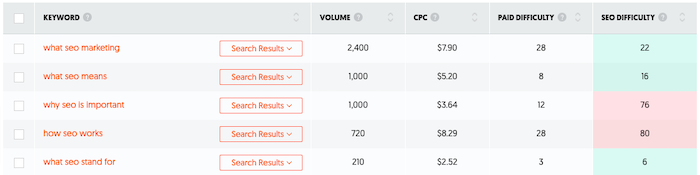
Digamos que eu vá falar sobre SEO, mas eu não escolhi ainda o assunto específico. O Ubersuggest me diz que as pessoas estão perguntando o que SEO significa e por que ele é importante. Isso me diz o que eu devo incluir no meu artigo.
8. Use um Esboço
Quando você tiver terminado a sua pesquisa e entendido o que o seu público espera do seu conteúdo, é hora de criar um esboço.
Por que se dar ao trabalho de esboçar seu conteúdo? Porque isso te ajuda a escrever um artigo mais útil e melhor estruturado.
Além do mais, isso te permite encontrar fontes valiosas e estatísticas para fortalecer seus argumentos e oferecer um contexto adicional.
É simples. Basta ver as perguntas na sua pesquisa de palavras-chave e colocá-las em uma ordem lógica. Por exemplo, “o que é SEO?” deve vir antes de “por que SEO é importante?”
Precisa fazer referência a vários pontos em uma única seção? Quebre esses pontos em subseções com subtítulos. Por exemplo, você pode incluir as seguintes subseções em “por que SEO é importante?”
tráfego orgânico vale muito
SEO local gera conversões
SEO oferece resultados duradouros
Por fim, busque fontes relevantes de terceiros e conteúdo existente no seu site para referenciar em cada seção (e subseção).
9. Inclua Dicas Acionáveis
Seu objetivo ao escrever conteúdo deve ser garantir que os leitores aprendam algo de valor. Isso aumenta as chances de eles compartilharem e voltarem depois. Eles podem até se cadastrar na sua lista de emails ou baixar gated content.
O jeito mais simples de ensinar seus leitores a fazerem alguma coisa é dar dicas específicas e acionáveis mostrando exatamente como fazer aquilo sobre o que você está falando.
Para fazer isso do jeito certo, você precisa ser um especialista na sua área. É por isso que eu escrevo sobre marketing, e não sobre neurocirurgia!
Ou seja, escreva sobre o que você sabe. Discuta como você aborda problemas da vida real passo a passo. Faça referência às ferramentas e processos que você usa; se foi você mesmo que os criou, melhor ainda.
10. Inclua Fatores de Confiança
Existe um monte de conteúdo por aí. Mesmo que você esteja em um nicho obscuro, é provável que haja centenas de artigos falando sobre assuntos semelhantes ao seu.
Então por que os leitores devem escolher seu conteúdo e não o de outra pessoa?
Uma das melhores maneiras de se destacar na multidão é tornar seu conteúdo confiável. Se as pessoas sabem que seu conteúdo é bem pesquisado e tem credibilidade, elas têm mais chances de clicar nele.
E, sinceramente, ser um grande nome na sua área ajuda. Agora que muita gente sabe quem eu sou, eu naturalmente tenho uma vantagem sobre editores menos conhecidos.
Mas não foi sempre assim. Eu tive que começar de algum lugar pra provar meu valor. Os backlinks me ajudaram, e podem te ajudar também. Você deveria, especificamente:
Respaldar os pontos do seu conteúdo linkando para fontes com credibilidade. Linkar para fontes da grande imprensa, sites do governo, de universidades e marcas conhecidas pode dar mais credibilidade ao seu conteúdo.
Faça com que sites com credibilidade linkem para o seu conteúdo. Se um site de alta autoridade como o New York Times linkar para o seu conteúdo, é um ótimo sinal de que as pessoas podem confiar em você. Como bônus, pode te ajudar a ranquear melhor na busca orgânica.
Exemplos de Excelente Conteúdo Escrito
Como seria um excelente conteúdo escrito na prática? Veja aqui três sites que estão constantemente acertando:
1. HubSpot
O HubSpot está sempre demonstrando os benefícios de criar conteúdo detalhado sobre assuntos importantes para o seu público-alvo de equipes de marketing e vendas. Eles têm inclusive blogs separados dedicados a profissionais de marketing e vendas. Além de serem informativos, seu conteúdo tem um papel fundamental no ciclo do comprador, levando os leitores para suas ferramentas pagas e gated content.
2. LinkedIn
Enquanto a maior rede social de networking profissional do mundo, o LinkedIn é uma fonte de alta credibilidade. Em vez de jogar conteúdo de baixo valor, seus artigos costumam incluir pesquisas originais, o que os torna ainda mais valiosos.
3. WooCommerce
A WooCommerce é a solução de tecnologia para e-commerce mais popular do mercado atualmente.
Seu plugin foi desenvolvido para facilitar o processo de abrir uma loja online e seu blog procura apoiar isso. Além de orientações práticas, ele traz com regularidade histórias de marcas que atuam em mercados de nicho, o que pode ser uma fonte incrível de inspiração para empreendedores.
Perguntas Frequentes Sobre Redação de Conteúdo
Que habilidades um redator de conteúdo precisa?
O redator de conteúdo médio precisa saber pesquisar e traduzir suas constatações em texto. Além disso, autodisciplina e gerenciamento do tempo são fundamentais, e conhecimento das melhores práticas de SEO também é útil.
É difícil escrever conteúdo?
Qualquer um pode colocar palavras em uma página, mas escrever conteúdo de qualidade que faça sentido para o seu público nem sempre é tão fácil.
O que é SEO copywriting?
Se trata de criar conteúdo que os mecanismos de busca possam entender. Costumava ser apenas encher todas as frases de palavras-chave, mas hoje em dia é um pouco mais do que isso.
Quais são os principais tipos de redação de conteúdo?
A redação de conteúdo pode ser dividida em duas categorias: marketing de conteúdo e copywriting. A primeira inclui coisas como blogs e e-books, enquanto a segunda consiste em textos para sites e anúncios.
Se você não entender para quem você está escrevendo e o que eles querem ouvir, você não vai conseguir criar um conteúdo que chame a atenção. Claro, você pode escrever belas palavras, mas elas dificilmente vão gerar leads ou vendas porque elas não estão segmentadas para as pessoas certas.
Comece tendo seu público em mente toda vez, e você terá mais chances de criar um conteúdo melhor.
Quais são suas técnicas testadas e comprovadas para escrever um conteúdo sensacional?