E-commerce provider Shopify reported [PDF] $505.2 million in revenue for the fourth quarter of 2019 on Wednesday, an increase of 47% compared to the fourth quarter of 2018. Annual revenues topped $1.57 billion in 2019, up 47% from 2018.
The company attributes the growth to a number of factors, including additional of marketing capabilities available to merchants on the platform such as Shopify Email and native chat for merchant sites.
Why we care
Shopify is aiming to become a centralized, end-to-end retail and marketing platform for merchants. The company continues to invest in efforts to build an affordable operational framework for merchants to grow — and maintain a competitive edge against Amazon. In 2019, Shopify launched its Shopify Distribution network, acquired 6 River Systems, added machine-learning powered inventory management systems and introduced Shopify Email. Shopify Marketing also launched an integration with Microsoft Advertising that allows merchants to expand their reach within the Microsoft Search Network from within Shopify’s platform.
“With consumer expectations rising for fast and affordable delivery, fulfillment poses a challenge to all businesses,” said Shopify CEO Harley Finklestein on the company’s earnings call Wednesday. “Combining our economies of scale with the automate fulfillment technology from 6 River Systems, we will enable our merchants to better compete with the largest business on the planet.”
More on the news
45% percent of eligible merchants in the US and Canada used Shopify Shipping in the fourth quarter, up from less than 40% in the fourth quarter of 2018.
Mobile orders accounted for 80% of web traffic and 68% of orders last quarter, up from 78% and 66%, respectively, from the same period a year ago.
Subscription Solutions revenue increased 37% year-over-year to $183.2 million.
Monthly recurring revenue also grew 32% year-over-year to $53.9 million, primarily due to new merchants coming on board, the company said.
About The Author
Jennifer Videtta Cannon serves as Third Door Media’s Senior Editor, covering topics from email marketing and analytics to CRM and project management. With over a decade of organizational digital marketing experience, she has overseen digital marketing operations for NHL franchises and held roles at tech companies including Salesforce, advising enterprise marketers on maximizing their martech capabilities. Jennifer formerly organized the Inbound Marketing Summit and holds a certificate in Digital Marketing Analytics from MIT Sloan School of Management.
If you’ve been looking to score the top spot or even the first page on Google, here’s one secret to improving your position: have a great content strategy.
Your content strategy should focus on producing quality content, engaging with your audience, and measuring your successes and failures. Don’t simply churn out content for content’s sake.
Let’s go over what a good content strategy contains and how to create one.
Step #1: Define Your Goals for Your Content Strategy
Great content is created for a specific purpose, and this purpose needs to be clearly defined. Ask yourself if you are creating content to boost brand awareness, generate leads, convert users, attract past customers, improve search ranking results, or something else altogether.
Once you have clearly defined your goals, you can determine if a content strategy is actually the best way to achieve them.
Don’t assume that content is the best option in every situation.
For instance, content might be of little use in converting users at the bottom of the sales funnel; however, it could be invaluable in bringing users onto your site in the first place, by boosting brand awareness and organic lead generation.
Different segments of the sales funnel warrant different types of content. So, you will need to decide what content is most appropriate for a person to receive at a given time. That way, you will have the right conversation with the right person at the right time.
Step #2: Research Your Audience for Your Content Strategy
Your content strategy will only be effective once you know who your target audience is.
Valuable information can be gleaned by checking what types of sites your prospects are already visiting, which content they engage with, and which social media platforms they share content on.
This can be done by enabling Google Demographics and Interests for the types of sites prospects engage with and Google Analytics for the content they engage with, as well as by calculating which social media platforms your users will be on from their demographics.
Understanding what content works best and where can also be useful in the long run. Facebook has made it increasingly difficult for small business owners to increase their reach without paid adverts. However, video content seems to thrive on the platform, with video content “generating 1200% more shares than text and image-based content combined.”
Understanding your audience, and how they act will help you narrow down your content strategy, without feeling like you need to have eggs in hundreds of baskets. Content creation on social media works well for B2C businesses, but not so much for B2B businesses.
Step #3: Focus on Your Niche for Your Content Strategy
It’s a sad fact that the Internet is full of content that shouldn’t even exist. A lot of content is either plagiarized from elsewhere, is simply reposted or doesn’t provide any real value. Most people don’t see 99 percent of this useless content because it doesn’t appear anywhere near the top of SERPs.
To avoid having your content lost in that pack, create content that: stands out, is unique, has a distinct voice, and, most importantly, offers genuine value to readers.
The more specific you are and the more you focus on your niche, the greater your chances of establishing yourself as an authority in your field, whether your readers are looking for information or entertainment.
Step #4: Measure Your Results for Your Content Strategy
Measuring the results of your content marketing efforts is one of the most important aspects of developing an effective content strategy. Churning out content without analyzing your user feedback is akin to having a phone conversation on mute. You need to know what your audience liked as well as what they didn’t like, and why.
Here are some of the most important metrics to understand:
1. Consumption Metrics
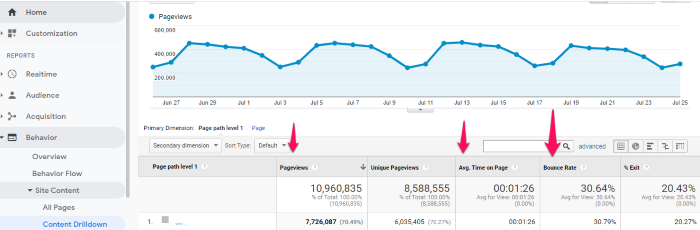
This is the first layer of information you can gather when people view your content. As previously mentioned, and as shown in the screenshot below, you get this data from Google Analytics by clicking on Behavior > Site Content > Content Drilldown. You can sort by different factors such as:
average time on page
bounce rate
pageviews
With this data, you can find answers to questions like these:
Did you craft a blog post that brought on a huge spike in traffic? Did your users spend more time on a particular piece or genre of content? Did a piece of content garner a large number of comments or shares on social media?
2. Social Sharing Metrics
Sharing on platforms like social media can be a great metric for judging how engaged your audience is. Ask yourself what types of content are being shared, who is sharing, which platforms are being used, and, most important, what content is converting. Below are the steps for how to find what content is converting:
Log into Google Analytics.
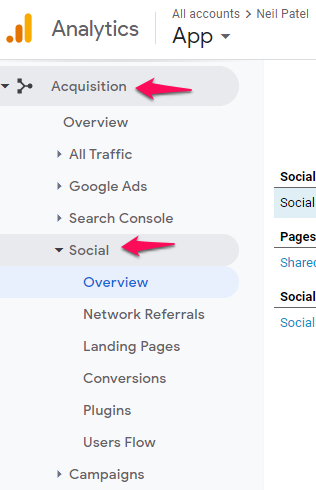
Click on Acquisition>Social>Overview.
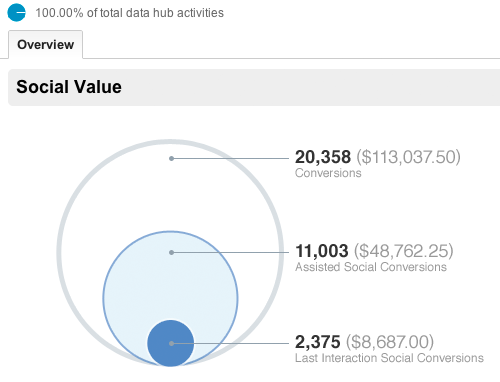
Then you will have a report similar to the one below (assuming you have goals set up):
Here, you have three important metrics:
Conversions: This shows you the total number and amount of conversions. They are from every traffic source, not only social.
Contributed Social Conversions: In order for an assisted social conversion to register, a visitor must have visited the social media site once, though they may have used another traffic source before the last part of the conversion.
Last Interaction Social Conversions: Visitors are attributed to this group if they came from social media and completed the assigned goal in the same session.
Once you have this data, it will yield insights into the style of content that needs to be created in order to get conversions. Also, you will be able to decipher which social media platforms are working best. (Take into account that some niches encourage sharing more than others, so compare your performance with those of competitors with a similar user base.)
3. Lead Metrics
If your content is part of a sales funnel, ask yourself which part of the sales funnel you are creating the content for. Content needs to be tailored to the specific audience at each segment of a sales funnel.
Your content could be either attracting or leaking leads, so monitor its performance and identify areas that could be improved to stop users from dropping out of the sales funnel and areas that could generate new leads. The quickest and easiest way to track leads is to use goals in Google Analytics.
The easiest type of goal to set up is a URL destination goal. Here are the steps:
Log into Google Analytics.
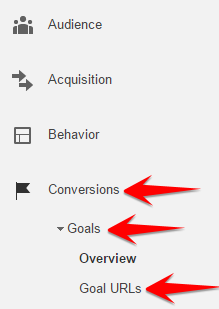
Click on Conversions>Goals>Goal URLs.
3. Click the “Set up goals” button.
4. Click the “+NEW GOAL” button.
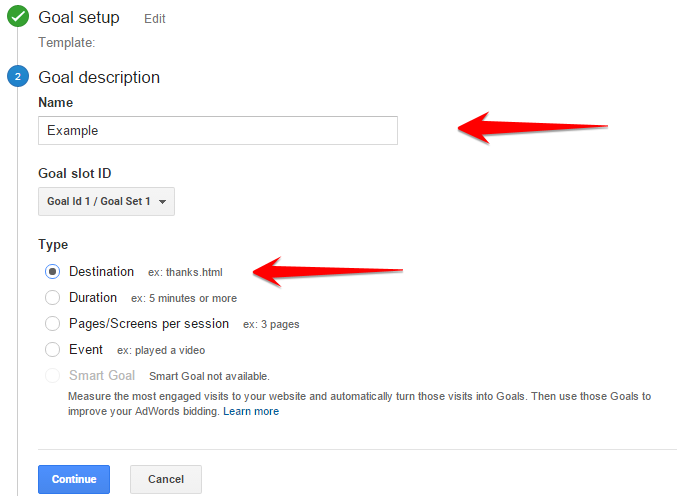
5. Select “Template” (shown in step 7 below).
6. Type in a description for your goal (shown in step 7 below).
7. Select “Destination”, and click the “Continue” button.
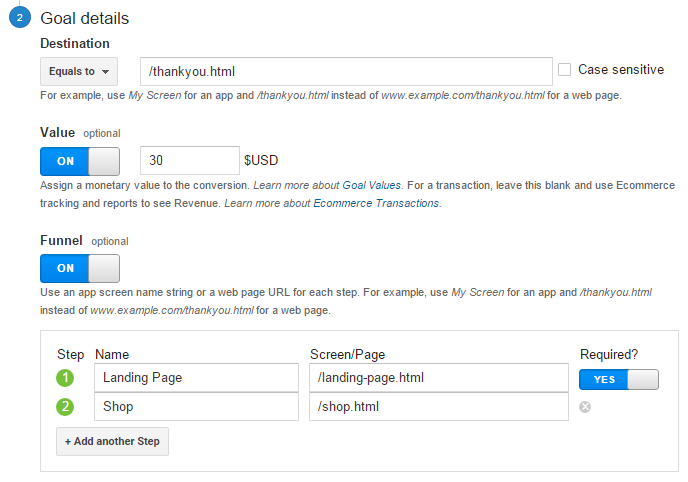
8. In goal details, you need to add the URL of the goal you want to track. The whole URL is not needed, just the final path. For example, to track www.example.com/thankyou.html, input only /thankyou.html.Here, you will have two optional details:
Value: It is possible to assign a value to the goal. For example, if you are selling a product for a specific price, you can add it here.
Funnel: It is also possible to track a specific part of the sales funnel by adding it to the goal.
9. Click save and that’s it: you’ve set up a goal.
10. To view goals once they are set up click Conversions>Goals>Goal URLs
You should see something like this:
4. Sales Metrics
For most businesses, content generation ultimately should boost revenue. Therefore, if your content strategy is revenue-based, you will need to find ways to measure the amount of revenue your content marketing has generated.
Below are the steps for how to find the amount of revenue your content has generated:
Log into Google Analytics.
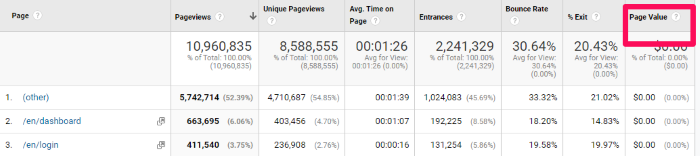
Click on Behavior>Site Content>All Pages.
You should have something similar to this:
This will allow you to assign a value to a piece of content. If the content isn’t performing as needed, then check out this article on how to increase engagement with content.
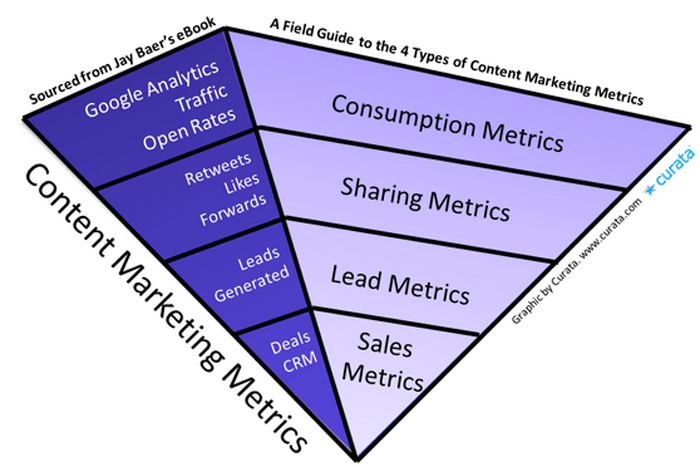
To summarise, here is a picture that visually represents the four content marketing strategy metrics outlined above:
Step #5: Listen to Your Customers to Improve Your Content Strategy
While data analysis can be an immensely useful tool, it gives you only black and white figures on a spectrum that encompasses a lot of subtleties. Access the rest of that spectrum by really listening to your customers. Your customers need to know they are being heard on social media, so ask them for feedback and suggestions and engage with them regularly.
Also, speak to other members of your staff to get a better understanding of the needs of your customers. Sales teams and help staff who are speaking to your customers on a regular basis are better positioned to have thoughtful insight on how customers perceive your business. Then, reaching out to your customers and responding to their feedback enables you to gather valuable data, whilst also showing them that their opinion matters.
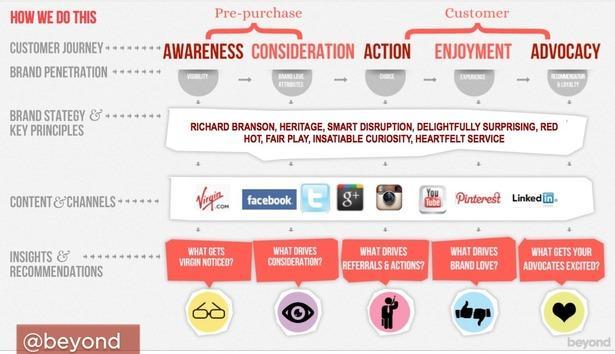
Virgin provided an excellent case study by showing how they utilized big data. They incorporated search terms used on the web, people being followed on social media platforms, and views and interests expressed online.
Using the data below, they dug deep and incorporated it into their communications, successfully giving audiences the right message at the appropriate parts of the customer journey. Find out more here.
Here is a flowchart of the results:
Step #6: Amplify Your Content Strategy
A sound content strategy and targeted content creation make up only the first part of the equation. The final part is amplification of the content.
To amplify your content, determine the places your audience are frequenting online, and then publish on those channels to reach them.
Ultimately, you’ll need to think strategically in order to identify all the resources available to you and truly harness the power of employees, customers, and influencers that can help you amplify your content.
Content Strategy Frequently Asked Questions
What is involved in content strategy?
Content strategy involves content ideation, content development and publication, editorial calendar planning, process and system creation and oversight, writing, editing, on-page SEO, and a host of other activities related to content management.
What is a content strategy framework?
A content strategy framework is an outline of how you plan to create content. A framework might include your audience, keywords you will target, how often and when you will publish content, and who will create the content.
Why is content strategy important?
If you want to rank high in Google, you need quality content. You also need good content so when people visit your website, they want to convert. Sloppy or visually unappealing content may turn off your potential customers.
What’s the first step of creating a content strategy?
The first step to creating a content strategy should be to define your goals. From there, you can make decisions about what your processes should look like, who your target audience is, what your publishing schedule should be, etc.
Content Strategy Conclusion
As you can see, creating a great content strategy isn’t rocket science, but it can be quite challenging to implement.
Expect to encounter roadblocks and go through lots of trial and error. Once you have a recipe for success, though, all you’ll have to do is rinse and repeat to see the kind of audience growth you’ve always dreamed of.
Using our step-by-step guide will push you in the right direction to creating a great content strategy, whilst also making sure you are paying attention to key metrics that can make or break the success of your content. Remember: starting your content strategy on the wrong foot is guaranteed to waste your time, and publishing your content on the wrong platforms for your audience means you won’t generate the leads you desire.
There’s a lot of planning behind content strategies that means you can’t just write great content and call it a day.
Does your team have a content strategy in place? If so, how thorough is it?
In this episode of our SEO Reality Show, see how to perform a technical SEO audit for a real US bakery and how to follow the same process for your business.
The views expressed in this post are solely those of the author.
I was recently spending time with some folks who I had never met, and before long, the conversation turned to current events – specifically the myriad of scandals in which the big tech companies have become embroiled. Soon, my new friends were discussing how creepy and distasteful it is that Google and Facebook collect consumer data, and were marveling at the specificity with which they are shown ads on the platform. A little bit later, we began talking about our jobs, and I was asked what I do. Sheepishly, I admitted that I worked for a digital ads agency, and was one of those people who managed ad campaigns on the very platforms that were just being excoriated.
I’m guessing that this is an experience that a lot of those in the PPC industry share. As platforms like Google, Facebook, and Microsoft become increasingly powerful in our world (and become increasingly a part of our political and civil discourse), it’s an experience that is only going to occur more frequently. So, in a time when digital marketers are looked upon by some with an amount of scorn previously reserved for debt collectors and telemarketers, can the PPC practitioner feel good about their job’s impact on the world?
Before answering that question directly, I acknowledge that the PPC industry, and more broadly the tech companies that it supports, does and should provoke legitimate concerns. While I believe there is some misunderstanding and/or hyperbolic rhetoric around the issue of just how much personal data these companies (and by extension, digital marketers) have, there is no denying that personal data has been mishandled in the past. And, to the extent that digital marketers deliver revenue to Facebook, Google, Amazon, and Microsoft, their impact on the world is tied to the impact of those tech giants. Whatever you think of those companies, the litany of recent headlines regarding monopolistic practices, mistreatment of workers, and giving a platform to hate speech leaves no doubt that these companies are not uniformly forces for good.
So, how can a digital marketer end their workdays without feeling like a nefarious scumbucket? First and foremost, they can do their jobs in a way that is consistent with the best version of the industry. While each individual has their own opinion of what the “best” version of the industry looks like, the standards below would likely find consensus:
Truthful: Digital ads should not mislead consumers, and should accurately describe the promoted products and services.
Non-Intrusive: Digital ads should facilitate a productive, enjoyable Internet experience. This standard is incompatible with campaigns that are spammy and frustrate users (check out this post for an example of where the industry is currently falling short of this standard).
Respectful Of Personal Data. Digital marketers should ensure that personal data, such as the data they might be given access to in the form of consumer lists, is secure.
Non-Discriminatory: Especially for those working in sensitive areas like employment, credit, and housing, digital marketers must design campaigns that do not discriminate on the basis of a protected class (for some background knowledge on this topic, see our posts on housing and employment advertising on Facebook)
Meeting those standards can go a long way to helping digital marketers feel as though they aren’t actively doing wrong in the world. But can digital marketers actually improve the world? I think so, but here too each individual will answer the question “how does my job fulfill me?” differently. The three answers to that question I’ve outlined below are some of the most common.
“I Promote the work of companies and organizations that I believe in.” Whether you work in-house or for an agency, it’s possible to find great meaning in the products and services you promote. Personally, I’ve found that when I get to know my clients better, I become more passionate about the work that their companies do. For example, I’ve had the opportunity to work closely with an apartment management company and was recently delighted to discover that they had been rated #1 in resident satisfaction. As part of their publicization of the ranking, they shared a resident review that was truly heartwarming. It detailed the amazing lengths the apartment’s staff had gone to help a resident who was in a tough situation. Knowing that I’m helping more folks find a company that cares so much about its consumers gives me the feeling that the work I do can improve the lives of others.
“I work with people that I believe in.” While I do think it’s true that digital marketers can take satisfaction in what they advertise, the immediate gratification of helping a colleague is often a quicker path to feeling good about your work. For veterans of the industry, this might mean seeking out mentorship opportunities to help newcomers in your organization grow and reach their potential. For those who are more recent entrants into the field, simply lending a helping hand when it isn’t expected can make a world of difference. Approaching the workday with a service-to-others mindset can be huge for an individual’s perception of their positive impact, even if you have doubts about the impact of the industry as a whole.
“I recognize that digital marketing enables the Internet and that the Internet can be awesome.” While the beginning of this post detailed many of the negative effects of the industry and the platforms it supports, it is also true that they support many of the modern technological miracles that have become commonplace. The Internet is largely supported by ad revenue – without ads, the Internet as we know it would not exist. And for many people, the Internet, flawed though it may be, has brought about amazing improvements to their quality of life. Google really has made information extraordinarily more accessible than it has ever been before. Facebook really does connect people and helps people maintain and rediscover relationships. And Amazon undoubtedly saves time and money for a huge number of people. To reiterate, I am not claiming that these companies do not have very real and very disturbing issues that need to be addressed – but I do not think that they are the monolithic forces for evil the way they are sometimes painted as.
Each of those three answers certainly has counterarguments, and I fully recognize that each individual’s mileage may vary for their persuasiveness. If you feel moved to do so, please share how your job in PPC fulfills you with us on Twitter @ppchero! We’d love to hear them.
Keyword research is at the heart of understanding where your business stands and what your end-users expect
Surveying or monitoring your analytics is a great way of listening to your customers or readers for effective content ideas
Seasonality is a great way to find fresh content ideas by finding angles where your primary topic overlaps with seasonal interests
Collaborate and meet real people – use every opportunity (events, meetups, live sessions) to talk to people and listen to what they’d be interested in consuming
Use “question research” to understand the existing information gaps in the market
Re-package your old, better-performing content into new (updated) assets
If you feel like everything has already been written and you have no idea what else you can write about, here are six content ideas for you that help you come up with valuable and engaging content this year:
1. Use new keyword research tools
Keyword research is not just for SEO! They can give you in-depth insight into your audience’s interests, questions, and struggles. Research and address them in your content.
The key is to try a new tool from time to time. Why? Each tool uses a different data source or a different output or a different way to organize those keywords. Any of these will be enough to give you lots of content ideas.
Luckily, we have quite a few tools to choose from.
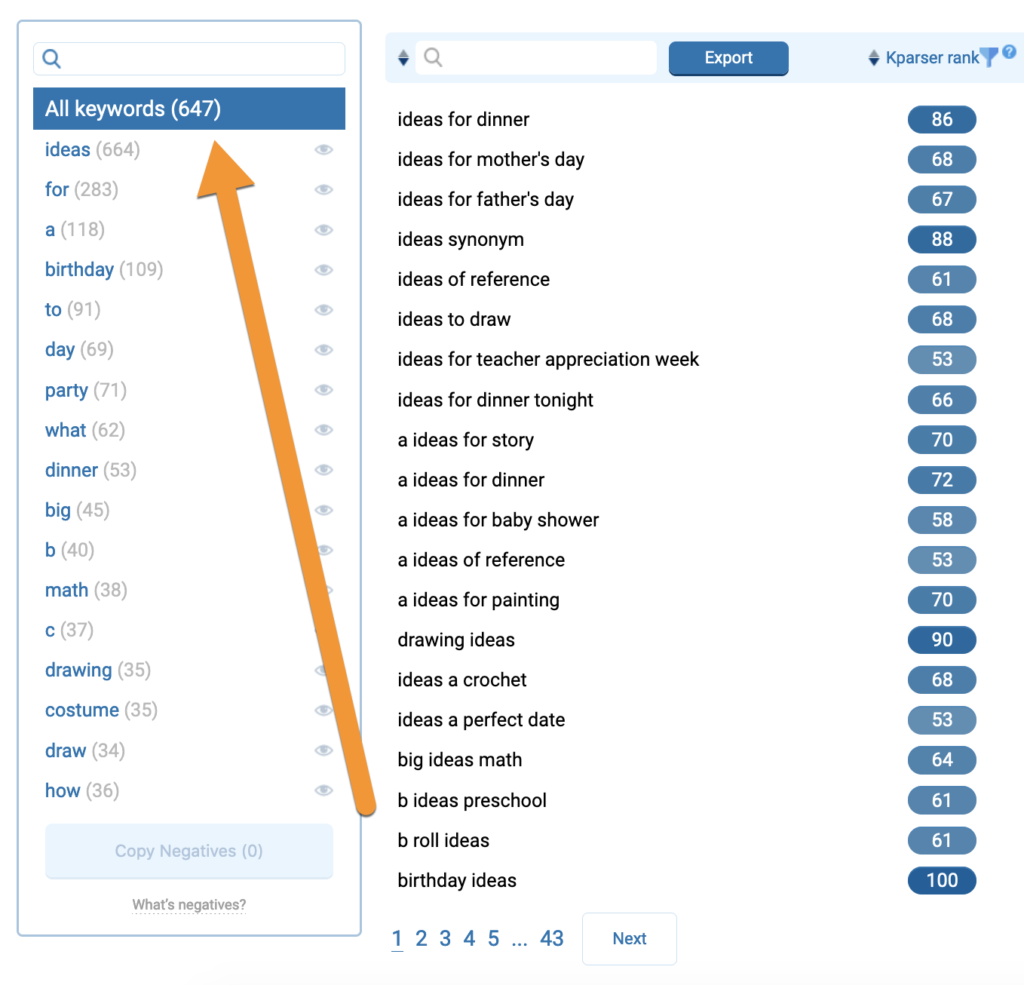
Kparser
This tool will give you pretty much everything you need to create a good topic list. Or at least point you in the right direction. Look at the left-hand channel to find popular concepts around your main topic and build your content around those!
Source: Screenshot by the author
Kparser offers apremiumversion for $69 a month but I’ve always been using its free version which is great!
KeywordTool.io
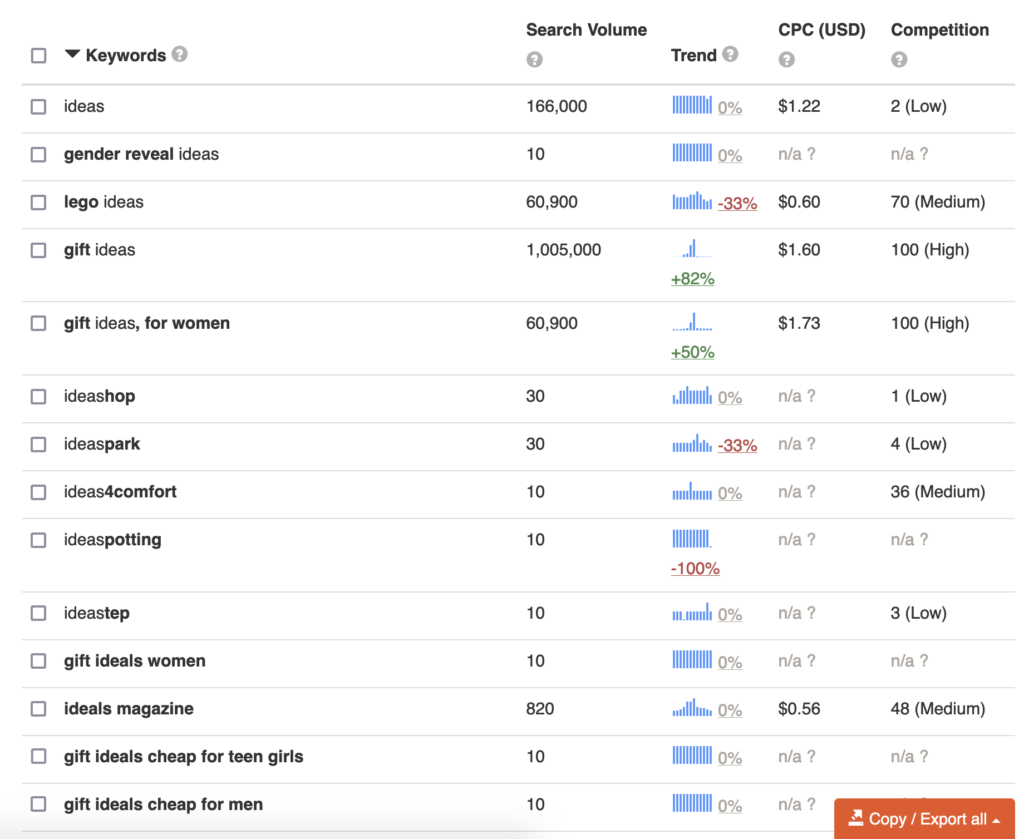
KeywordTool.io allows access to lots of data sources, including Google, Youtube, Amazon, Instagram, and Twitter.
(Content ideas sourced from Amazon)
Source: Screenshot made by the author
The tool will give you lots of ideas for free but to see each keyword analysis, you need to upgrade to one of the listed plans.
Answer the Public
This one you may not have heard of. It features a man called ‘The Seeker’, who impatiently awaits your questions. You put in keywords or phrases, he suggests some interesting topics.
Apart from being a great keyword research tool, this one is also great for question research (see my #5 tip on the list!) Using different ways to group and organize your keyword lists will likely uncover more ideas. These grouping techniques include keyword clustering and semantic research.
Source: Screenshot by the author
Answer the Public isfreemiumand comes at $79/month minimum if you pay for a year, but frankly I’ve never had to upgrade as the free version is simply awesome!
2. Turn to your actual customers for ideas
You know who you really need to listen to. Correct, your current and future customers. You want your content to make a difference for your bottom line, not just bring your word out there, no matter if anyone is there listening or not.
You don’t just want to be heard, you want to be heard by your target audience.
You can even gamify that process by building up your surveys with visualization tools, here are some extra tips on that.
You can offer a good mix of generic questions (like, ask about their lifestyle) which would help you build up your customers’ personas and target them better. Then come your brand-specific questions:
“What questions did you have when browsing our services?”
“Were they sufficiently covered on the site?”
The latter will help you improve your site performance too.
The cool thing is that you will also be able to use your survey results in site content and articles, making your site intent-rich, trustworthy, and linkable.
It’s also a wise idea to set up a well-defined routine to help you record your customers’ questions as they come. This will help you in both content planning and social media goals.
Slack is a nice tool to help your in-team communication and idea-sharing. Simply set up a separate Slack channel and encourage your customer and support team to send your customers’ questions there as soon as they come across any.
Using your web analytics is another way to listen to your customers and readers. Finteza is a great solution to better understand which content and on-page elements your site users respond to best. It supports a variety of events including mouse-overs, clicks, and downloads allowing you to measure which content does a better job engaging your readers:
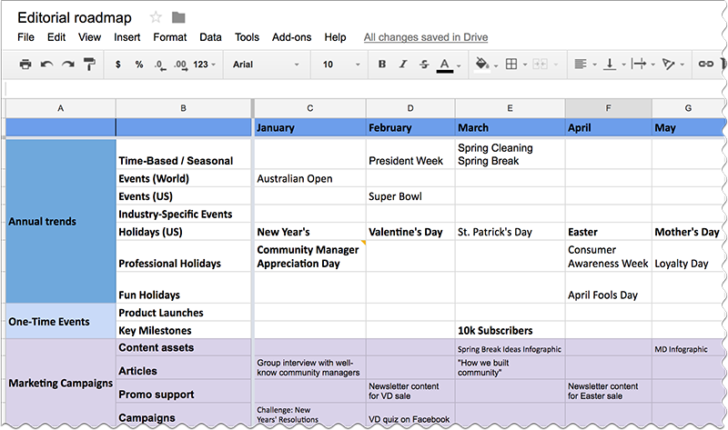
There areholidays and seasonal trends to include in your content editorial plans. When you catch a trend, there’s always a huge boost of interactions, new followers, and clicks.
Source: Screenshot by the author
The great thing about seasonal trends is that you can plan your editorial calendar months in advance because they are easy to predict and repeat yearly. This means you’ll be able to re-use your calendar as a reference point to structure your seasonal content strategy and improvise for maximum success.
Simply sit down and plan your content assets for upcoming big holidays, seasonal events like spring cleaning season, summer holidays, Amazon Prime Day, and other noteworthy days that are relevant to your target customers.
Source: Screenshot by the author
You can use Google Spreadsheets to create your content roadmap. To better focus on ideation and get more inspired, I usually start with planning my seasonal content using a printable calendar which you can easilyfind using these steps.
There are handycalendar apps that can even integrate into WordPressto keep track of those holidays you may want to include in your social media editorial plan.
You can schedule social media updates as far as one year ahead to make sure there’s always something going on your brand channels no matter how busy you get.
4. Get out into the world
We have a tendency to look for our inspiration online because we are targeting an internet-based audience, which is totally understandable: you can discover so many wonderful topics on the web. It just isn’t the only place we can look and purely searching online actually limits our scope, and so our returns.
The most popular piece of content is one that comes from the real world. People love personal stories!
Go out into the real world. Seek out events in your industry, or things that are tangentially related. Discover how everyday experiences connect to your niche and use your social media channels as a platform to explain and share with others.
Get out of cyberspace and into meet-space!
A good way is to engage with your local community (now in a safe and socially distanced way!)
This serves as a great way to understand the pulse of your audience/target customers, their intent, and personal experiences that impact their decisions. Plus, you also earn a chance to introduce new people to your brand.
You can also connect with other local brands, businesses, and business owners and potentially work out some topic ideas that way.
5. Find out what people are asking online
Question research offers a few important marketing opportunities:
Questions give you lots of insight into what your target audience is struggling with and how to best help them
Questions are your best content ideation source
Covering niche questions online opens up more organic search visibility opportunities includinggetting featured and ranking in “People Also Ask” results
Asking a question on social media is one of the most important ways to increase your social media engagement because whenever they see a question mark, people have that natural reflex to stop and find an answer
So ask questions on social media often and engage with answers you receive.
If you are open to trying tools to bolster this exercise, Text Optimizer is a smart option. All you Just type your keyword into its “Topic Ideas”sectionand it will generate a list of topic ideas for you:
Source: Screenshot by the author
Every question is rated based on how many people are searching for it and how many sites are covering it – giving you a clear analysis of demand vs competition which informs your decision making.
The tool is paid and I am not aware of any alternatives. But the good thing is, question research will be mostly free. You will get some content ideas without the need to pay or register an account.
Quick tip: If you install theirGoogle Chrome extension, most of that analysis will come for free as long as you use Google Chrome.
Source: Screenshot by the author
6. Learn the art of content re-packaging
Right off the bat, re-packaging content is going to be the best weapon in your arsenal. It takes what you already have and makes it stretch, getting more out of every piece you write. A lot of those prolific writers are using this tactic, albeit at its extreme. That is how they manage to get so much out without others writing for them.
So what does re-packaging content entail? It is creating new content directly from the old. Some ways to do that are:
Collecting articles into an ebook to give away on your site (As a bonus, this would also make a greatlead magnet!)
Creating a webinar with the information you have written
Turning your content series into a (mini) email course
Creating newsletters
Recording a podcast with the old post content
Shooting a video with the old post content
Converting info from posts into infographics
Making a Slideshare presentation with condensed slides
Writing new posts based on small details mentioned in old posts that have been expanded
These are only a few examples, but you get a general idea. A piece of content should never remain on its own without some form of recycled item coming out of it.
Looking at that list of ideas for re-packaging old content, did any of them stand out as forms of media you have never tried before? It may be time to start expanding what you create and produce something brand new.
This will attract a new kind of audience, one that is drawn to the media in question. Do you usually write blog posts? Start making infographics or videos. Never done a Slideshare slideshow? Consider it now, and see if it gets any bites.
You will be able to recycle your content better this way, and it will keep you from being burnt out. That will inevitably have an impact on the speed and quality of your content creation.
Content ideation isn’t easy and moreover, it is a continuous struggle. Let’s hope these ideas will get you out of that writer’s block!
Ann Smarty is the Founder of Viral Content Bee, Brand and Community manager at Internet Marketing Ninjas. She can be found on Twitter @seosmarty.
Struggling to improve your conversion rate on limited funds? Read how to increase e-commerce conversions on a shoestring budget to watch your business grow.