Wednesday, 31 January 2018

The future of visual search and what it means for SEO companies

The human brain has evolved to instantly recognize images.
Visual identification is a natural ability made possible through a wonder of nerves, neurons, and synapses. We can look at a picture, and in 13 milliseconds or less, know exactly what we’re seeing.
But creating technology that can understand images as quickly and effectively as the human mind is a huge undertaking.
Visual search therefore requires machine learning tools that can quickly process images, but these tools must also be able to identify specific objects within the image, then generate visually similar results.
Yet thanks to the vast resources at the disposal of companies like Google, visual search is finally becoming viable. How, then, will SEO evolve as visual search develops?
Here’s a more interesting question: how soon until SEO companies have to master visual search optimization?
Visual search isn’t likely to replace text-based search engines altogether. For now, visual search is most useful in the world of sales and retail. However, the future of visual search could still disrupt the SEO industry as we know it.
What is visual search?
If you have more than partial vision, you’re able to look across a room and identify objects as you see them. For instance, at your desk you can identify your monitor, your keyboard, your pens, and the sandwich you forgot to put in the fridge.
Your mind is able to identify these objects based on visual cues alone. Visual search does the same thing, but with a given image on a computer. However, it’s important to note that visual search is not the same as image search.
Image search is when a user inputs a word into a search engine and the search engine spits out related images. Even then, the search engine isn’t recognizing images, just the structured data associated with the image files.
Visual search uses an image as a query instead of text (reverse image search is a form of visual search). It identifies objects within the image and then searches for images related to those objects. For instance, based on an image of a desk, you’d be able to use visual search to shop for a desk identical or similar to the one in the image.
While this sounds incredible, the technology surrounding visual search is still limited at best. This is because machine learning must recreate the mind’s image processing before it can effectively produce a viable visual search application. It isn’t enough for the machine to identify an image. It must also be able to recognize a variety of colors, shapes, sizes, and patterns the way the human mind does.

The technology surrounding visual search is still limited at best
However, it’s difficult to recreate image processing in a machine when we barely understand our own image processing system. It’s for this reason that visual search programming is progressing so slowly.
Visual search as it stands: Where we are
Today’s engineers have been using machine learning technology to jumpstart the neural networks of visual search engines for improved image processing. One of the most recent examples of these developments is Google Lens.
Google Lens is an app that allows your smartphone to work as a visual search engine. Announced at Google’s 2017 I/O conference, the app works by analyzing the pictures that you take and giving you information about that image.
For instance, by taking a photo of an Abbey Road album your phone can tell you more about the Beatles and when the album came out. By taking a photo of an ice cream shop your phone can tell you its name, deliver reviews, and tell you if your friends have been there.

All of this information stems from Google’s vast stores of data, algorithms, and knowledge graphs, which are then incorporated into the the neural networks of the Lens product. However, the complexity of visual search involves more than just an understanding of the neural networks.
The mind’s image processing touches on more than just identification. It also draws conclusions that are incredibly complex. And it’s this complexity, known as the “black box problem”, that engineers struggle to recreate in visual search engines.
Rather than waiting explicitly on scientists to understand the human mind, DeepMind — a Google-owned company — has been taking steps toward programming the visual search engine based on cognitive psychology rather than relying solely on neural networks.
However, Google isn’t the only company with developing visual search technology. Pinterest launched its own Lens product in March 2017 to provide features such as Shop the Look and Pincodes. Those using Pinterest can take a photo of a person or place through the app and then have the photo analyzed for clothing or homeware options for shopping.

What makes Pinterest Lens and Google Lens different is that Pinterest offers more versatile options for users. Google is a search engine for users to gather information. Pinterest is a website and app for shopping, recipes, design ideas, and recreational searching.
Unlike Google, which has to operate on multiple fronts, Pinterest is able to focus solely on the development of its visual search engine. As a result, Pinterest could very well become the leading contender in visual search technology.
Nevertheless, other retailers are beginning to catch on and pick up the pace with their own technology. The fashion retailer ASOS also released a visual search tool on its website in August 2017.
The use of visual search in retail helps reduce what’s been called the Discovery Problem. The Discovery Problem is when shoppers have so many options to choose from on a retailer’s website that they simply stop shopping. Visual search reduces the number of choices and helps shoppers find what they want more effectively.
The future of visual search: Where we’ll go from here
It’s safe to assume that the future of visual search engines will be retail-dominated. For now, it’s easier to search for information with words.
Users don’t need to take a photo of an Abbey Road album to learn more about the Beatles when they can use just as many keystrokes to type ‘Abbey Road’ into a search engine. However, users do need to take a photo of a specific pair of sneakers to convey to a search engine exactly what they’re looking to buy.

Searching for a pair of red shoes using Pinterest Lens
As a result, visual search engines are convenient, but they’re not ultimately necessary for every industry to succeed. Services, for instance, may be more likely to rely on textual search engines, whereas sales may be more likely to rely on visual search engines.
That being said, with 69% of young consumers showing an interest in making purchases based on visual-oriented searches alone, the future of visual search engines is most likely to be a shopper’s paradise in the right retailer’s hands.
What visual search means for SEO
Search engines are already capable of indexing images and videos and ranking them accordingly. Video SEO and image SEO have been around for years, ever since video and image content became popular with websites like YouTube and Facebook.
Yet despite this surge in video and image content, SEO still meets the needs of those looking to rank higher on search engines. Factors such as creating SEO-friendly alt text, image sitemaps, SEO-friendly image titles, and original image content can put your website’s images a step above the competition.
However, the see-snap-buy behavior of visual search can make image SEO more of a challenge. This is because the user no longer has to type, but can instead take a photo of a product and then search for the product on a retailer’s website.
Currently, SEO has been functioning alongside visual search via alt-tagging, image optimization, schema markup, and metadata. Schema markup and metadata are especially important for SEO in visual search. This is because, with such minimal text used in the future of visual search, this data may be one of the only sources of textual information for search engines to crawl.
Meticulously cataloging images with microdata may be tedious, but the enhanced description that microdata provides when paired with an optimized image should help that image rank higher in visual search.
Metadata is just as important. In both text-based searches and visual-based searches, metadata strengthens the marketer’s ability to drive online traffic to their website and products. Metadata hides in the HTML of both web pages and images, but it’s what search engines use to find relevant information.
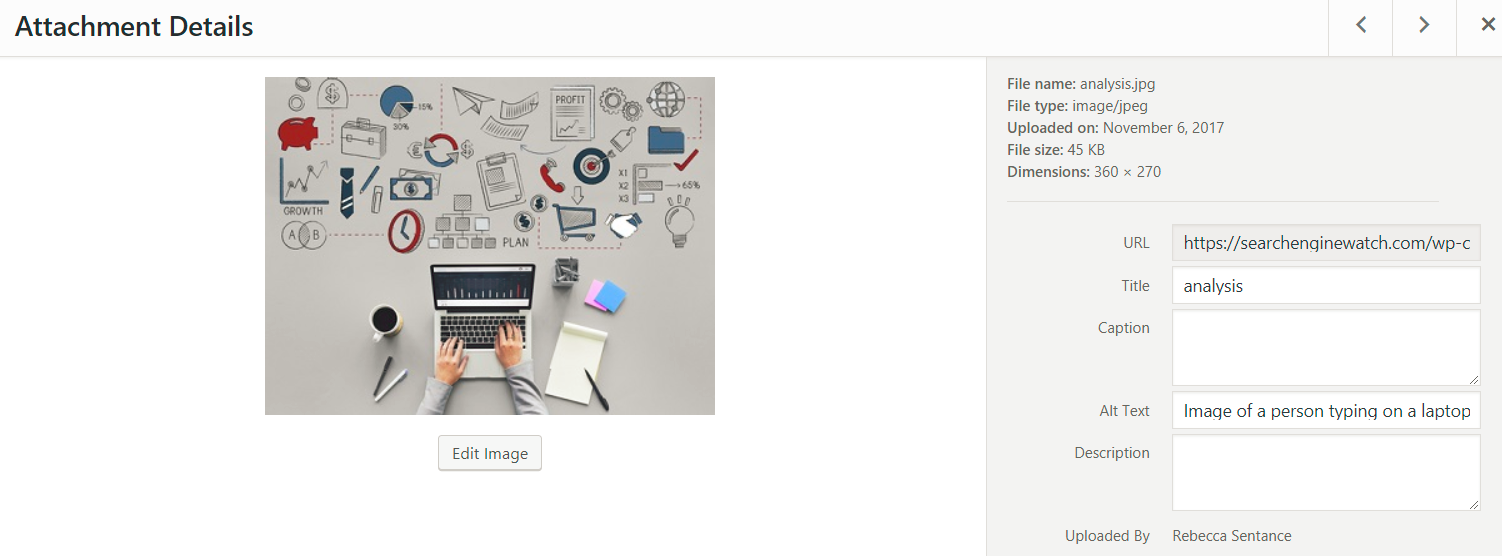
Marking up your images with relevant metadata is essential for image SEO
For this reason, to optimize for image search, it’s essential to use metadata for your website’s images and not just the website itself.
Both microdata and metadata will continue to play an important role in the SEO industry even as visual search engines develop and revolutionize the online experience. However, additional existing SEO techniques will need to advance and improve to adapt to the future of visual search.
The future of SEO and visual search
To assume visual search engines are unlikely to change the future of the SEO industry is to be short-sighted. Yet it’s just as unlikely that text-based search will be made obsolete and replaced by a world of visual-based technology.
However, just because text-based search engines won’t be going anywhere doesn’t mean they won’t be made to share the spotlight. As visual search engines develop and improve, they’ll likely become just as popular and used as text-based engines. It’s for this reason that existing SEO techniques will need to be fine-tuned for the industry to remain up-to-date and relevant.
But how can SEO stay relevant as see-snap-buy behavior becomes not just something used on retail websites, but in most places online? As mentioned before, SEO companies can still utilize image-based SEO techniques to keep up with visual search engines.
Like text-based search engines, visual search relies on algorithms to match content for online users. The SEO industry can use this to its advantage and focus on structured data and optimization to make images easier to process for visual applications.
Additional techniques can help impove image indexing by visual search engines. Some of these techniques include:
- Setting up image badges to run through structured data tests
- Creating alternative attributes for images with target keywords
- Submitting images to image sitemaps
- Optimizing images for mobile use
Visual search engines are bound to revolutionize the retail industry and the way we use technology. However, text-based search engines will continue to have an established place in industries that are better suited to them.
The future of SEO is undoubtedly set for rapid change. The only question is which existing strategies will be reinforced in the visual search revolution and which will be outdated.
Related reading

Reaching new customers has become significantly more complex. With new platforms and channels still emerging, consumers have more and more choices and are demanding greater attention from brands trying to reach them. Here’s how you can ramp up your multi-channel strategy in 2018 to meet that demand.

Google rarely stands still. In fact, the search giant claims to tweak its search algorithms at least 3 times per day. Some of these updates are bigger than others, and the past month has brought an unprecedented wave of newsworthy enhancements.

On Thursday 11th January, Facebook announced a major change to News Feed that would severely impact the reach of publishers’ posts. Deprived of referral traffic from Facebook, will publishers be turning en masse back to SEO to restore their fortunes?

Whether you’re a stickler for New Year’s resolutions, or the very thought makes you roll your eyes, reviewing your SEO habits for 2018 should be a priority for every business and digital marketer.
This marketing news is not the copyright of Scott.Services – please click here to see the original source of this article. Author: Adam Stetzer
For more SEO, PPC, internet marketing news please check out https://news.scott.services
Why not check out our SEO, PPC marketing services at https://www.scott.services
We’re also on:
https://www.facebook.com/scottdotservices/
https://twitter.com/scottdsmith
https://plus.google.com/112865305341039147737
#seoservices #seoservice #seocompany #seocompanies #seoagency #seoagencies #seoconsultant #seoconsultantsuk #seoconsultant #seoconsultantuk #seoexpert #seoexperts #seocompanyuk #seomarketing #seospecialist #seospecialists #seoservicesuk #seofreelancer #seopackages #seostrategy #smallbusinessseo #affordableseoagency #localseoservices #seocost #seopackagesuk #searchengineoptimisationcompany #seoexpertuk #seomarketingcompanies #freelanceseoconsultant #professionalseoservices #seoservicescompany #affordableseoservices #searchengineoptimisationconsultant #seomarketingagency #seomarketingservices #smallbusinessseoservices #completeseoservices #seoadvice #seoconsultingservices #professionalseocompany #googleseoconsultant #affordableseocompany #freelanceseoexpert #professionalseoconsultant #marketingnews #seonews #ppcnews #seo #searchengineoptimisation #searchengineoptimization #scottseo
The post The future of visual search and what it means for SEO companies appeared first on Scott.Services Online Marketing News.
source https://news.scott.services/the-future-of-visual-search-and-what-it-means-for-seo-companies/
14 of the Best Places You Can Learn Photoshop for Free by @LarryKim
Adobe Photoshop is considered the gold standard in photo editing software.
In fact, it can be hard to picture a world without the amazing images created with this software.
In the right hands, photographs can be created that would leave you believing that a magical unicorn had walked through your back yard.
But, with all its power comes a steep learning curve. And that’s intimidating.
Simply loading up the software and trying to figure things out on your own doesn’t work as well when you want to learn Photoshop as it does for other pieces of software.
While you could try and read the manuals (which may be more effective at putting you to sleep than anything else), a more visual and interactive learning approach is almost always the better option.
Luckily, a high-quality learning experience may be just a few clicks away.
Here are 14 places that will let you learn Photoshop for free, giving you all of the information you could want for the most reasonable price in the world.
When your goal is to learn photoshop, sometimes it pays to go to the source.
Adobe provides access to a plethora of videos and hands-on tutorials designed to help you learn the basic when you start out and work your way up to more advanced techniques.
The tutorials are available for free, so you can use them at your leisure.
For a wide range of video tutorials that let you learn Photoshop basic and advanced techniques, as well as a range of special effects, Phlearn connects you with a lot of resources in one location.
Many of the tutorials are free, though there is also a subscription option to provide you with more access, should you want to dive deeper into the world of Photoshop.
While Udemy offers more paid courses than anything else, there are numerous free options focused on Photoshop. Many of these are suitable for beginners and they generally rate well with the Udemy community.
The free tutorial on GFCLearnFree.org provides you with access to 10 core lessons and five extras, including a quiz that lets you put your skills to the test.
These modules are really intended for beginners, but make it easier to learn Photoshop from the beginning.
Every lesson on Photoshop Essentials is created “with beginners in mind.”
You can access information straight through the site or by visiting their companion YouTube channel.
Some of the information is basic, like how to open images using the software, while others focus on fun edits, like giving a person rainbow colored eyes.
Another site full of tutorial videos is Photoshop Caf.
Using their instructional content, you can learn to do popular tasks like cutting out trees, putting text inside a shape, and how to turn a photo into a pencil sketch.
This site goes beyond the basics, letting you learn Photoshop techniques to help you accomplish goals like creating photo-realistic wax seal mock-ups and aligning your Facebook cover and profile picture for a seamless image.
Design Stacks offers shareable tutorials to help you learn Photoshop from nearly beginning to end.
You can start with the basics, which will help you understand concepts like layers and non-destructive dodge and burn, and move on to photo manipulations, special effects, and web layouts.
This site offers only a few tutorials now, but the keyboard shortcuts downloads are helpful for anyone who wants to learn Photoshop.
Why?
Because sometimes pressing a few keys is so much faster than digging through menus. And who doesn’t love saving some time and hassle.
PluralSight, which recently absorbed the learning destination known as Digital Tutors, offers a wide array of Photoshop tutorials and courses.
Some of the information is suitable for beginners while others require being familiar with the software to accomplish the goals set forth in the project.
However, all of it is useful, and it’s a great resource if you want to learn almost everything Photoshop can do.
This photography blog isn’t entirely focused on tutorials, but there are plenty to choose from.
For example, you can learn how to digital add fire to a photograph using one of the posts.
There’s also general photography advice, such as how to take the highest quality photos under specific conditions, as well as other helpful information, like camera reviews.
Floqq offers a free course called, “Learning Adobe Photoshop in 30 Days.”
The class is divided into 30 steps and includes 32 videos (and introduction and conclusion, and one video for each step).
Similar to Udemy and other learning platforms, Alison provides access to two free courses designed to help you learn Photoshop, as well as some others that may be helpful, like guides to digital photography.
While this isn’t a traditional learning platform, Photoshop Forums does have a significant amount of information available.
The site is now considered closed, but the threads persist. So, you can dig into the archives to find answers to questions you may have.
This post was originally published in Inc.com
This marketing news is not the copyright of Scott.Services – please click here to see the original source of this article. Author: Larry Kim
For more SEO, PPC, internet marketing news please check out https://news.scott.services
Why not check out our SEO, PPC marketing services at https://www.scott.services
We’re also on:
https://www.facebook.com/scottdotservices/
https://twitter.com/scottdsmith
https://plus.google.com/112865305341039147737
#seoservices #seoservice #seocompany #seocompanies #seoagency #seoagencies #seoconsultant #seoconsultantsuk #seoconsultant #seoconsultantuk #seoexpert #seoexperts #seocompanyuk #seomarketing #seospecialist #seospecialists #seoservicesuk #seofreelancer #seopackages #seostrategy #smallbusinessseo #affordableseoagency #localseoservices #seocost #seopackagesuk #searchengineoptimisationcompany #seoexpertuk #seomarketingcompanies #freelanceseoconsultant #professionalseoservices #seoservicescompany #affordableseoservices #searchengineoptimisationconsultant #seomarketingagency #seomarketingservices #smallbusinessseoservices #completeseoservices #seoadvice #seoconsultingservices #professionalseocompany #googleseoconsultant #affordableseocompany #freelanceseoexpert #professionalseoconsultant #marketingnews #seonews #ppcnews #seo #searchengineoptimisation #searchengineoptimization #scottseo
The post 14 of the Best Places You Can Learn Photoshop for Free by @LarryKim appeared first on Scott.Services Online Marketing News.
source https://news.scott.services/14-of-the-best-places-you-can-learn-photoshop-for-free-by-larrykim/
Breaking CRO Best Practices: You Can Do It!
January 31, 2018
In the world of expertise, where you focus on honing your skills in one facet of digital marketing, sometimes you’re required to perform outside of that facet. Digital marketing is an environment affected by a myriad of variables both controllable and erratic. We can be insanely brilliant PPC gurus but when it comes to optimizing the post-click experience CRO can become a sphere of confusion which can lead to over reliance on best practices.
Earlier in my PPC Hero tenure, I shed light on My Experience With Landing Page Best Practices And The Failures That Ensued. Today I will illuminate a few instances in which we violated CRO best practices and it was an utter success.
Example #1: Social Media Has a Time and Place
This specific client sells essential oils which is a market that is engulfed in education and opinion. This innately pairs with social media creating a very large avenue for traffic to the main website along with a strong lean on social proof. Much of this client’s traffic enters via Facebook and much of that traffic is referred via word-of-mouth. So Facebook is important to this brand right? Yes. So opportunities to connect a user’s Facebook experience with his/her website experience should also be quite prevalent in order to remain relevant and congruent right? Not necessarily.
We wanted to give the homepage an uplift; enable it to be the gateway and avenue into the site that it really should be. We started this process via existence testing because if we can’t tell what IS vital to the homepage, we may ignorantly eradicate a heavy hitting element.
Combining data from behavior maps and Google Analytics, we learned that the element at the bottom of the homepage showcasing this brand’s Facebook presence was not driving action and not being seen by the majority of users experiencing the homepage. Furthermore, splits the column with an element showcasing the brand’s blog. This element, on the same lateral plane as the Facebook element received significant attention and successfully drives purchase behavior.
The variation in this A/B test removed the Facebook element and enlarged and centered the blog element as seen below. Note that both of these elements only appear on the desktop and tablet version of the site.

The variation lifted both purchase rate (8.79%) and revenue per user (28.08%). Even more interesting, when we split these metrics by device we see a more substantial lift in purchase rate on tablet (20.08% vs. 6.26%) but a rather similar lift between the two devices in revenue per user (desktop: 28.96%, tablet: 25.16%).
In essence, we removed a distraction and nullified a rabbit trail that was pulling people off the site, out of the purchase mindset, and straight out of the funnel. Social sharing is lovely, but it’s also a spiral into distraction that should be limited to a page where it cannot rip your users away from their purchase; like the thank you page.
Example #2: Video Should Not be Placed Willy Nilly
This client is a hospital whose main online focus is brand awareness and overall education/information dispersal. They had recently acquired video testimonials showcasing real patients and their experiences with each of the primary lines on service. Social proof is crucial right? Yes. Video social proof carries more validity than written testimonials correct? Typically, yes. So video testimonials should be placed as high on the page as possible right? Not necessarily.
Based on 30-day data after the video was originally placed in the hero image and in-line with the content much further down the page, we discovered that a very small proportion of overall traffic was engaging with the video in either location. So we wondered is it the video? Or the placement of the video?
The variation tested an image replacing the video in the hero image but kept the in-line video in its place.

While we don’t see traditional conversions on this specific page focusing on brand awareness and information dispersal, there are conversion options to sign up for a seminar to learn more about this service line or contact the facility to learn more. The variation created a lift in both of these actions (Sign Up for a Seminar: 84.71% and Contact Us: 214.29%). The in-line video saw a 135.71% lift in engagement with the removal of the hero image video.
Users didn’t necessarily want to hear about this patient’s story until they had digested or at least scanned the content preceding the video that incorporated facts and figures with basic essential information. Ensure that your users are exposed to persuasive content only once they have had the opportunity to peruse the pertinent content.
Example #3: Contact Forms Don’t Have a Place Where They “Belong”
Last, but certainly not least, this client is a preschool franchise offering many different avenues of conversion both high and low in the funnel. Perhaps the most classic of these avenues is the “Contact Us” avenue.
So this one is probably one of the most common best practices I’ve been taught or seen floating about the CRO advice sphere. Forms on a two-column page should always be on the right-hand side of the page, right? Because we read left to right and it makes sense to put content on the left and the conversion option that follows on the right, correct? No. No. And no.
Context matters folks. This form is accessed via a sticky “Contact Us” call-to-action in the top navigation. Thus, by arriving to this page the user has already indicated their intent to contact you. If you have a seamless or convenient option to do so, such as a form, why is it necessary to expose the user to a phone number, address, or any other content before that form?
In order to increase the perceived availability of the form on this page, we swapped it with the content on the page as seen below.

The variation drastically increased form completions by 154.81% without significantly impacting any of the other avenues of conversion. If you users have already indicated what they want (“Yeah, I’ll go to this new page because that’s what I’d like to do now.”) give them a lighted and blatant path to that action. Don’t place best practices in the way.
Final Thoughts
Listening to data and your users and inevitably violating best practices can be highly beneficial. As a reminder, best practices can and frequently do fail. Continue to be the expert that you are and deliver all-around value to each piece of work you create by taking the time to listen to your users when you really need to optimize that post-click experience.
All in all, your users are more valuable than best practices.
This marketing news is not the copyright of Scott.Services – please click here to see the original source of this article. Author: Kate Wilcox
For more SEO, PPC, internet marketing news please check out https://news.scott.services
Why not check out our SEO, PPC marketing services at https://www.scott.services
We’re also on:
https://www.facebook.com/scottdotservices/
https://twitter.com/scottdsmith
https://plus.google.com/112865305341039147737
#seoservices #seoservice #seocompany #seocompanies #seoagency #seoagencies #seoconsultant #seoconsultantsuk #seoconsultant #seoconsultantuk #seoexpert #seoexperts #seocompanyuk #seomarketing #seospecialist #seospecialists #seoservicesuk #seofreelancer #seopackages #seostrategy #smallbusinessseo #affordableseoagency #localseoservices #seocost #seopackagesuk #searchengineoptimisationcompany #seoexpertuk #seomarketingcompanies #freelanceseoconsultant #professionalseoservices #seoservicescompany #affordableseoservices #searchengineoptimisationconsultant #seomarketingagency #seomarketingservices #smallbusinessseoservices #completeseoservices #seoadvice #seoconsultingservices #professionalseocompany #googleseoconsultant #affordableseocompany #freelanceseoexpert #professionalseoconsultant #marketingnews #seonews #ppcnews #seo #searchengineoptimisation #searchengineoptimization #scottseo
The post Breaking CRO Best Practices: You Can Do It! appeared first on Scott.Services Online Marketing News.
source https://news.scott.services/breaking-cro-best-practices-you-can-do-it/
Google EU shopping rivals complain antitrust remedies aren’t working
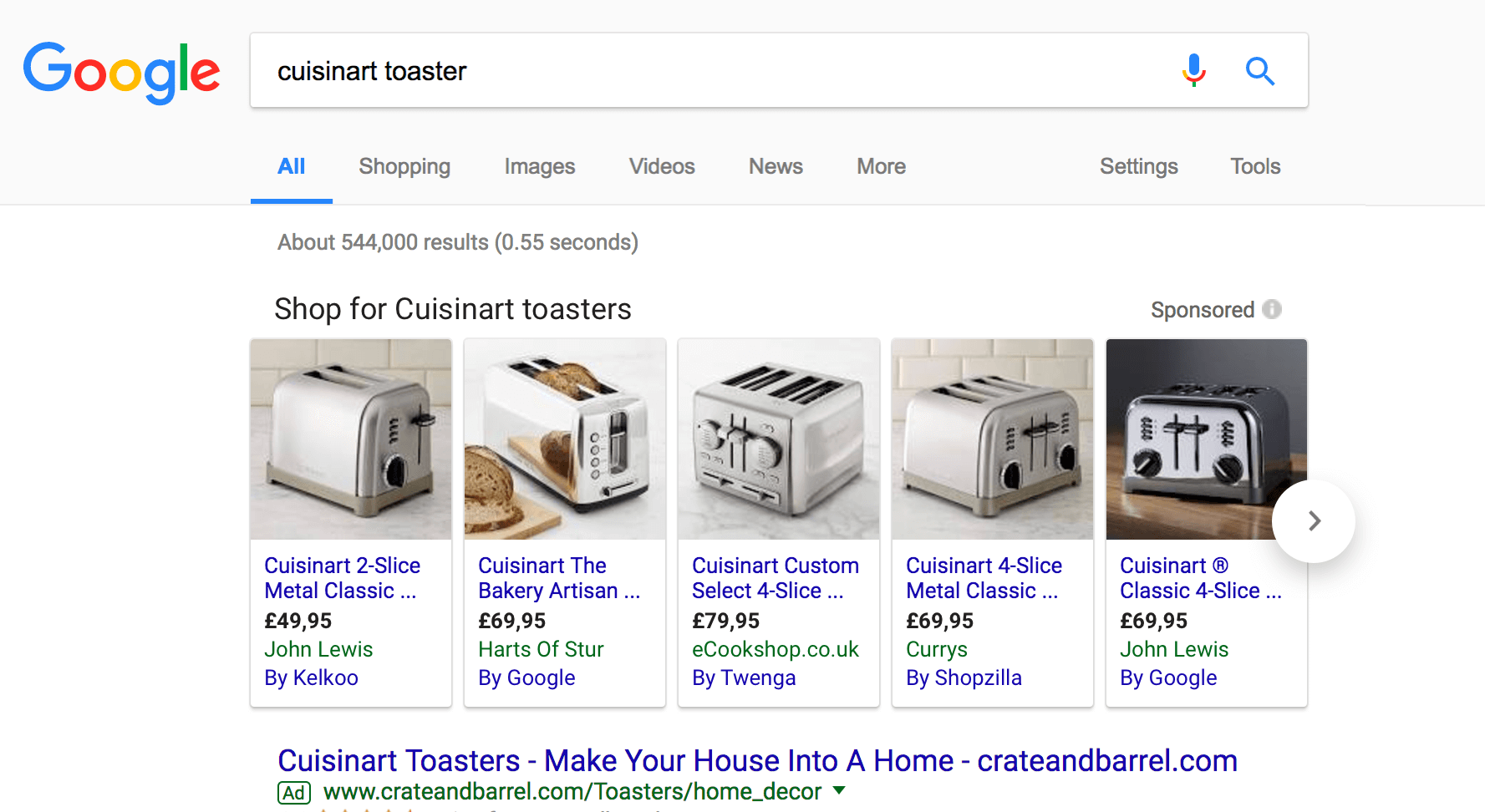
In the wake of the European Commission’s $2.7 billion antitrust fine against Google last year, the company opened up product listing ads (PLAs) to rival comparison shopping services. It also pledged to operate Google Shopping as though it were a stand-alone entity and to provide “equal treatment” for rivals.
Implementing that program resulted in a number of changes to the auction and shopping ads in search results. However, rivals such as Kelkoo, among others, have been complaining these measures haven’t worked and that their competitive positions have deteriorated.
Google’s shopping comparison rivals now formally seek additional concessions and have complained to the European Commission, which is reviewing their complaints and seeking information from Google to assess the efficacy of its remedies.
Data and analysis released earlier this week by Searchmetrics appear to support the rivals’ cause. Searchmetrics’ analysis found that Google still overwhelmingly dominates shopping ads in the UK and Germany in five key retail segments. More than 99 percent of PLAs across the examined categories in the UK were still “by Google.” The German market is reportedly somewhat more competitive.

Searchmetrics also found that organic visibility had declined for Google’s shopping competitors since the end of June 2017. This is mirrored in some of the complaints and allegations from Google competitors in Europe. According to The Wall Street Journal:
Some rivals also allege Google has continued to demote their websites in its general search results since the EU decision, which also alleged such demotions. Kelkoo CEO Richard Stables says the firm’s revenue from general search traffic dropped by 62 percent last year, to €2.3 million. In 2018, he projects a two-thirds drop to €800,000.
Google has taken the position that its changes to shopping ads and the auction in Europe comply with the European Commission’s order and that rival shopping services are treated equally. Google’s competitors disagree.
Should the Commission find that Google’s measures are inadequate or don’t comply with its antitrust order, the company could receive additional fines equivalent to 5 percent of its global daily revenue until compliance. Indeed, the European Commission is likely sympathetic to Google’s competitors and will be inclined to demand further action with the threat of additional penalties.
It’s not entirely clear what should happen or what would indicate compliance. The simple answer might be a substantially higher percentage of rival ads in PLAs and rival sites in organic slots. But that implies a high degree of regulatory involvement and potential intervention in the SERP itself.
Google maintains it has leveled the playing field for PLAs in Europe. Its competitors see something quite the opposite. Are those competitors right, partly right or not entirely competent and blaming their failures on Google?
Google is in the process of appealing the EC antitrust ruling and fine, but that could take several years.
About The Author

Greg Sterling is a Contributing Editor at Search Engine Land. He writes a personal blog, Screenwerk, about connecting the dots between digital media and real-world consumer behavior. He is also VP of Strategy and Insights for the Local Search Association. Follow him on Twitter or find him at Google+.
This marketing news is not the copyright of Scott.Services – please click here to see the original source of this article. Author: Greg Sterling
For more SEO, PPC, internet marketing news please check out https://news.scott.services
Why not check out our SEO, PPC marketing services at https://www.scott.services
We’re also on:
https://www.facebook.com/scottdotservices/
https://twitter.com/scottdsmith
https://plus.google.com/112865305341039147737
#seoservices #seoservice #seocompany #seocompanies #seoagency #seoagencies #seoconsultant #seoconsultantsuk #seoconsultant #seoconsultantuk #seoexpert #seoexperts #seocompanyuk #seomarketing #seospecialist #seospecialists #seoservicesuk #seofreelancer #seopackages #seostrategy #smallbusinessseo #affordableseoagency #localseoservices #seocost #seopackagesuk #searchengineoptimisationcompany #seoexpertuk #seomarketingcompanies #freelanceseoconsultant #professionalseoservices #seoservicescompany #affordableseoservices #searchengineoptimisationconsultant #seomarketingagency #seomarketingservices #smallbusinessseoservices #completeseoservices #seoadvice #seoconsultingservices #professionalseocompany #googleseoconsultant #affordableseocompany #freelanceseoexpert #professionalseoconsultant #marketingnews #seonews #ppcnews #seo #searchengineoptimisation #searchengineoptimization #scottseo
The post Google EU shopping rivals complain antitrust remedies aren’t working appeared first on Scott.Services Online Marketing News.
source https://news.scott.services/google-eu-shopping-rivals-complain-antitrust-remedies-arent-working/
Google Gives Details On Featured Snippets & What New Snippets May Come

Google’s featured snippets have been one of those areas in search that Google has been investing a lot of time, resources and money in. It is clearly a space that Google finds to be one of the more important areas of search because (a) they are shown as authoritative answers in the search results, (b) take up a lot of real estate and (c) are the forefront of Google’s voice Assistant responses.
Danny Sullivan, in his first blog post at the Google blog, wrote A reintroduction to Google’s featured snippets – it honestly may be the best written Google blog post in history – of course I am biased about Danny’s writing. But more importantly, the blog post, as I explained at Search Engine Land yesterday, is one of the most authoritative and comprehensive explanations of featured snippets ever.
We’ve covered them in absolute detail and many of the UI changes to them and embarrassing moments over the years.
Let me share what is newish to me from the post, although, I don’t think anything is really new new.
(1) The suggested video clips, which we covered twice here before are actually a form of featured snippets. I didn’t know that, I thought they were their own thing. Doesn’t really matter, and they are rare to actually see. But good to know they are considered featured snippets.
(2) Google show cases some of the experiments they’ve been testing, which we covered already here numerous times but here are those screen shots again:
Featured Snippets with refinement buttons:

Featured snippets with a “more results” button:

Doubling up on featured snippets:

Again, we’ve covered those tests before.
Of course, the blog post gets into how these featured snippets are not just good for searchers but do send traffic to publishers. This was a debate between Google and SEOs for some time over the years. It also goes through the challenges of being right and sensitivity of being wrong. It is a comprehensive overview of those featured snippets.
Featured snippets have been around for over four years now and they will just continue to grow in importance.
One of Google’s head search engineers, Paul Haahr, spent the time on Twitter yesterday answering questions about them:
It’s not that knowledge panels, e.g., don’t depend on retrieval, because they do, but the effects are so indirect that it’s hard to relate them.
— Paul Haahr (@haahr) January 31, 2018
So click through to check out that thread.
Today in a new series going behind-the-scenes on how Google Search work, we explore when, where and why we provide featured snippets. https://t.co/Gm8bwSJ1Oo
— Google SearchLiaison (@searchliaison) January 30, 2018
Forum discussion at Twitter.
This marketing news is not the copyright of Scott.Services – please click here to see the original source of this article. Author: barry@rustybrick.com (Barry Schwartz)
For more SEO, PPC, internet marketing news please check out https://news.scott.services
Why not check out our SEO, PPC marketing services at https://www.scott.services
We’re also on:
https://www.facebook.com/scottdotservices/
https://twitter.com/scottdsmith
https://plus.google.com/112865305341039147737
#seoservices #seoservice #seocompany #seocompanies #seoagency #seoagencies #seoconsultant #seoconsultantsuk #seoconsultant #seoconsultantuk #seoexpert #seoexperts #seocompanyuk #seomarketing #seospecialist #seospecialists #seoservicesuk #seofreelancer #seopackages #seostrategy #smallbusinessseo #affordableseoagency #localseoservices #seocost #seopackagesuk #searchengineoptimisationcompany #seoexpertuk #seomarketingcompanies #freelanceseoconsultant #professionalseoservices #seoservicescompany #affordableseoservices #searchengineoptimisationconsultant #seomarketingagency #seomarketingservices #smallbusinessseoservices #completeseoservices #seoadvice #seoconsultingservices #professionalseocompany #googleseoconsultant #affordableseocompany #freelanceseoexpert #professionalseoconsultant #marketingnews #seonews #ppcnews #seo #searchengineoptimisation #searchengineoptimization #scottseo
The post Google Gives Details On Featured Snippets & What New Snippets May Come appeared first on Scott.Services Online Marketing News.
source https://news.scott.services/google-gives-details-on-featured-snippets-what-new-snippets-may-come/
Google Search Console Can Show Clicks To HTTP After Site Migration To HTTPS

So you moved your site from HTTP to HTTPS, you feel good about it, but for some reason, Google Search Console’s Search Analytics report for the old HTTP property is still showing some click data to the old HTTP property. Why? Well, John Mueller said it is normal to show some clicks because some queries can still trigger the HTTP version even if the canonical version is set to HTTPS.
He said this on Twitter, “That can happen in individual cases… Sometimes you can see it by finding the queries that trigger it, even if a https url is the canonical.”
That can happen in individual cases… Sometimes you can see it by finding the queries that trigger it, even if a https url is the canonical.
— John ☆.o(≧▽≦)o.☆ (@JohnMu) January 29, 2018
I still see it and we moved this site to HTTPS three and a half years ago and I still see some Search Analytics data in my HTTP Search Console profile:

So this is normal and you probably should every now and then check your HTTP profiles in Search Console.
Forum discussion at Twitter.
This marketing news is not the copyright of Scott.Services – please click here to see the original source of this article. Author: barry@rustybrick.com (Barry Schwartz)
For more SEO, PPC, internet marketing news please check out https://news.scott.services
Why not check out our SEO, PPC marketing services at https://www.scott.services
We’re also on:
https://www.facebook.com/scottdotservices/
https://twitter.com/scottdsmith
https://plus.google.com/112865305341039147737
#seoservices #seoservice #seocompany #seocompanies #seoagency #seoagencies #seoconsultant #seoconsultantsuk #seoconsultant #seoconsultantuk #seoexpert #seoexperts #seocompanyuk #seomarketing #seospecialist #seospecialists #seoservicesuk #seofreelancer #seopackages #seostrategy #smallbusinessseo #affordableseoagency #localseoservices #seocost #seopackagesuk #searchengineoptimisationcompany #seoexpertuk #seomarketingcompanies #freelanceseoconsultant #professionalseoservices #seoservicescompany #affordableseoservices #searchengineoptimisationconsultant #seomarketingagency #seomarketingservices #smallbusinessseoservices #completeseoservices #seoadvice #seoconsultingservices #professionalseocompany #googleseoconsultant #affordableseocompany #freelanceseoexpert #professionalseoconsultant #marketingnews #seonews #ppcnews #seo #searchengineoptimisation #searchengineoptimization #scottseo
The post Google Search Console Can Show Clicks To HTTP After Site Migration To HTTPS appeared first on Scott.Services Online Marketing News.
source https://news.scott.services/google-search-console-can-show-clicks-to-http-after-site-migration-to-https/