Monday, 16 August 2021

The New Moz SEO Q&A: 100K URL Migration Case Study

Over time, the Moz Q&A saw serious neglect, resulting in loss of user satisfaction and traffic. So Moz had a choice: improve the Q&A immediately, or kill it. Thankfully, we chose to improve it. Here’s how we did it.

This marketing news is not the copyright of Scott.Services – please click here to see the original source of this article. Author:

For more SEO, PPC, internet marketing news please check out https://news.scott.services

Why not check out our SEO, PPC marketing services at https://www.scott.services

We’re also on:
https://www.facebook.com/scottdotservices/
https://twitter.com/scottdsmith
https://plus.google.com/112865305341039147737

The post The New Moz SEO Q&A: 100K URL Migration Case Study appeared first on Scott.Services Online Marketing News.


source https://news.scott.services/the-new-moz-seo-qa-100k-url-migration-case-study/

Which of My Competitor’s Keywords Should (& Shouldn’t) I Target? – Best of Whiteboard Friday

You don’t want to try to rank for every one of your competitors’ keywords. Like most things with SEO, it’s important to be strategic and intentional with your decisions. In this fan favorite Whiteboard Friday, Rand shares his recommended process for understanding your funnel, identifying the right competitors to track, and prioritizing which of their keywords you ought to target.

Plus, don’t miss our upcoming webinar on Wednesday, March 11: Competitive Analysis for SEO: Size Up & Surpass Your Search Rivals presented by Director of Growth Marketing Kelly Cooper.

Which of my competitor's keyword should I target?

Click on the whiteboard image above to open a high-resolution version in a new tab!

Video Transcription

Howdy, Moz fans, and welcome to another edition of Whiteboard Friday. So this week we’re chatting about your competitors’ keywords and which of those competitive keywords you might want to actually target versus not.

Many folks use tools, like SEMrush and Ahrefs and KeywordSpy and Spyfu and Moz’s Keyword Explorer, which now has this feature too, where they look at: What are the keywords that my competitors rank for, that I may be interested in? This is actually a pretty smart way to do keyword research. Not the only way, but a smart way to do it. But the challenge comes in when you start looking at your competitors’ keywords and then realizing actually which of these should I go after and in what priority order. In the world of competitive keywords, there’s actually a little bit of a difference between classic keyword research.

So here I’ve plugged in Hammer and Heels, which is a small, online furniture store that has some cool designer furniture, and Dania Furniture, which is a competitor of theirs — they’re local in the Seattle area, but carry sort of modern, Scandinavian furniture — and IndustrialHome.com, similar space. So all three of these in a similar space, and you can see sort of keywords that return that several of these, one or more of these rank for. I put together difficulty, volume, and organic click-through rate, which are some of the metrics that you’ll find. You’ll find these metrics actually in most of the tools that I just mentioned.

Process:

So when I’m looking at this list, which ones do I want to actually go after and not, and how do I choose? Well, this is the process I would recommend.

I. Try and make sure you first understand your keyword to conversion funnel.

So if you’ve got a classic sort of funnel, you have people buying down here — this is a purchase — and you have people who search for particular keywords up here, and if you understand which people you lose and which people actually make it through the buying process, that’s going to be very helpful in knowing which of these terms and phrases and which types of these terms and phrases to actually go after, because in general, when you’re prioritizing competitive keywords, you probably don’t want to be going after these keywords that send traffic but don’t turn into conversions, unless that’s actually your goal. If your goal is raw traffic only, maybe because you serve advertising or other things, or because you know that you can capture a lot of folks very well through retargeting, for example maybe Hammer and Heels says, “Hey, the biggest traffic funnel we can get because we know, with our retargeting campaigns, even if a keyword brings us someone who doesn’t convert, we can convert them later very successfully,” fine. Go ahead.

II. Choose competitors that tend to target the same audience(s).

So the people you plug in here should tend to be competitors that tend to target the same audiences. Otherwise, your relevance and your conversion get really hard. For example, I could have used West Elm, which does generally modern furniture as well, but they’re very, very broad. They target just about everyone. I could have done Ethan Allen, which is sort of a very classic, old-school furniture maker. Probably a really different audience than these three websites. I could have done IKEA, which is sort of a low market brand for everybody. Again, not kind of the match. So when you are targeting conversion heavy, assuming that these folks were going after mostly conversion focused or retargeting focused rather than raw traffic, my suggestion would be strongly to go after sites with the same audience as you.

If you’re having trouble figuring out who those people are, one suggestion is to check out a tool called SimilarWeb. It’s expensive, but very powerful. You can plug in a domain and see what other domains people are likely to visit in that same space and what has audience overlap.

III. The keyword selection process should follow some of these rules:

A. Are easiest first.

So I would go after the ones that tend to be, that I think are going to be most likely for me to be able to rank for easiest. Why do I recommend that? Because it’s tough in SEO with a lot of campaigns to get budget and buy-in unless you can show progress early. So any time you can choose the easiest ones first, you’re going to be more successful. That’s low difficulty, high odds of success, high odds that you actually have the team needed to make the content necessary to rank. I wouldn’t go after competitive brands here.

B. Are similar to keywords you target that convert well now.

So if you understand this funnel well, you can use your AdWords campaign particularly well for this. So you look at your paid keywords and which ones send you highly converting traffic, boom. If you see that lighting is really successful for our furniture brand, “Oh, well look, glass globe chandelier, that’s got some nice volume. Let’s go after that because lighting already works for us.”

Of course, you want ones that fit your existing site structure. So if you say, “Oh, we’re going to have to make a blog for this, oh we need a news section, oh we need a different type of UI or UX experience before we can successfully target the content for this keyword,” I’d push that down a little further.

C. High volume, low difficulty, high organic click-through rate, or SERP features you can reach.

So basically, when you look at difficulty, that’s telling you how hard is it for me to rank for this potential keyword. If I look in here and I see some 50 and 60s, but I actually see a good number in the 30s and 40s, I would think that glass globe chandelier, S-shaped couch, industrial home furniture, these are pretty approachable. That’s impressive stuff.

Volume, I want as high as I can get, but oftentimes high volume leads to very high difficulty.
Organic click-through rate percentage, this is essentially saying what percent of people click on the 10 blue link style, organic search results. Classic SEO will help get me there. However, if you see low numbers, like a 55% for this type of chair, you might take a look at those search results and see that a lot of images are taking up the other organic click-through, and you might say, “Hey, let’s go after image SEO as well.” So it’s not just organic click-through rate. You can also target SERP features.

D. Are brands you carry/serve, generally not competitor’s brand names.

Then last, but not least, I would urge you to go after brands when you carry and serve them, but not when you don’t. So if this Ekornes chair is something that your furniture store, that Hammers and Heels actually carries, great. But if it’s something that’s exclusive to Dania, I wouldn’t go after it. I would generally not go after competitors’ brand names or branded product names with an exception, and I actually used this site to highlight this. Industrial Home Furniture is both a branded term, because it’s the name of this website — Industrial Home Furniture is their brand — and it’s also a generic. So in those cases, I would tell you, yes, it probably makes sense to go after a category like that.

If you follow these rules, you can generally use competitive intel on keywords to build up a really nice portfolio of targetable, high potential keywords that can bring you some serious SEO returns.

Look forward to your comments and we’ll see you again next week for another edition of Whiteboard Friday. Take care.

Video transcription by Speechpad.com


For more on competitor analysis, join our upcoming webinar on Wednesday March 11 at 10am PST: Competitive Analysis for SEO: Size Up & Surpass Your Search Rivals, hosted by Moz’s Director of Growth Marketing Kelly Cooper:

Save my spot!

This marketing news is not the copyright of Scott.Services – please click here to see the original source of this article. Author: randfish

For more SEO, PPC, internet marketing news please check out https://news.scott.services

Why not check out our SEO, PPC marketing services at https://www.scott.services

We’re also on:
https://www.facebook.com/scottdotservices/
https://twitter.com/scottdsmith
https://plus.google.com/112865305341039147737

The post Which of My Competitor’s Keywords Should (& Shouldn’t) I Target? – Best of Whiteboard Friday appeared first on Scott.Services Online Marketing News.


source https://news.scott.services/which-of-my-competitors-keywords-should-shouldnt-i-target-best-of-whiteboard-friday/

Sunday, 15 August 2021

Google Help Video On Angular SEO

Here is the next video in the series of JavaScript SEO videos from Google. This one is on Make your Angular web apps discoverable in search and SEO friendly.

Martin Splitt from Google digs into the tech behind how this works and how you can help Google discover the content within your Angular web apps. He discusses how to get your titles and meta descriptions to be indexed by Google in these cases. He also gets into Angular Universal and how that can work with Google search.

Here is the video:

Forum discussion at Twitter.

This marketing news is not the copyright of Scott.Services – please click here to see the original source of this article. Author: barry@rustybrick.com (Barry Schwartz)

For more SEO, PPC, internet marketing news please check out https://news.scott.services

Why not check out our SEO, PPC marketing services at https://www.scott.services

We’re also on:
https://www.facebook.com/scottdotservices/
https://twitter.com/scottdsmith
https://plus.google.com/112865305341039147737

The post Google Help Video On Angular SEO appeared first on Scott.Services Online Marketing News.


source https://news.scott.services/google-help-video-on-angular-seo/

Thursday, 29 July 2021

Google: Generally The Localized Version Of Your Site Gets Its Own Signals

Google was asked if you have an English version of your site for years and years and then expand the site to France. So you create an FR subdomain or subfolder for the French users. Does the English version signals pass through to the French version of the site? Gary Illyes from Google said generally no.

This marketing news is not the copyright of Scott.Services – please click here to see the original source of this article. Author: barry@rustybrick.com (Barry Schwartz)

For more SEO, PPC, internet marketing news please check out https://news.scott.services

Why not check out our SEO, PPC marketing services at https://www.scott.services

We’re also on:
https://www.facebook.com/scottdotservices/
https://twitter.com/scottdsmith
https://plus.google.com/112865305341039147737

The post Google: Generally The Localized Version Of Your Site Gets Its Own Signals appeared first on Scott.Services Online Marketing News.


source https://news.scott.services/google-generally-the-localized-version-of-your-site-gets-its-own-signals/

Two simple behavioral levers to improve your link building efforts

Two simple behavioral levers to improve your link building efforts

Link building is hard. Anyone who says otherwise has either not done much of it, or they’re trying to sell you a course.

To make it even harder, there are a million supposed link building hacks and tactics on the web – and most of them are pretty bad. A quick Google search will net you a treasure trove of stale email templates and tactics like link reclamation that either trick you into believing them because they rank well in search, or make you wonder why articles like that don’t have an expiration date.

When it comes down to brass tacks, there are really only two broad strategies for increasing your link building effectiveness, both of which come from a framework using BJ Fogg’s behavior model:

  • Increase motivation (make them want to link to you more) or
  • Decrease friction (make it easier for them to link to you)

Link building is a critical part of SEO, whether your website is small or large.

Here’s how you can use BJ Fogg’s framework to really improve your link building strategies – despite what your Google searches are telling you.

What is BJ Fogg’s behavior model?

BJ Fogg’s behavior model illustrates that three elements must converge at the exact same moment for a behavior to occur: “Motivation”, “Ability”, and a “Prompt”. When the desired behavior is not performed, one or more of these elements is missing.

the BJ Fogg behavior model which helps derive the two ways to improve link building

Source: Behaviormodel.org

Each of these elements is comprised of subcomponents. For example, “Core Motivators” will shape the “Motivation” element, “Simplicity Factors” define the “Ability” element, and each of these will work together in the context of the “Prompt”.

“Motivation” and “Ability” share a compensatory relationship in that when one is high, the other can be low and still achieve the desired results. For example, if something is hard to do, success can still be achieved if the motivation is high enough.

When this model is applied to link building, your best chance at securing a quality link is to either increase someone’s motivation to link to you or decrease friction to make it easier to link to you.

Let’s dive in.

Method one: Increase motivation

If you’re trying to increase motivation, you need to figure out how to influence how much the blogger or publisher wants to give you a link. The main way to do that is to produce really amazing content. That’s really a pre-requisite, for any long term content program, you can’t cut corners on content quality.

Outside of that, though, there are several ways to increase the blogger’s motivation to give you a link to that amazing content:

1. Build reciprocity and play the long game

Creating strong relationships is a clear path to increasing motivation. Your strategic partners can be an “in” to new markets or audiences, and ideally, you’ll be able to offer the same benefit to them.

As marketing strategist Mark Lindquist of Mailshake notes, when forming strategic partnerships, it’s not just about building high-profile relationships – it’s about working with the right people.

“I’m not at all concerned about the social following of someone as an indication of whether or not they’re worth connecting with,” he says. “Figure out what your goals are, find the people who can help you accomplish those goals, and build relationships with them.”

Guest posting is a great way to start building these relationships, but it’s also important to go to meetups, get on calls, and generally build your network and help others out. A good rule is to offer something of value first before asking for something in return. It’s a long game, but it will ultimately result in a win-win for everyone involved.

2. Offer clear incentives

‘What’s in it for me?”

This is the ultimate question at the center of almost any transaction or conversation in marketing and business, and for good reason. Mercy and gratitude won’t get the job done. You need to push the self-interest button to spur action.

If someone is devoting time and resources to help you, they’ll want to know that it’s worth their efforts. What incentives can you offer?

If you have a large social following, use it as leverage in the deal. They can tap into your audience and essentially get free exposure if they’re willing to do the same for you.

3. Give them something truly helpful

If your content genuinely helps someone improve their own content, it’s a much easier sell than a stale pitch of “My content is slightly better than what you already link to”. Here’s what better content could look like:

New original research

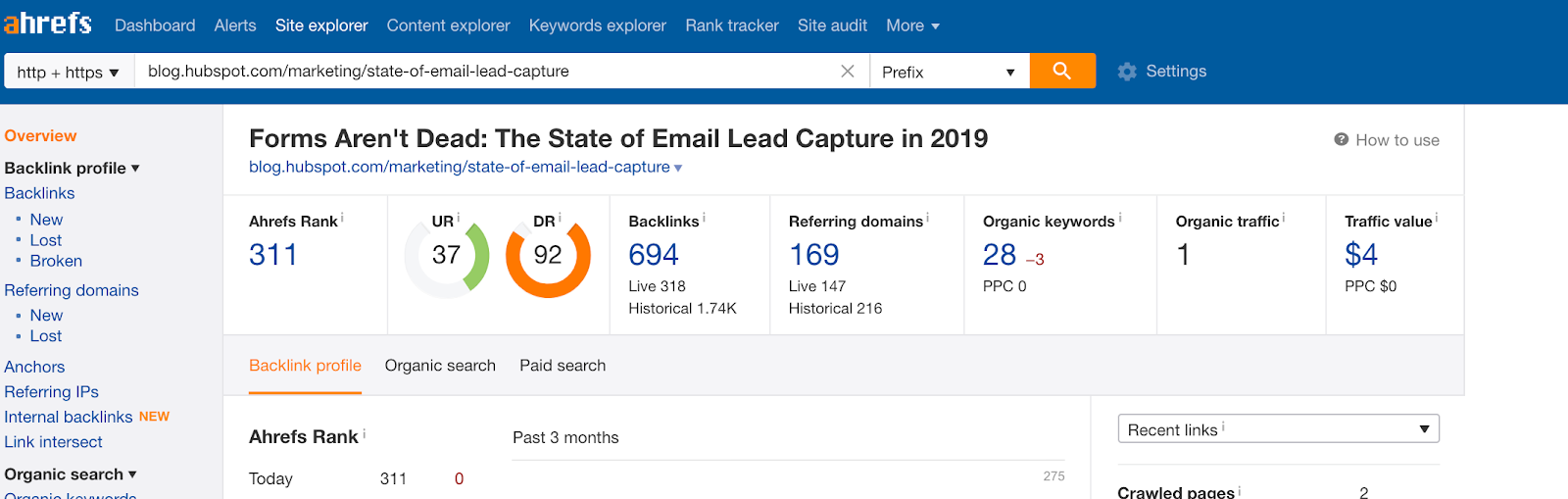
At Hubspot, we did some original research with the goal of getting some links back to our forms product. We published a blog post with the findings, and it was pretty easy to pick up some links because the data was new and interesting to bloggers.
ahrefs example of using research content to improve link building

Source: ahrefs

Exclusive quotes and interviews

Working with influencers is a strategy that works for tons of companies like DataBox, BigCommerce, and Mailshake.

For example, Smart Blogger uses round-up pieces to boost social shares and connect with influencers. They reached out to bloggers asking for their best tips on how to promote a blog, and the final article became one of their most successful posts at that time with more than 4,000 shares.

New images and graphs

Infographics and images can become outdated just as easily as blog text. As new research and information become available, images and infographics should be adjusted to reflect it.

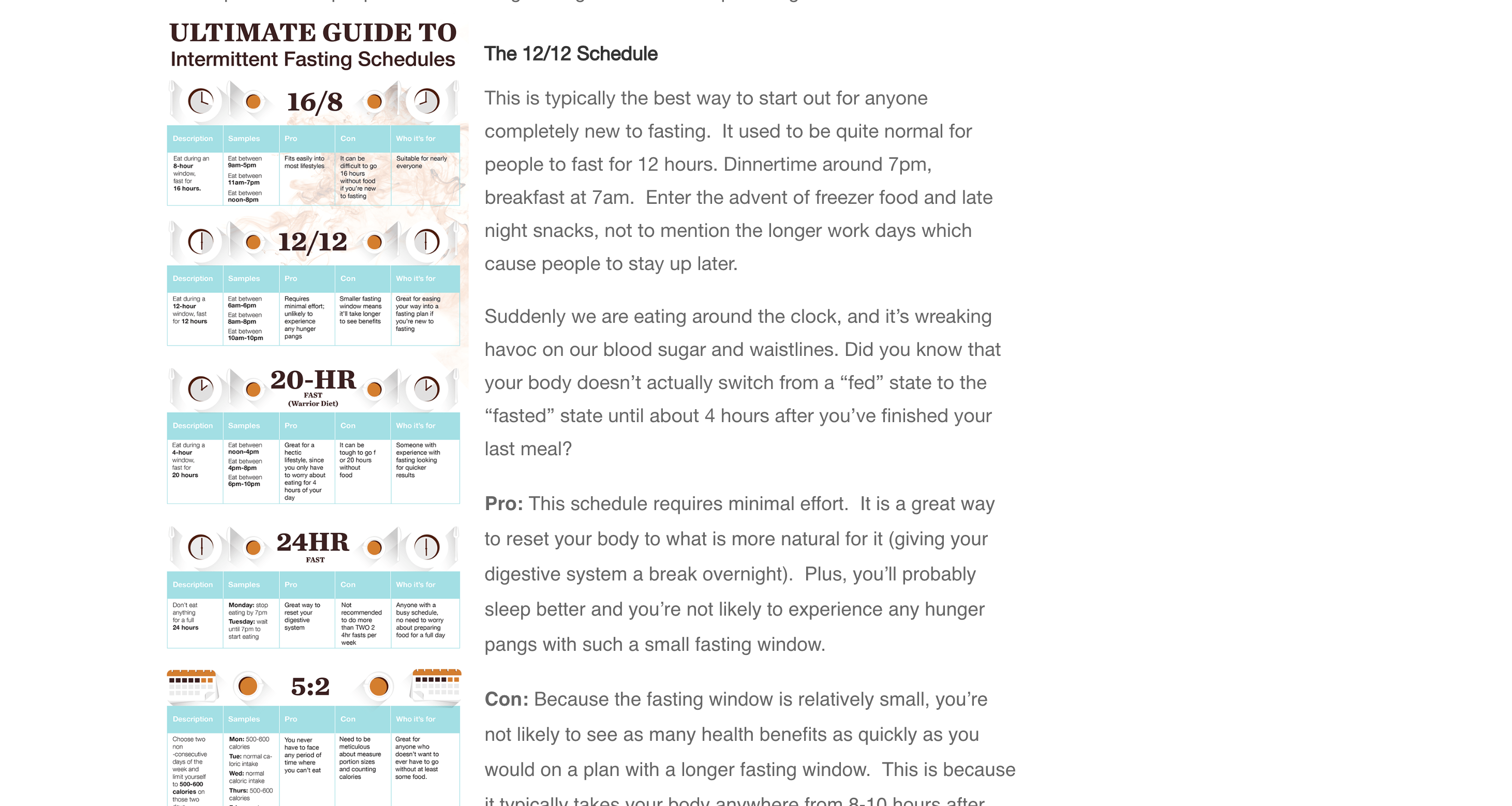
I think the infographic link building tactic is sometimes overdone, but it can still work if you do it right. It’s best when you’re summarizing new data or complex information in a simple and interesting way. A great example is Pique Tea’s guide to intermittent fasting (a complex subject):
Pique Tea's example of using infographics for link building

Source: blog.piquetea.com

SEO Smarty’s case study shows how they shared an infographic at scale using MyBlogGuest to get it in front of potential publishers (they earned 10 links from this method, by the way).

Or, you could do this the old-fashioned way by posting your infographic to your own blog, sharing seed content on social media, and reaching out to potential publications that could use it.

Anything that genuinely improves their content, ask yourself – “How can I improve tons of people’s content by creating something new?”

What questions do you have while reading content that goes unanswered? Could something you’ve written help to clarify?

LawnStarter does this well with their original research and data analysis pieces. For example, their blog post on the beneficial insects for your lawn includes backlinks to reputable sources for more information without distracting from the overall content.

Method two: Decrease friction

The other link building method is to lower the friction or the inherent effort it takes someone to give you a link. Your goal should be to make things as easy as possible for the person on the other side.

1. Make your outreach emails as clear as possible

Good email outreach means that the person on the other end of your email shouldn’t have to figure out what you’re trying to say. If they don’t understand your request, they probably won’t respond to it.

Keep it simple and professional, but don’t be afraid to infuse a little personality, either:

Alex Birkett's example of using email outreach for link building

Image Source

There’s no need for mystery or ulterior motives. Ask for what you want, and tell them why you’re asking for it.

2. Deliver your quote or link fully formatted and ready to go

Give publishers as little work to do as possible. This not only makes it easy for them to do what you want, but it also ensures the quality of the final results. Your link or quote looks just as you want it to, the anchor text is spot-on, and you can reach back out with a genuine “Thank you”.

Other sources you can tap into are HARO or even Slack groups where people are actively looking for quotes. This is a super low-friction way to get links – for you and the publisher – because the barrier to entry is low.

3. Provide free content by guest posting

Guest posting remains one of the most effective, low-friction ways to earn backlinks. If your post is good, the publisher has zero work to do other than hit “Publish”.

If you can write a good guest post, you’re giving someone content for free, which is a win-win. Many publishers have a dedicated contributor program, but even if you don’t see one on their website, they still may accept guest posts with a good pitch.

Also, don’t forget to reduce friction in your own process. Use a cold email tool like Mailshake and a good CRM like HubSpot to automate and track all of your efforts, and remove much of the guesswork on outreach and follow-up.

BJ Fogg’s behavior model has been applied to a myriad of practical use cases, but its potency for effective link building is hard to ignore. Increasing someone else’s motivation and decreasing friction might not help you earn every link you pursue, but it can help you win bigger and lose smaller the more you do it.

Alex Birkett is a Senior Growth Marketing Manager at HubSpot, where he focuses on freemium user growth. He can be found on Twitter @iamalexbirkett.

Whitepapers

Related reading

Don’t underestimate the power of video
set up google analytics annotations for google updates
Research The most common SEO errors
Delete your pages and rank higher in search - Index bloat and technical optimization 2019

This marketing news is not the copyright of Scott.Services – please click here to see the original source of this article. Author: Alex Birkett

For more SEO, PPC, internet marketing news please check out https://news.scott.services

Why not check out our SEO, PPC marketing services at https://www.scott.services

We’re also on:
https://www.facebook.com/scottdotservices/
https://twitter.com/scottdsmith
https://plus.google.com/112865305341039147737

The post Two simple behavioral levers to improve your link building efforts appeared first on Scott.Services Online Marketing News.


source https://news.scott.services/two-simple-behavioral-levers-to-improve-your-link-building-efforts/

Google Says It Does Not Ignore All Edu Links

John Mueller from Google said it is wrong to say that “Edu domains tend to have a ton of outbound links, and as such, Google ignores a big chunk of them.” He said “People who focus on .edu links usually have bigger problems to worry about, but I’ve certainly never said what you’re suggesting.”

This marketing news is not the copyright of Scott.Services – please click here to see the original source of this article. Author: barry@rustybrick.com (Barry Schwartz)

For more SEO, PPC, internet marketing news please check out https://news.scott.services

Why not check out our SEO, PPC marketing services at https://www.scott.services

We’re also on:
https://www.facebook.com/scottdotservices/
https://twitter.com/scottdsmith
https://plus.google.com/112865305341039147737

The post Google Says It Does Not Ignore All Edu Links appeared first on Scott.Services Online Marketing News.


source https://news.scott.services/google-says-it-does-not-ignore-all-edu-links/

On The Edge Of Google’s Quality Threshold – Pages Disappear & Return After Submission

Gary Illyes from Google posted an awesome question and answer on Twitter talking about pages that are on the edge of the Google quality threshold. He said that if your pages disappear from Google Search and then reappear when you manually submit them to Google, that means you’re on that edge.

This marketing news is not the copyright of Scott.Services – please click here to see the original source of this article. Author: barry@rustybrick.com (Barry Schwartz)

For more SEO, PPC, internet marketing news please check out https://news.scott.services

Why not check out our SEO, PPC marketing services at https://www.scott.services

We’re also on:
https://www.facebook.com/scottdotservices/
https://twitter.com/scottdsmith
https://plus.google.com/112865305341039147737

The post On The Edge Of Google’s Quality Threshold – Pages Disappear & Return After Submission appeared first on Scott.Services Online Marketing News.


source https://news.scott.services/on-the-edge-of-googles-quality-threshold-pages-disappear-return-after-submission/