Thursday, 1 October 2020

How to Create a Content Strategy Template

Having a solid content strategy is a sure-fire way to get a competitive advantage. There is so much content created blindly without purpose, and this approach doesn’t set you up for success.

Relying on “finger in the air” blog content, as an example, will not help you to create content that drives the results you need. This is one of the main reasons marketers who don’t see an impact from their content marketing efforts give up and stop allocating resources.

However, content can mean big money for your business. In fact, “the Content Marketing Institute’s digital content marketing stats show that 72% of marketers say that content has increased the number of leads that they generate.”

When you are developing a solid content strategy, you want to create different types of content that catches users at the right step of the sales funnel. From creating top-of-the-funnel content to end-of-the-funnel content, you will find that certain types of content will create potential customers that you can lead through the sales funnel.

In this guide, we will show you how to develop a content strategy that sets you up for success and provides you with a clear roadmap for creating and publishing content that produces measurable results.

Specifically, we’ll look at:

What Is a Content Strategy?

You must understand the difference between strategy and tactics when putting together a content strategy. Think about it this way: 

Goals: What you want to achieve
Strategy: Your plan to achieve this goal
Tactics: How you are going to execute this plan

If you have not set your goals, you will struggle to create a strategy template. And if you do not create a plan, how can you map out what you need to do to execute it?

You need to know where you are now, where you are going, and how you will get there.

As Re: signal’s Kevin Gibbons has previously commented on the importance of taking a strategy-first approach, “If you don’t know where you’re going, don’t complain about where you end up.”

Applying this to content marketing, a content strategy template helps you to figure out what content you need to create and to be able to justify why you are making it.

Why You Need to Develop a Content Marketing Strategy

You must be taking the time to plan a content marketing strategy, are regularly reviewing it and changing things up as needed, and understand how your content marketing strategy is going to meet your business’ goals. 

A well-developed content strategy helps you to:

  • Plan a content calendar based on opportunities that you have identified.

  • Keep sight of what your competitors are doing so that you can figure out how to do something better.

  • Keep focused on consistently creating content that aligns with your goals.

  • Use the right formats and distribution channels to place your content in front of your audience.

  • Know precisely who this audience is and the content that they want to consume.

Content marketing as a tactic does not just sit in its own silo. Done right, a great content strategy template can help you to:

  • Rank higher on the SERPs for your target keywords and drive consistent growth in organic search traffic.

  • Drive engagement across your social media channels and integrate with your social media strategy.

  • Position you as experts and specialist thought-leaders in your industry.

  • Turn your site’s browsers into buyers.

If you want to succeed online, you can’t ignore the power of content marketing.

An 8 Step Template For Creating a Content Strategy

Success starts with creating a content strategy, but knowing where to begin is often the most challenging part.

And to help you out, we have put together a proven eight-step template framework that you can use as a starting point.

1. Setting Your Goals and KPIs

It all starts with setting goals and KPIs. If you have not selected your goals, you have no strategy. But what goals should you be setting for your content?

This, to some extent, depends upon your broader marketing goals, but could include things like:

  • Drive an increase in traffic
  • Drive an increase in conversions 
  • Reduce your cost-per-acquisition by targeting an audience who is ready to buy
  • Earn topically relevant backlinks
  • Earn social media engagement
  • Increase brand visibility or market share

The fact is, you need to be thinking about your goals and KPIs before you start to figure out your strategy. Otherwise, you will be working blind.

While we can, of course, guide you on the goals that are commonly set by content marketers, you need to make sure you’re putting in place the plans that are meaningful to your business. 

Figure out what success looks like and set this as your goals and KPIs. Then make sure that these are SMART. Not sure what that means? It is a way of setting goals that ensure you keep these clear and achievable. Your goals should be:

  • Specific (Goals should be clear and precise to allow a definite focus on what needs to be achieved)
  • Measurable (You must be able to measure the progress of goals to know when you have achieved them)
  • Attainable (Goals should be realistic, yet should be challenging enough to motivate you)
  • Relevant (Goals should be relevant to your broader business objectives and make sense when achieved)
  • Time-bound (You should always set a timeframe for goals to be measured against to maintain focus)

Goals help you to keep everyone’s efforts focused and act as the base for your strategy. 

2. Researching Your Audience Personas

You need to know who you are creating content for to be able to effectively make the content that they want to consume. An effective way of doing this is to create buyer personas

In the guide referenced above, Natalia Zhukova states that:

Even existing businesses have to redefine the portrait of their audience from time to time, not to mention newbies who are just about to create their go-to-market strategy.

When you take the time to understand your audience and create the content that they are actively looking for, this shows in your results.

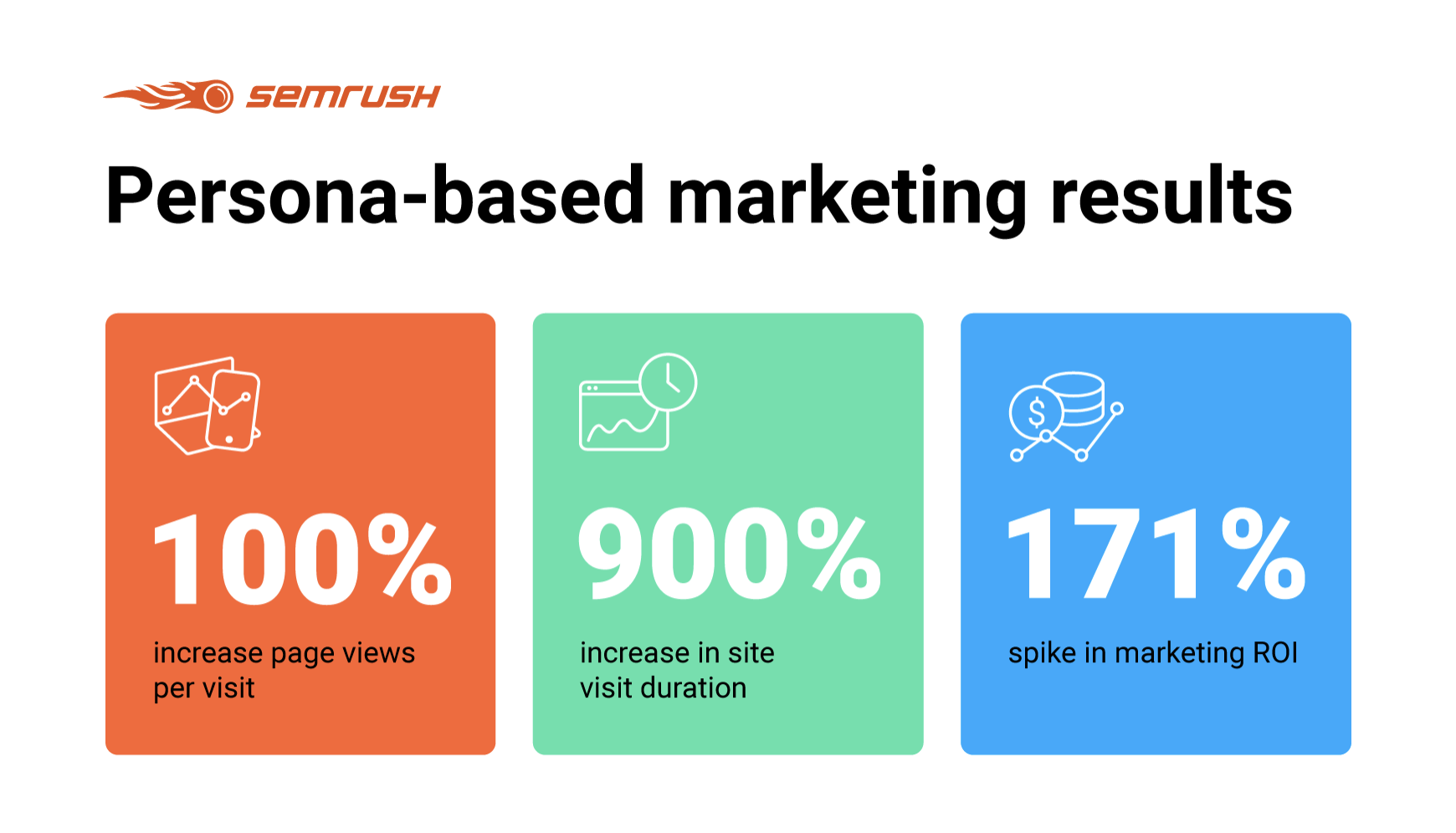
A study by NetProspex revealed that the creation of buying personas increased the number of pageviews per visit by 100%, saw an increase in site visit duration by 900%, and an increase in ROI by 171%.

SEMrush persona-based marketing infographic

Ideally, you will create several different personas that align with the various audiences that your business targets, building out a profile for each (complete with a fictional name and avatar) across the likes of:

  • Persona demographics (age, gender, annual income, location, family status, level of education, etc.)
  • Professional status (job title and level, industry and responsibilities)
  • Psychographics (personal and professional goals, beliefs, and values)
  • Pain points and challenges (personal and professional struggles and hurdles to overcome, Irrational/rational fears, and pain points)
  • Influences and information sources (where they consume content online and offline, influencers and thought leaders they respect and follows, and events they attend)
  • Purchasing processes (their role in the decision-making process, lifetime cycle, and purchase blockers)

Upon completing this exercise, you should have different personas and a wealth of insight into who these individuals are. 

To help out, you can download our buyer persona template and fill this out before feeding this information into your strategy, using it to inform the content that you’ll be creating. 

3. Conducting a Content Audit

Once you have collected the insights you need on your audience and have set goals and KPIs for your content strategy, it is time to get to work on diving deep into your site’s current content performance by conducting a content audit.

Many marketers make the mistake of jumping straight to creating new content as default, but the fact is that almost all sites can benefit from optimizing existing content as the first step. 

Just think about it this way…

Every single page of content on your site needs a purpose. After all, if a page isn’t serving a purpose, why does it exist?

A content audit can help you to understand how every page is currently performing and allow you to identify quick-win opportunities. And trust us when we say that quick-wins are always a great starting point when executing your strategy. 

You can use the SEMrush Content Audit Tool to help you to build up a picture of your site’s content inventory and give you the data that you need to inform your strategy and make decisions around critical priorities. You can use the tool to analyze your site’s existing content based upon data from sources including your XML sitemap and return a list of URLs and associated metrics.

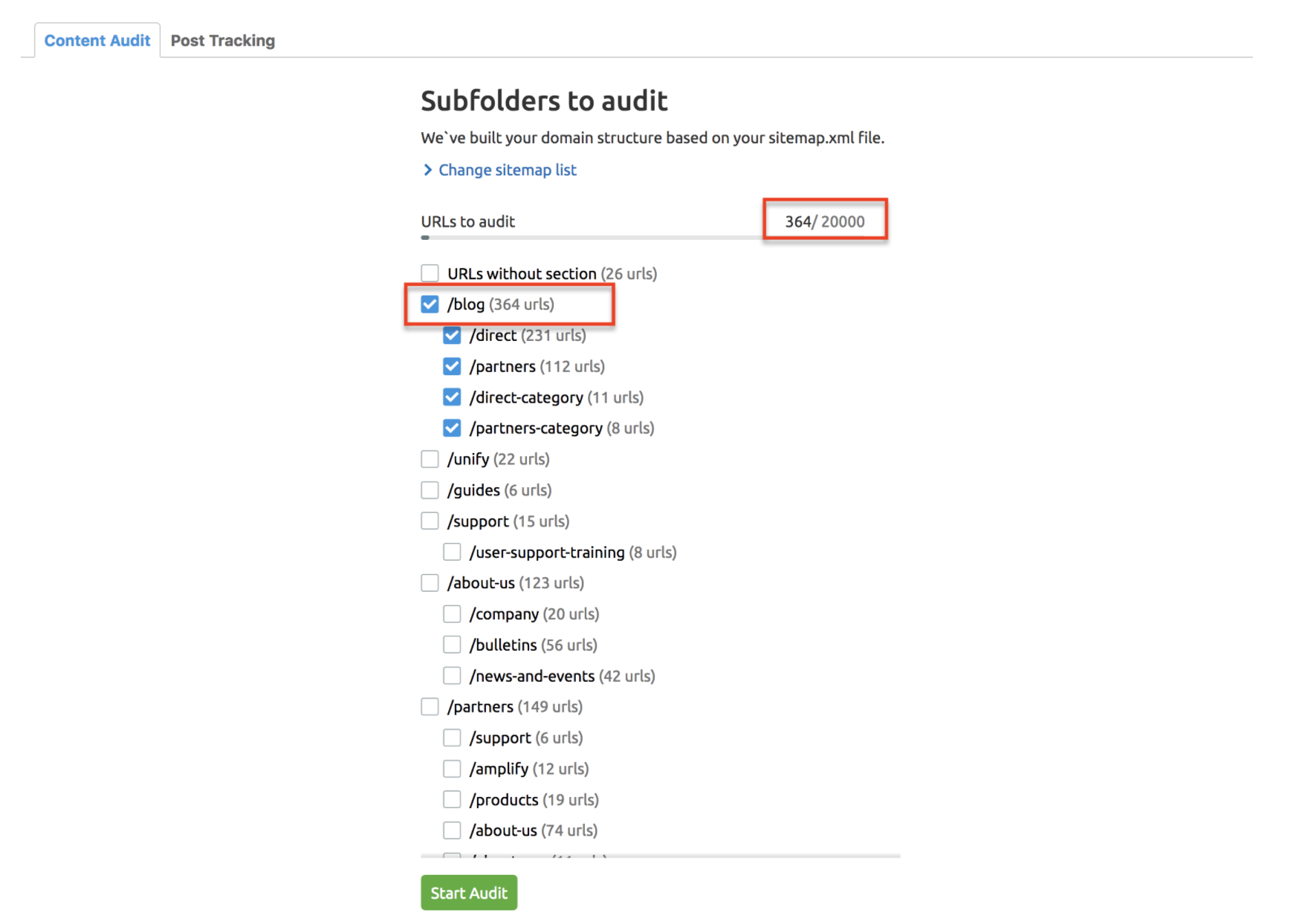
You can either audit your entire domain or break this down by subfolders:

SEMrush Content Audit folders

Running a content audit should result in you having an easy-to-understand content inventory that gives you the data you need across traffic, backlinks, social shares, and more so that you can pull out actions.

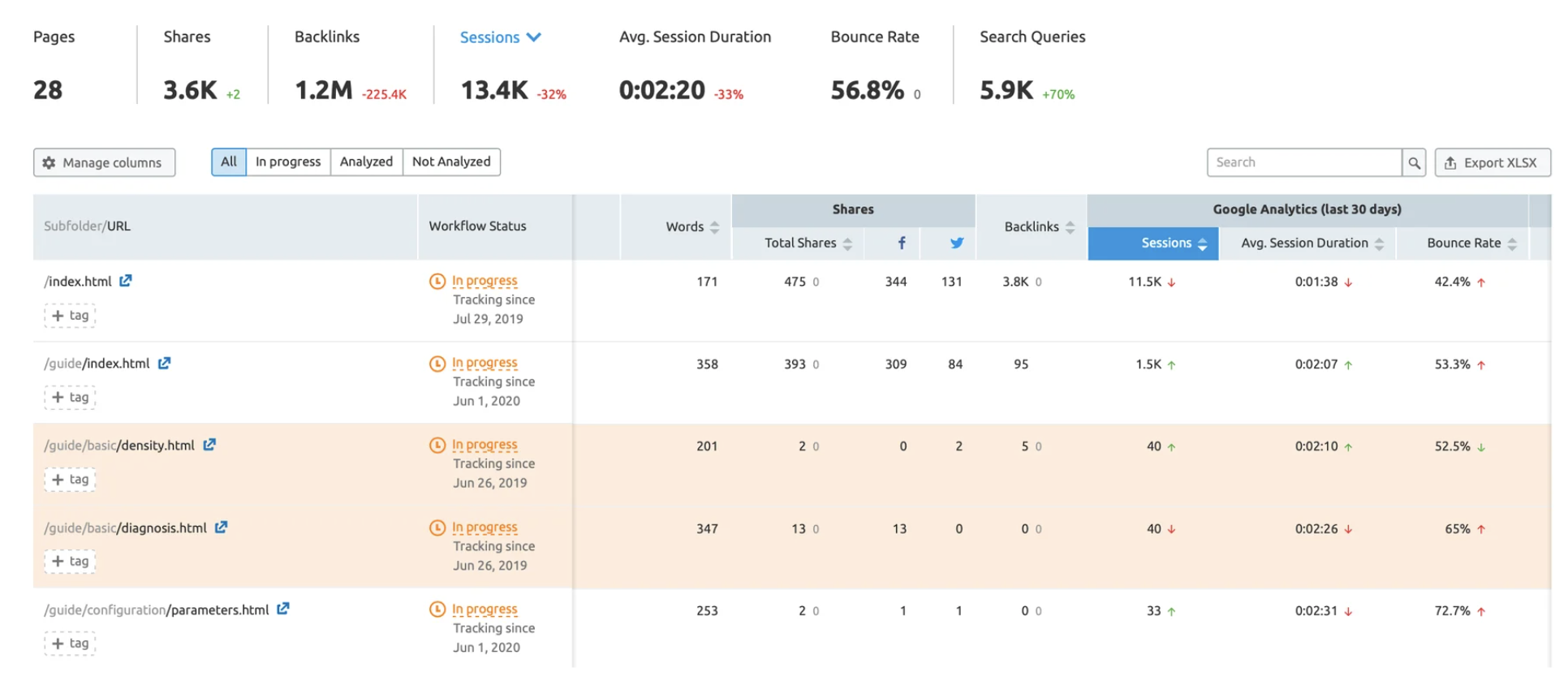
SEMrush Content Audit screenshot

Think of the audit phase as collecting your data into a simple format, and then using it to prioritize your actions. If you do not take the time to run this audit, you will likely rush into the creation of new content too soon and overlook the opportunities that you can act upon to make the content you already created work harder. 

4. Prioritizing Optimizing Existing Content

So, now that you have run a content audit and have the data that you need to feed into your strategy, it’s time to determine where you should start. 

You are going to work through every page on your site (yes, really … if you do not do this, you are not going to see the bigger picture. If you are working on a large site, you can always run this exercise in sections) and assign each page URL one of four actions:

  • Keep

  • Improve

  • Remove 

Using this simple but useful framework for turning an audit into actions is the key to finding and maximizing the opportunities. 

But let us dig a little deeper to look at what each status means and how to reach this decision.

  • Keep (Content that is performing well, drives traffic each month, and has earned backlinks)

  • Improve (Content that is not performing but could be working harder if it was improved or optimized)

  • Remove (Content that is not currently performing and does not warrant being improved)

The good news is that you can configure the content audit tool to group your site’s pages into these buckets based upon criteria that you define:

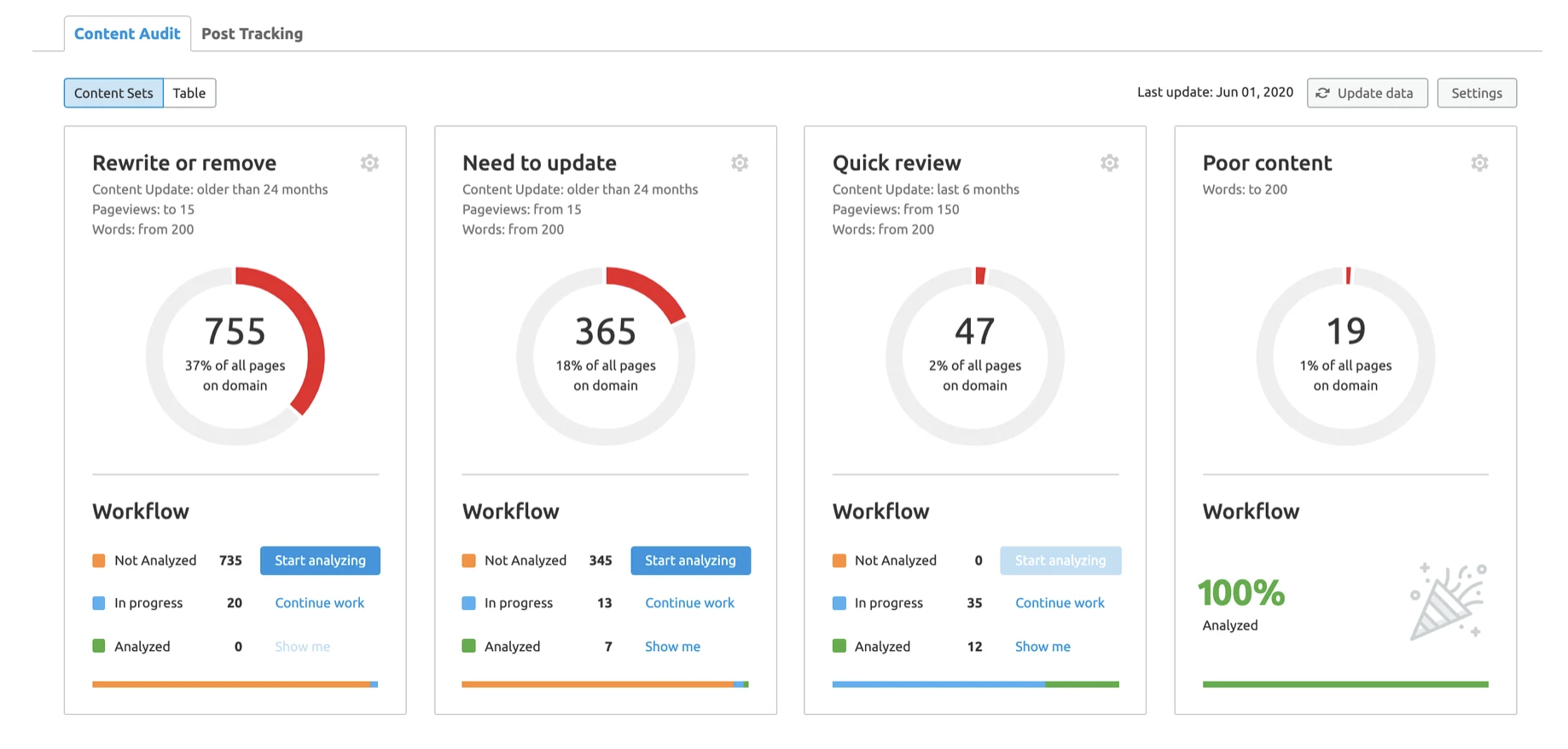
SEMrush Content Audit groups

Once you have audited your site’s existing content, you should have a list of actions to make these pages work harder.

But when it comes to improving each page, you need to understand why those that are not currently performing fall into this group.

It could be that:

  • Your page does not dive deep enough into a topic to deserve to rank in a top spot
  • The intent of your page isn’t right (see our guide to identifying intent in search to learn more)
  • Your page has not earned enough backlinks compared to the competition
  • You are not targeting the right keywords (or are targeting keywords that you do not have sufficient authority to rank for)

A great starting point is to run your pages through our SEO Writing Assistant when you come to optimize the content as a way to help focus your efforts on improving each one efficiently:

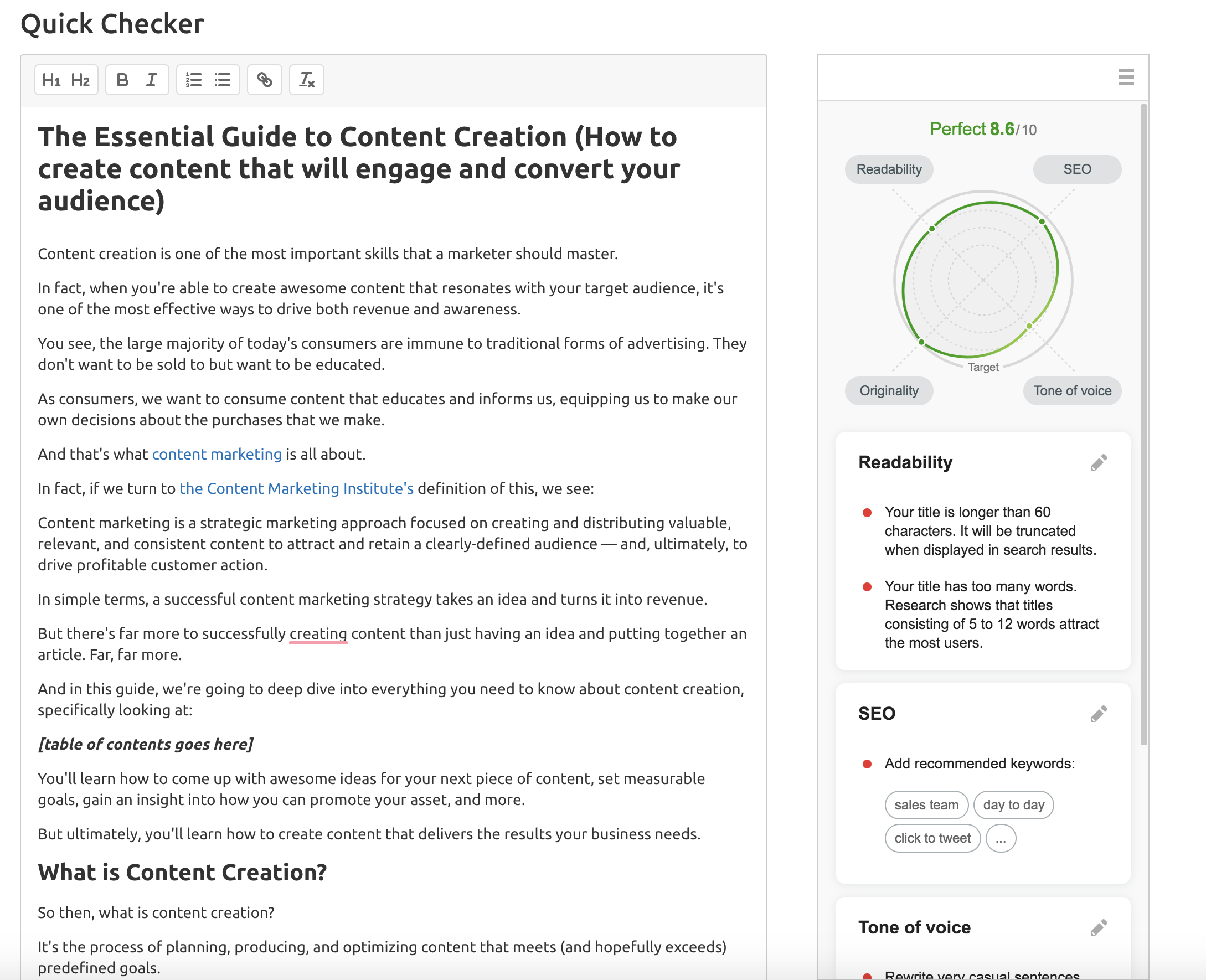
SEMrush Search Writing Assistant

5. Finding Content and Keyword Gaps

While optimizing your site’s existing content should play a key role in your content strategy, working with this is only going to get you so far.

Sure, some sites will have more opportunities to improve current pages than others, but every strategy must efficiently balance optimizing existing content with creating new pages and posts. This means that you need to map out opportunities as part of your plan.

You can do this by identifying keyword gaps. Keyword gaps are search queries that your core competitors are ranking for, but you are not currently targeting.

Need help discovering your keyword gaps? Use the SEMrush Keyword Gap Tool to help you to do this.

Enter your domain as well as up to four competitors, and you will be able to analyze the keywords that your competitors are visible for but that you are not targeting (filter by the ‘missing’ tab):

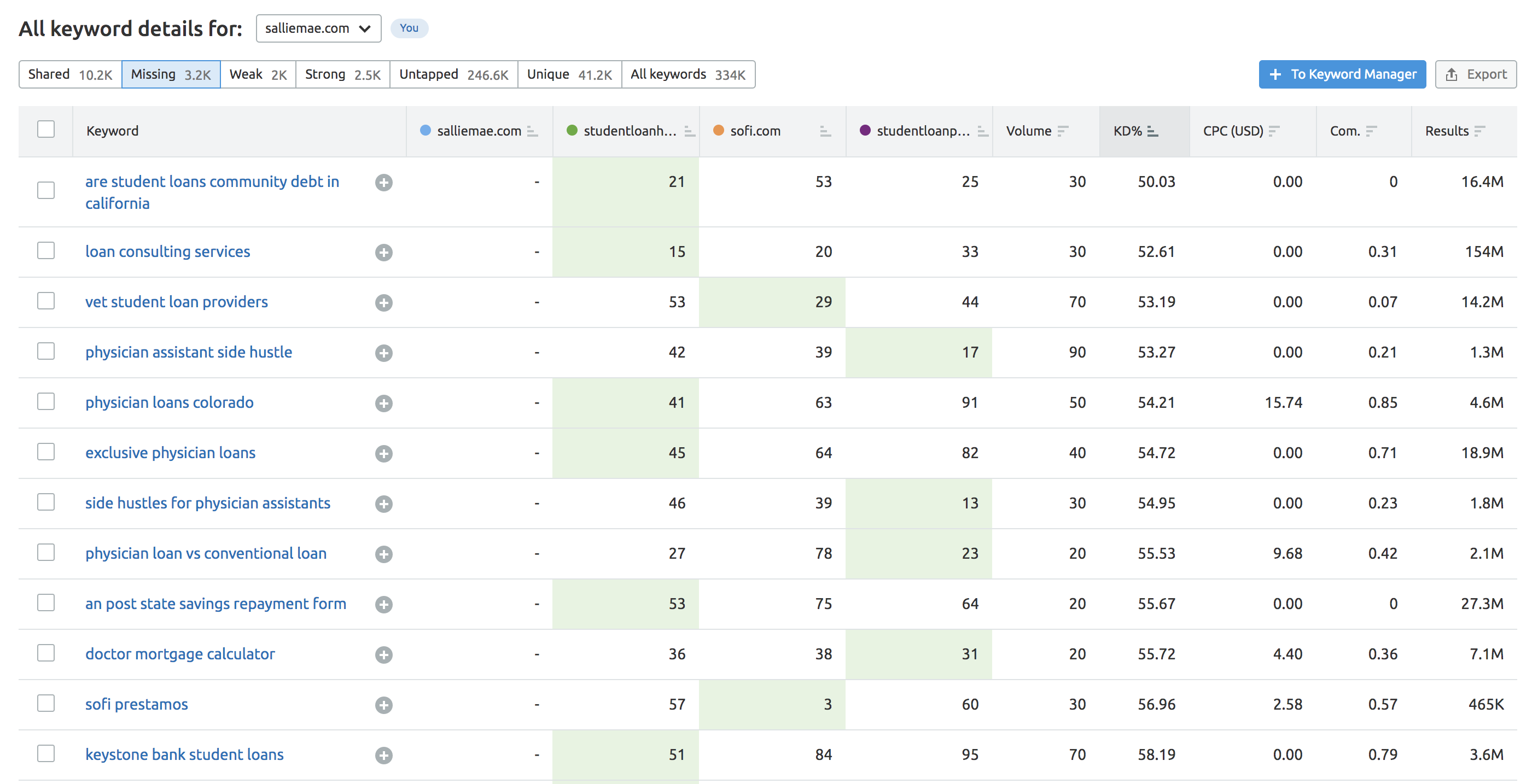
SEMrush Keyword Gap Tool screenshot

This is a great starting point to help you to build out a strategy that fills the gaps between yourself and your competitors. It also allows you to find opportunities that you have previously missed. However, you’ll want to go one further and rely on more than just what your competitors are doing. After all, they might have missed opportunities, too.

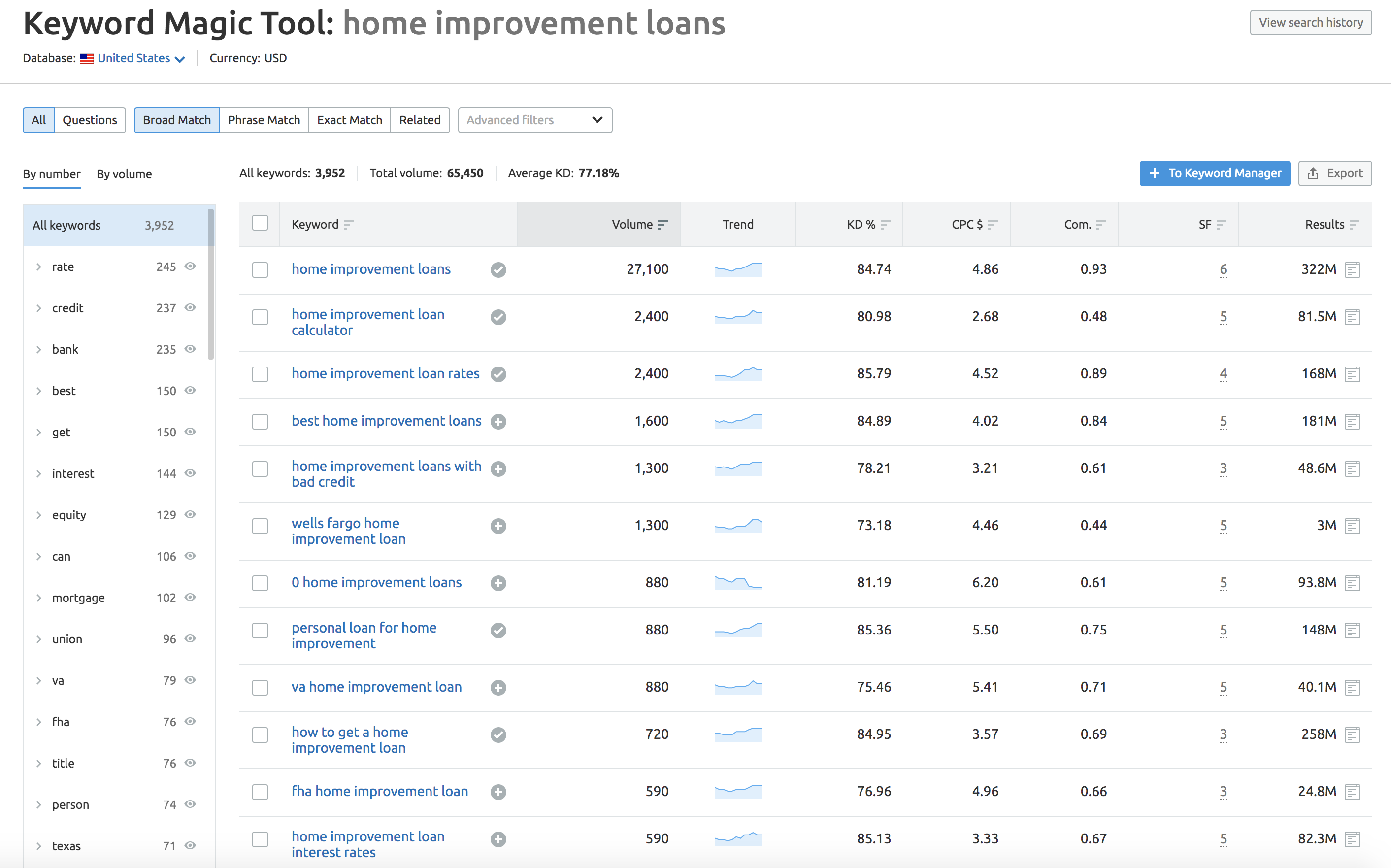
We recommend using the Keyword Magic Tool to identify additional keywords to target to build a solid content plan and editorial calendar.

SEMrush Keyword Magic Tool screenshot

Read our 2020 Keyword Research Guide for SEO to learn more about how to do this and find fresh opportunities.

Lastly, there’s a lot of insight that can be gleaned by analyzing your keyword performance. Head to the Organic Research Tool and open up the ‘positions’ tab.

Here, you can find a list of all of the keywords that your site currently has visibility for. We recommend filtering for positions No. 6 – No. 20 as this shows keywords that are within striking distance of placement within the top 5.

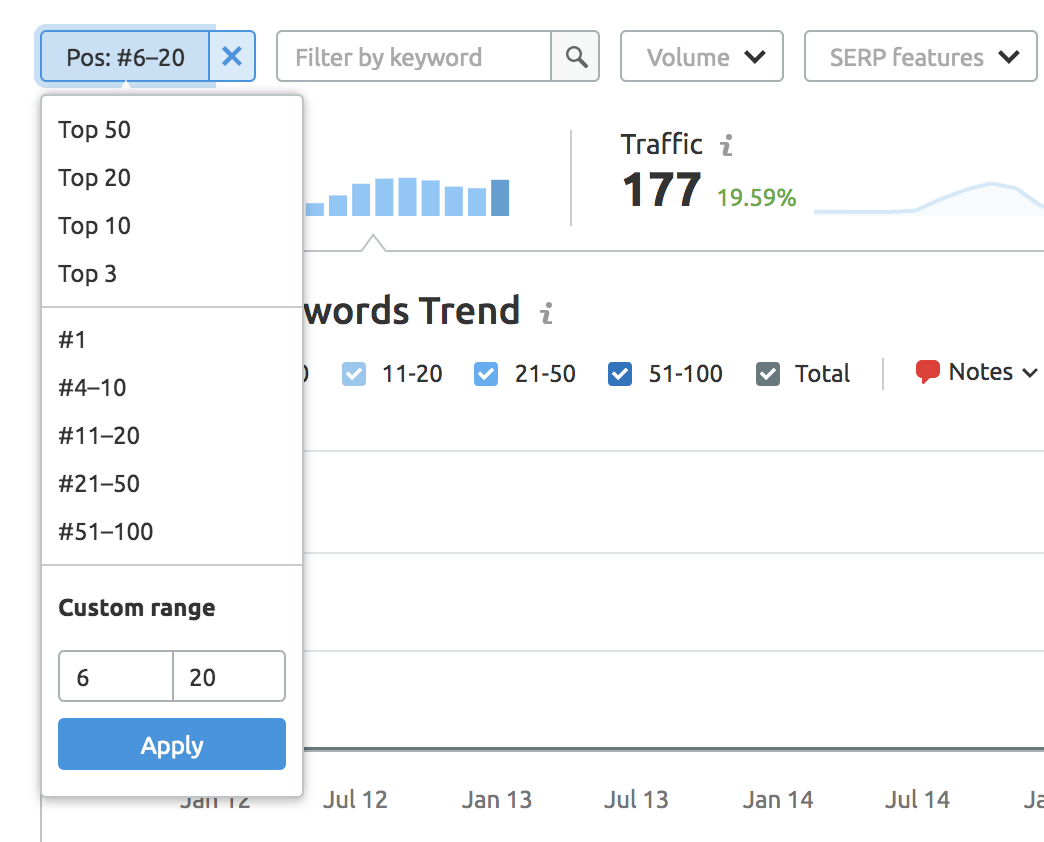
Organic Research Top Positions screenshot

You can analyze keywords that you are visible for against the page that’s ranking, looking for keywords that do not closely match the intent or content of the page.

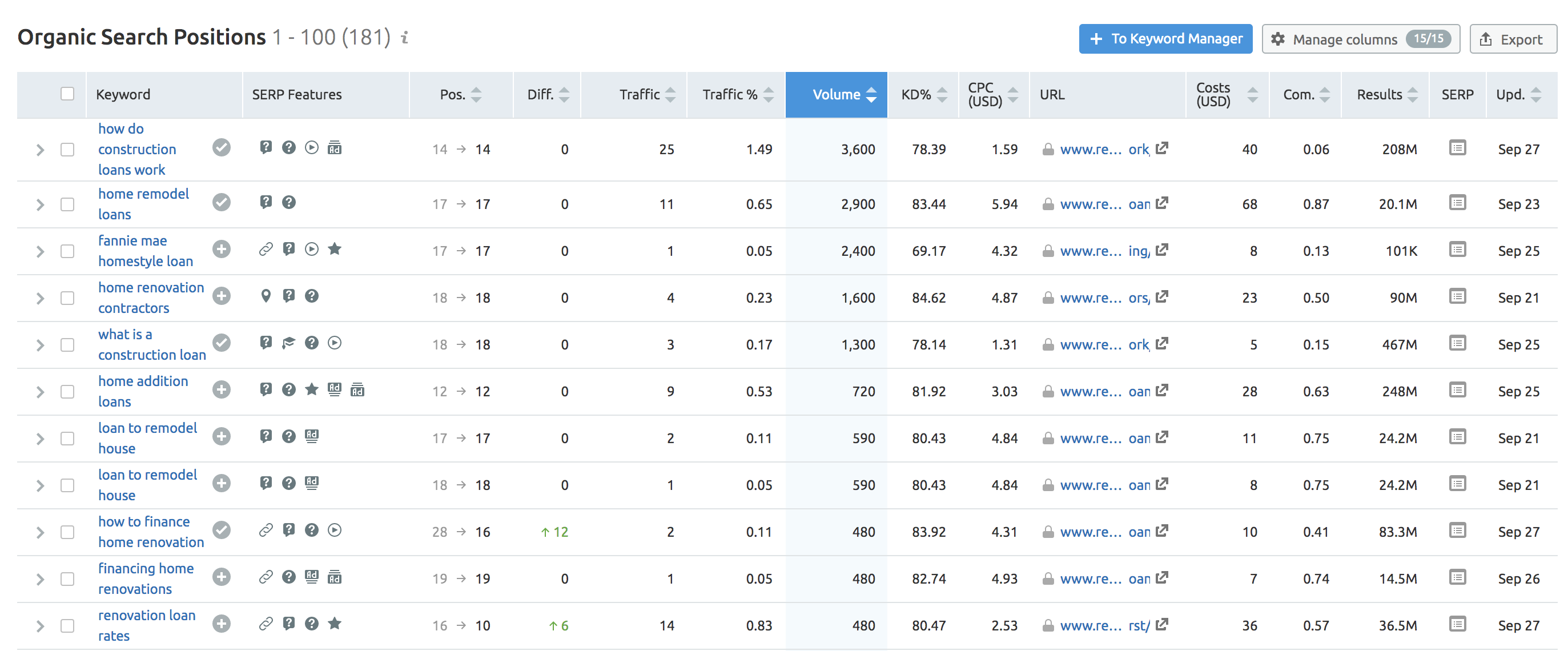
Organic Search Positions screenshot

You can find opportunities to target specific search terms by creating highly relevant content and adding internal links from the original page that’s visible. 

6. Planning New Content

Once you have identified keywords and topics for your new content, you need to take the time to plan these pieces properly. It is often the case that content is prepared and written by different people. A solid plan is an effective way of communicating the needs of a piece to a copywriter that they can reference during production.

And this comes down to two things:

  • Analyzing and understanding search intent
  • Building out content frameworks that a copywriter can follow

Analyzing Search Intent

You need to know the intent of the content that’s already ranking to create a piece that competes. This can come down to analyzing the pages that rank in the top 10 positions for your main keywords.

Head to Google and search for your primary keyword. What’s the intent of the pages that are ranking? These could be:

  • Transactional
  • Informational
  • Navigational

For example, if a searcher intends to find information, you would struggle by attempting to rank an eCommerce category. Likewise, if the intent of a searcher is transactional, you will not need to create that 5,000-word guide you have been considering.

Looking for another real-world example? Let’s look at the data behind a search for the term’ finance internships.’

This term is searched for 6,600 times each month. It’s clear why you may be considering targeting this keyword.


finance internships keyword data screenshot

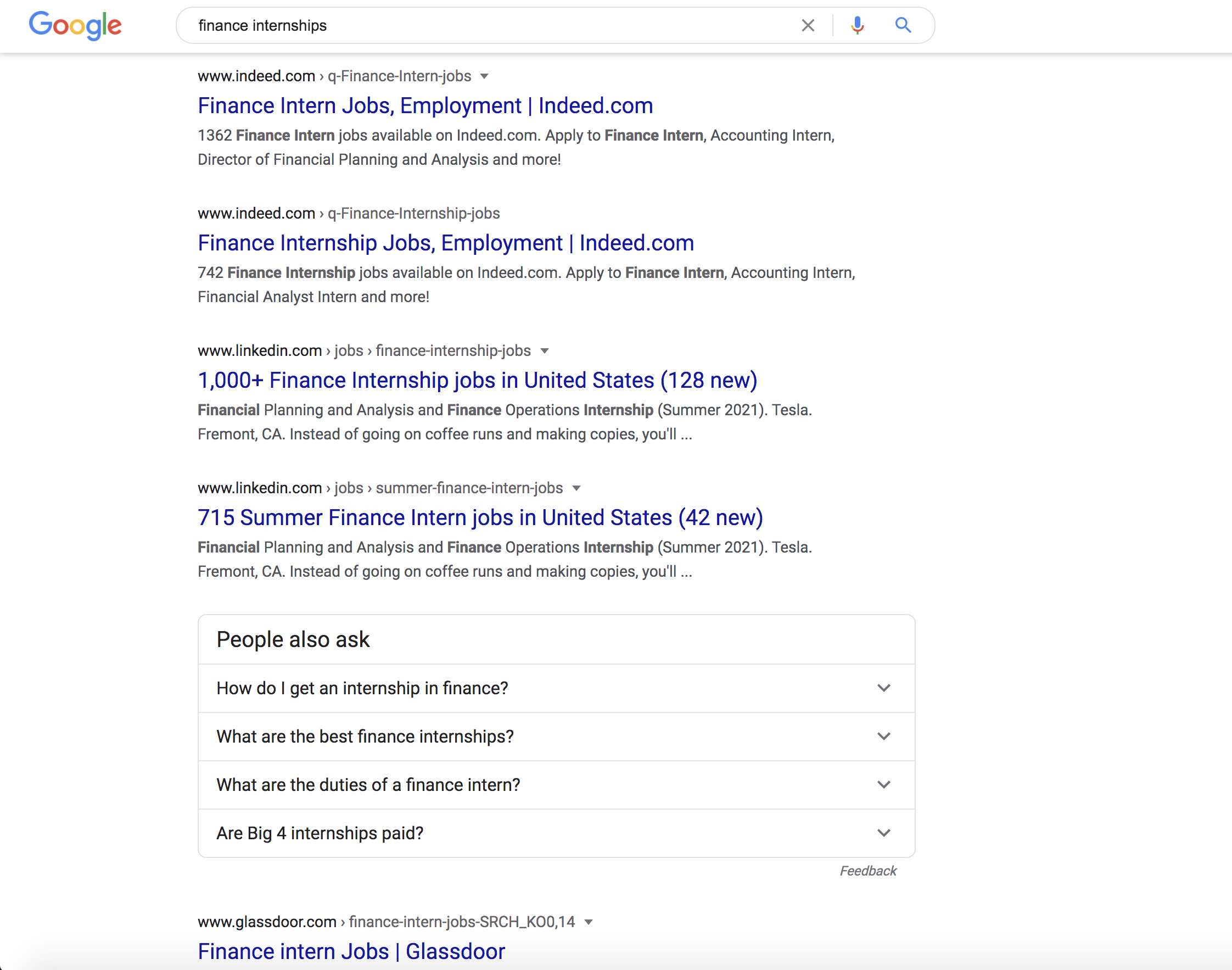
Now, we will head to the SERPs to find out what’s ranking:

finance internship SERP results screenshot

That the intent of a searcher who is entering this keyword is to find an internship, if you want to rank for this keyword, you are going to need a list of live internships that can be applied for, not a guide that details the process.

Be sure to analyze the intent of the keywords you will be targeting in your content so that you can use this insight to steer the format and type of page you’ll create. 

Building a Content Framework

It always helps you be able to provide a copywriter with a framework for every piece of content that you are asking them to create so that they have the insights needed around things such as:

  • Your primary keyword(s)
  • Secondary keywords
  • Optimal word length
  • Terms to include in the title and meta description

You can use the SEMrush SEO Content Template to quickly and effectively produce frameworks that your copywriters can work from to produce optimized rank-ready content.

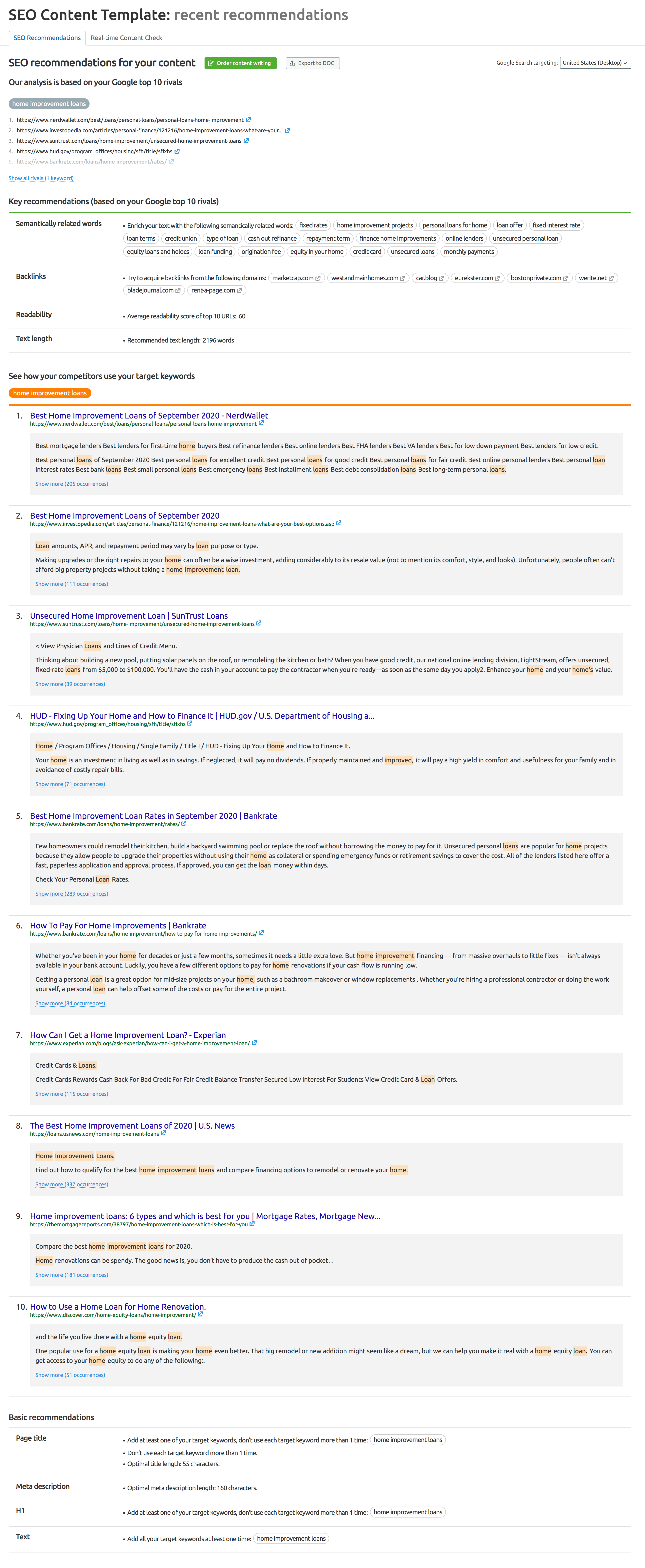
SEMrush SEO Content Template screenshot

7. Crafting a Content Distribution and Promotion Strategy

Unless you promote your content, it is unlikely that your efforts will result in a roaring success. Despite what many might claim, very few businesses can publish content and see these pieces perform without an effort taken to distribute and amplify them.

According to the 80/20 Pareto Principle, you should be spending 20% of your time on content creation and 80% on promotion.

It might sound crazy, but it works.

If no one knows about your content, how can you expect them to take action from it? How will you drive traffic to your pieces? It’s simple; you won’t. Or, at least not for a while.

There are hundreds of ways you can promote your content, but you need to be mapping out your approach to distribution as part of your strategy.

Popular and effective ways to distribute and promote your content include:

  • Sharing across social media
  • Collaborating with influencers
  • Running paid social media ads
  • Including in your email newsletter
  • Email outreach
  • Sharing on platforms such as Reddit

Check out our guide on content promotion hacks and tips from experts to arm yourself with a whole host of ideas that you can use to promote your next piece. 

In this, we asked several industry experts the all-important question of:

Is there a possibility that unique content will promote itself? Why?

Take a read of the guide to see the answers for yourself, but the consensus is that you will need to put in the effort to promote every piece if you want to see the best results. 

8. Measuring Success

You started creating your content strategy by setting goals, and now you will end it by mapping out exactly how you’re going to measure the success of each piece that you publish.

Now, so long as you set SMART goals, you should already have a pretty good idea of how you will measure the performance of your content, but this will typically tie back to the goals you set.

We recommend setting weekly intervals to measure performance, always analyzing back against the goals you set out, and recording the progression against the time-bound metric you put in place.

Did you set a goal of doubling organic traffic within six months?

Weekly, you would want to measure the metrics related to this (organic hits, impressions, and ranking positions, as an example) and showcase where things are now against both the benchmark point and your end goal. A weekly check-in on performance also helps you to make changes to your strategy should you need to do so, based upon the results you are seeing. 


Putting together a solid content strategy is all about building solid foundations. Without it, your efforts will be wasted. Take the time to get your strategy right, but do not feel you need to reinvent the wheel every time.

Follow our proven template format that we have shared above, and you will see that creating a content strategy can be based around a tried-and-tested approach that works hard to drive results time and time again.

This marketing news is not the copyright of Scott.Services – please click here to see the original source of this article. Author:

For more SEO, PPC, internet marketing news please check out https://news.scott.services

Why not check out our SEO, PPC marketing services at https://www.scott.services

We’re also on:
https://www.facebook.com/scottdotservices/
https://twitter.com/scottdsmith
https://plus.google.com/112865305341039147737

The post How to Create a Content Strategy Template appeared first on Scott.Services Online Marketing News.


source https://news.scott.services/how-to-create-a-content-strategy-template/

Contact Us Page Tips: Move From Blah to Yeah!

contact us page tips

A visitor hits your website and wants to talk to you. What does that person start searching for?

Your Contact Us page.

It’s a page on your site that pushes visitors from browser to buyer.

Contact Us pages are among the most underutilized and misunderstood resources on the web today.

Some companies don’t use them at all, and those that do have them often push these critical pages to the back burner during website revision projects.

That stops today.

I’ll share a step-by-step plan you can follow to strategize and revise this lowly web page. And I’ll use plenty of examples to spark your creativity.

Let’s get started.

What Is a Contact Us Page?

Think of a Contact Us page as a sort of digital business card. Sure, it’s short and concise. But if someone wants to reach out to you, they’ll use this page to do so.

Contact Us pages often get lumped in with other critical website resources, including:

  • About Us pages: Use this resource to explain your company’s history, goals, and direction. If someone wants to know how you became a leader in your field, the data is ready to go.
  • Help pages: Customers with critical product or service questions lean on this page to get their answers.
  • Employment pages: Job seekers need private, protected spaces to learn more about open opportunities.

A Contact Us page is different because you’re telling people more about getting in touch with you.

Your page should also embody your brand and entice that click. If your Contact Us page is the blandest one on your website, you’re not alone. The best contact us pages contain some value proposition, even when they don’t have a lot of text.

Do You Need a Contact Us Page?

A Contact Us page can’t be skipped because it is a trust signal. Share location information and highlight your phone number and email, and you’ll demonstrate to wary consumers that they can reach you at any time.

Trust and transparency matter in marketing. Contact Us pages start the process.

Five Key Contact Us Page Elements

You know you need a Contact Us page. But you have no idea what to put on the page. Push past the writer’s block, and follow this recipe for success.

A converting Contact Us page contains these critical pieces:

  1. Your company name: Don’t beat around the bush. Use your full company name.
  2. Your physical address: This can get tricky for multi-location companies. Maps often solve the problem (and more on that in a minute). If you share only one address, use the one associated with your corporate headquarters.
  3. A map to your location: Google Maps hold immense power for marketers. When customers know where you are, even when they’re looking at a mobile device, your conversion rates can skyrocket. Boost that power by adding a Google Map to your Contact Us page.
  4. Your contact information: Include a phone number, email address, and a quick data-collection form. Customers need plenty of calls to action. Fight off spam with a CAPTCHA as well.
  5. Links to relevant pages: If you know customers have product questions, show them to your Help page. If you have plenty of job seekers, highlight that Jobs page.

Don’t be tempted to clutter up the page with more details and data. Keep things clean and streamlined with this list.

Build the Perfect Contact Us Form

If you’re looking for a way to streamline customer conversations, forms are key. If you build forms correctly, routing questions is a snap.

Your form could include several fields, including:

  • Name
  • Location
  • Current customer (Y/N)
  • Question
  • Email address
  • Phone number

You might be tempted to add all of these fields to your form. The more data you have, the better, right?

Not always.

When customers face a sea of questions, they tend to click away. Form completion rates and added fields are inversely related.

To keep those conversion rates up and deliver exceptional user experience, only ask critical questions.

10 Exceptional Contact Us Page Examples

I’ve talked a lot about what should and shouldn’t go on a Contact Us page.

These ten companies have lessons anyone can apply.

Streamlined and Simple: Scorpion

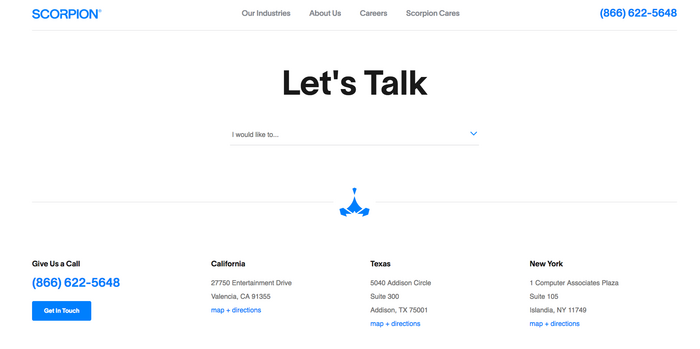
Scorpion offers internet marketing services to law firms, hospitals, franchises, and more. The company shows off robust design skills on all other web pages. But this one is remarkable in its simplicity.

Customers answer one simple question with a dropdown. The answer routes them to an appropriate secondary form.

Scorpion contact us page example

Customers can also skip the hassle of forms altogether, call the number in the top-right corner of the screen, or visit one of three locations listed at the bottom of the page.

Brand Promise First: BarkBox

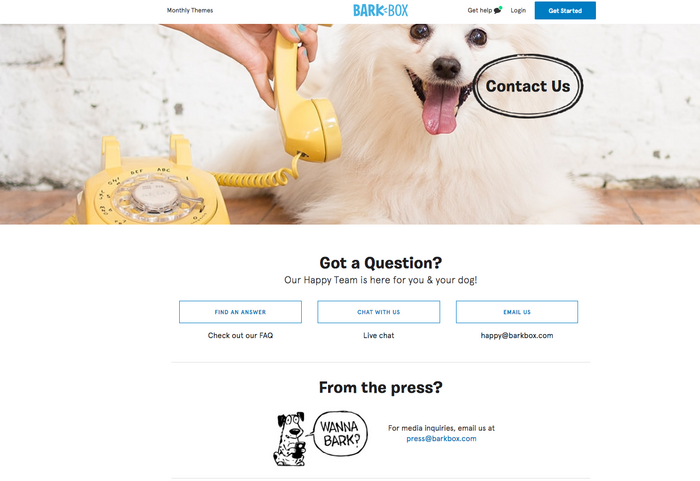
A subscription service for happy dogs should have a dog’s photo on a Contact Us page. And that dog should look happy. BarkBox has that element covered.

barkbox contact us page example

Customers have three different contact options sitting below that big image. They can search FAQs, start a live chat, or send an email. It’s a simple, streamlined interface made for busy dog lovers.

Personality Plus: Kick Point

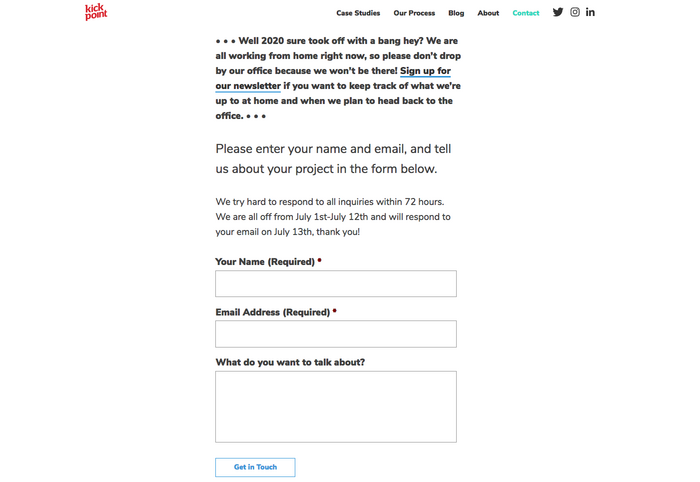
This Canadian marketing firm kicks off the About Us page with a chatty, conversational tone.

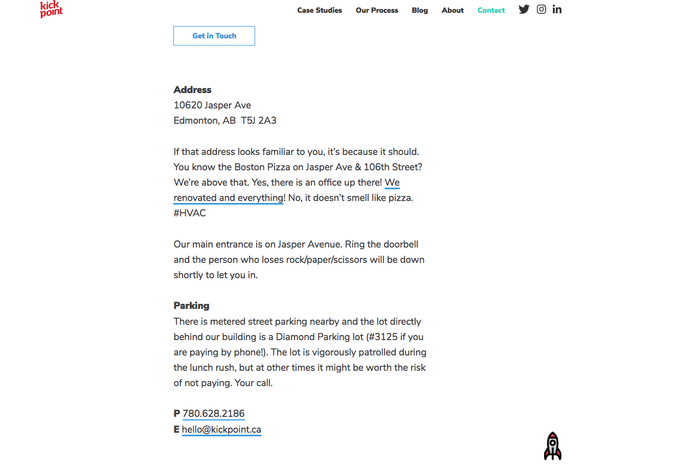
Keep scrolling, and that clever voice keeps speaking. When you reach the bottom of this page, you know just how these employees talk and write.

kick point contact us page example
another kick point contact us page example

The cleverness doesn’t impede clear communication. You’re told the company’s address, email address, phone number, and more.

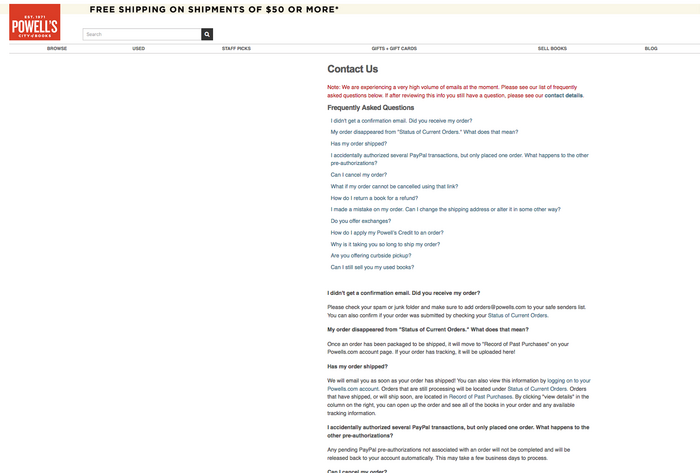
Crisis Communication: Powell’s Books

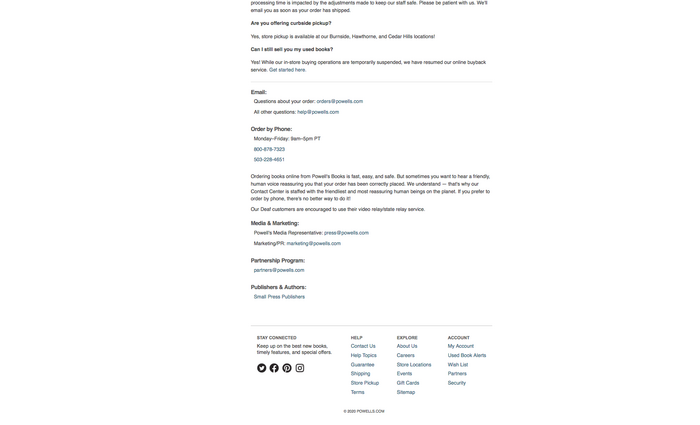
Powell’s puts customer communication front and center on this Contact Us page. Timely content about shipping delays comes first. Keep scrolling, and you’re taken to email addresses and phone numbers.

powell's contact us page example
powell's books contact us page example

Typically, converting Contact Us pages are short. But you can break the rules when the unexpected happens.

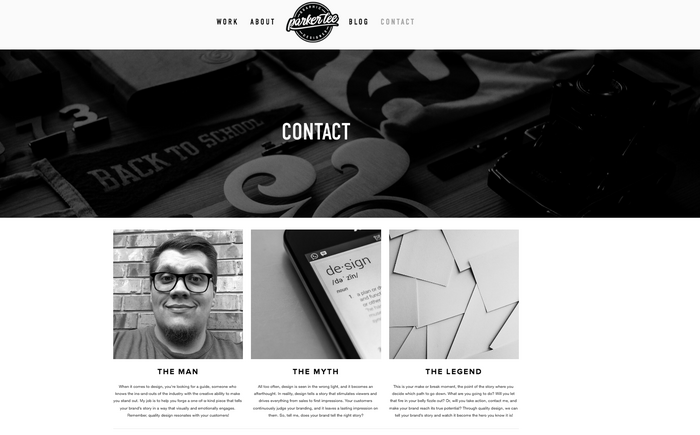
Arresting Graphics: Parker Lee

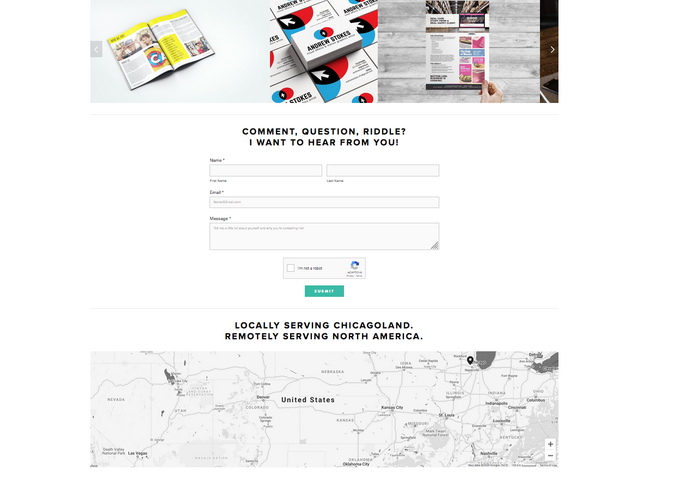
People hire Parker Lee to design logos, websites, and other branded elements. He puts those skills to work on this visually arresting Contact Us page. The page begins with a brand statement, but scrolling past that is a snap.

parker lee contact us page example
parker lee contact us page example map

A simple form with just four fields appears, and a clever map rounds out the page.

Forms Do the Hard Work: Six Leaf Design

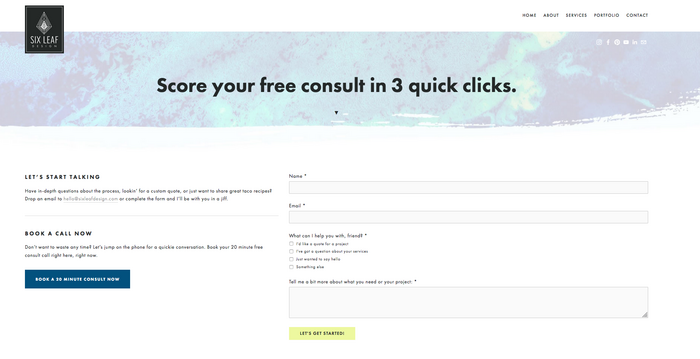
This company emphasizes sales on this Contact Us page. A three-field form, with a tiny multiple-choice quiz, gets potential customers a price quote.

sixleaf contact us page example

A blue button for anxious customers leads right to a 20-minute consult appointment. For companies hoping to emphasize lead generation, this is a smart model to follow.

Friendly Faces: Byte

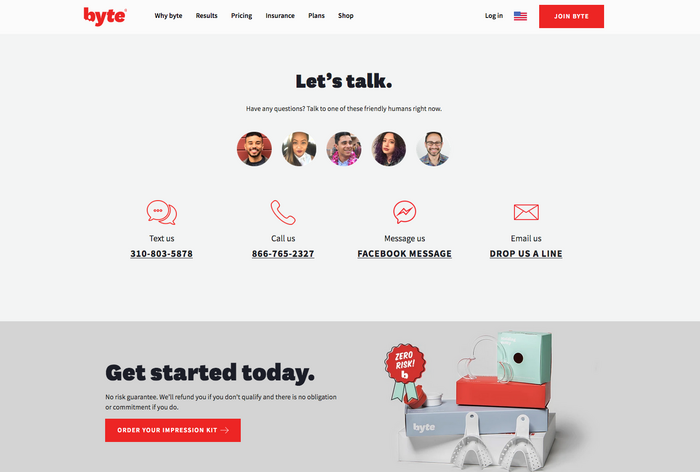
Who will customers talk to when they reach out? Byte answers this question with photos of real-life customer service reps ready to respond to questions.

byte contact us page example

Choose from multiple contact formats, including text, email, Facebook message, and email. All of this data is streamlined, so white space surrounds the page.

Product Photography: Freshly

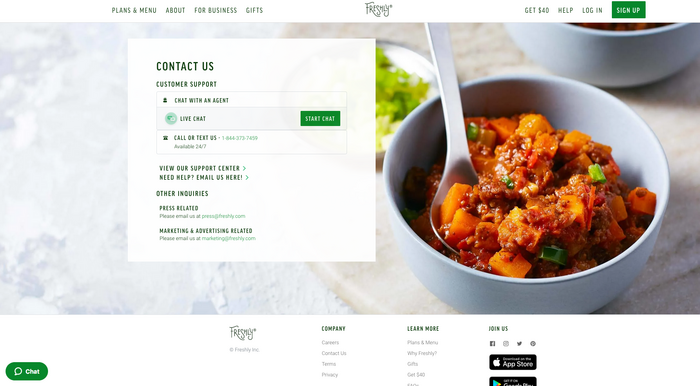
Freshly offers meal-kit delivery services, and an enticing product takes up about half of this Contact Us page. Putting the product first could attract customers to jump into a purchase.

freshly contact us page example

The contact box is the clever bit. Customers can chat, call, text, or skip to email.

This is a simple, friendly interface that puts the product first.

Multi-Location Mastery: Wendy’s

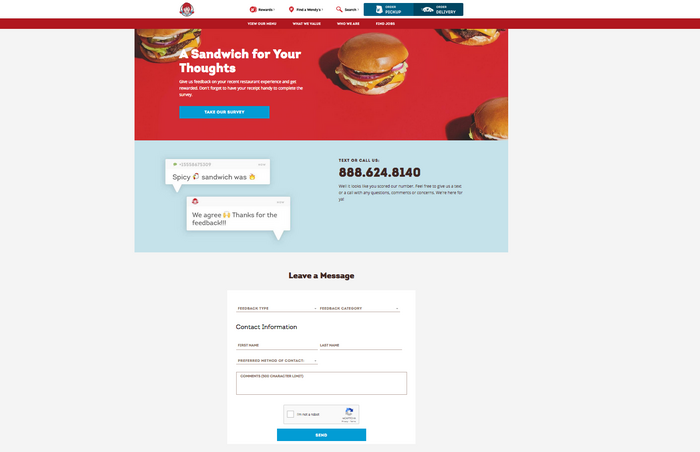
How do you handle inquiries when customers have dozens of locations to choose from? Wendy’s handles this question with a “Find Wendy’s” button at the top of the page.

wendys contact us page example

Customers with questions can text or call a number displayed in big, black text. It’s nearly impossible to miss. A clever, short form rounds out the page.

Short and Sweet: My Own

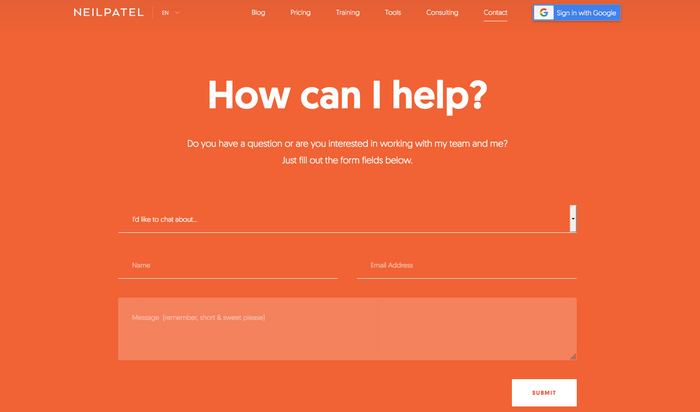
I put best practices to use on my website’s Contact Us page. I use a drop-down to route questions, and I ask customers to fill out just three fields.

I keep the branding light on this page, but the colors remind my guests that they’re still on my site.

neil patel contact us page example

I also link to relevant social media sites to follow me through those platforms. My digital marketing consulting contact form is similar. Short and sweet with just the information I need to know.

Contact Us Page Do’s and Don’ts

We’ve walked through several examples of pages that convert. And we’ve shared quite a few tips you can put to use right now.

But there’s more to learn.

As you’re working on your Contact Us page, be sure to:

  • Be a good journalist. Put the important stuff first. Your visitors are there to connect with you. Make those opportunities easy to find and deliver an exceptional user experience. Save the rest for last.
  • Promote your page like a pro. Put a link to your page in your email signature and link it to your social media accounts. Make sure customers know you’re interested in a connection.
  • Link to your page. Customers look in the top-right corner of a page for Contact Us links. Make sure each page on your site connects to that critical page.

Before you publish your Contact Us page, be sure to avoid:

  • Cluttered design. Don’t fill the space with tons of graphics, jokes, or text blocks. Respect what your consumers are there to do – contact you.
  • Overconfidence. Use A/B testing to find the design your customers want. Don’t be overconfident about your design prowess — you might be surprised by what works!
  • A desktop-first mentality. Test your site on mobile devices. Try out the form fields. Plenty of customers will visit you on the go; make sure their experience is a good one.

It takes time to design a Contact Us page that converts. Don’t be afraid to slow down, test, and head back to the drawing board. You can’t afford to make mistakes on such an essential piece of your website.

Conclusion

Your Contact Us page is one of the most critical assets on your website. People head here when they want to reach you. Make that communication as quick and painless as possible.

Publish with confidence, and watch those conversion rates. If you don’t see the response you want, change it!

With experimentation and vigilance, you can develop the right Contact Us page that works for your customers, your company, and your community.

Is your current Contact Us page lacking? What can you change to make it more effective?

This marketing news is not the copyright of Scott.Services – please click here to see the original source of this article. Author: Neil Patel

For more SEO, PPC, internet marketing news please check out https://news.scott.services

Why not check out our SEO, PPC marketing services at https://www.scott.services

We’re also on:
https://www.facebook.com/scottdotservices/
https://twitter.com/scottdsmith
https://plus.google.com/112865305341039147737

The post Contact Us Page Tips: Move From Blah to Yeah! appeared first on Scott.Services Online Marketing News.


source https://news.scott.services/contact-us-page-tips-move-from-blah-to-yeah/

Developing a PPC Analyst Mindset

Over the years I’ve learned that being a PPC analyst means being in a state of constant learning and adaptation. You are often asked to solve a wide variety of problems from technical troubleshooting to complex data analysis. The skills and abilities to meet these needs are varied and you often don’t possess everything you need to solve the problem immediately. This can lead to frustration.

What follows are a few things I’ve learned to remind myself during those frustrating times.

You can’t and won’t know everything

PPC technology is vast and ever changing. You cannot keep up with all there is to keep up with. From the ad platforms to analytics to tracking to data analysis, there is not enough time in the day to keep on top of it all. So, what can you do?

You simply have to get comfortable with not knowing.

It’s okay to not know. It’s okay to not have an immediate solution or insight. It’s okay to take the time to reflect on a problem. You often will come up with a better solution and save a lot of headache in the end.

Spend the time to learn the tech

With so much technological change in the field it’s easy to want to jump right in and start helping. This often backfires as you don’t have the general knowledge you need to understand what you might need to do.

You can’t see the forest for the trees.

So, take the time to learn about the technology you’re trying to fix or the data you’re trying to pull. Ask yourself questions like:

  • Where might you locate the type of data you need? 
  • Do you need to pull from multiple places and aggregate? 
  • What might be the best tool to do that? 
  • Are there any oddities about a platform or tool you need to know about that could affect your analysis?

There are a ton of questions that can be answered by taking a step back and thinking through the problem at a high level.

Always be adding to your toolbox

The analyst toolbox is the foundation of an analyst’s ability to do their job. That toolbox contains everything from knowledge of ad platforms and analytics tools to spreadsheets and coding that can help solve a variety of problems.

It can be easy to invest time in the tools you know because it’s easier to build upon a foundation than build from scratch, but you just might be missing out on tools that can be helpful in the long term.

For instance, spreadsheets are still the foundation of data analysis in many places and they have their place, but there are often problems that simply can’t be done in a spreadsheet or are done far more efficiently elsewhere. This is where some coding and database knowledge in your toolbox can provide that extra help you need.

Always be on the lookout for more tools to help you.

Conclusion

Being an analyst is full of complexity. The need to find a solution can be strong and the frustration when running into roadblocks even stronger. These three concepts have helped me develop a mindset to survive that frustration. At the very least, I hope they help guide you in developing your own mindset.

This marketing news is not the copyright of Scott.Services – please click here to see the original source of this article. Author: Chadd Powell

For more SEO, PPC, internet marketing news please check out https://news.scott.services

Why not check out our SEO, PPC marketing services at https://www.scott.services

We’re also on:
https://www.facebook.com/scottdotservices/
https://twitter.com/scottdsmith
https://plus.google.com/112865305341039147737

The post Developing a PPC Analyst Mindset appeared first on Scott.Services Online Marketing News.


source https://news.scott.services/developing-a-ppc-analyst-mindset/

Why we should stop using DA to measure influencers

Why we should stop using DA to measure influencers

Whether you’re an SEO, PR or a website owner, it’s highly likely you’ve come across DA (Domain Authority). The metric, created by industry-leading platform Moz, was designed to help search marketers understand the value of a domain, at a glance and compare it with others in the same industry or niche. This was important for SEO, third party links have long been used to understand how “trustworthy” a website is and form part of Google’s “ranking criteria” (although their importance and how this works is a hot talking point in SEO).

Moz uses their index (or understanding of the web), to map out these links between sites and, alongside other factors, try to assign a “competition” score to each website they encounter. This can then be used as a proxy to determine the value of a said site.

Note: I have nothing against Moz. This piece isn’t in any way designed to be a slight on them or their work, but further insight and context into how to use the data they provide.

The eye-opener to follower deception

Last year, Social Chain opened marketers’ eyes to the murky world of follower deception. Many brands understand the importance of influencers to the digital ecosystem, but measuring the value that someone can bring prior to working with them is difficult and time-consuming. As such, often companies rely on metrics that symbolizes “reputation”, followers, engagement, and other similar indicators. However, as Social Chain asserted, the typical signposts do not always depict a true picture and if not completely understood or manipulated, can lead to large amounts of spend being wasted.

This is a common theme with SEO. Although it’s less a question of manipulation and more a question of understanding. In 2012, Penguin, Google’s “webspam” filter was rolled-out and assigned a positive or negative value to third party links. Prior to this, “trust” was judged on an arguably simpler set of volume-based criteria, but as the flaws in the system were exploited. It soon became clear that a more complex solution was required, to ensure the integrity of search results was maintained. Trust continued to be an important factor in success, but SEO’s had to start thinking more carefully about how they generated these. Here the connection between SEO and PR became more important as links could not be artificially built they had to be earned, naturally.

The two teams started to collaborate more closely, with SEOs providing PRs extra resource to contact a “lower”, but still valuable tier of influencer and PRs helping SEOs reach the higher, more widely trusted publications that they could not access before. Over time, the lines between SEO and other channels have started to blur – and as teams were pushed to operate across remits, PRs started to use SEO metrics, with DA taking precedence (as it was arguably the simplest to use), to understand more about the people they were contacting. With investment from brands increasing, more influencers started to appear, and from this grew an industry in its own right.

Fast forward to the present day

An influencer marketer will likely sit across content, Social, PR, and SEO, with the goal of engaging personalities to improve performance across all the channels they are connected to (based on the goals of the organization/campaign). For social and PR, engagement and reach can be more easily measured. But SEO has always been complicated. This is because “good SEO” has never been about links alone and the idea of a “link value” is entirely subjective, based on factors that change between industries, counties, and even search results. As such, the idea of using a single, links-based metric to determine the value a domain can provide for SEO is inherently floored – and yet, many marketers, influencers and PR teams still continue to use DA for this purpose.

To make matters more complex, the whole link-building ecosystem has been flooded with misinformation. I discussed this in a recent webinar with SEMRush, but it’s often been the case that the wider industry’s understanding of the link building practice has come through commentators on the practice and not the experts conducting the work themselves. This means, the influencers and PR teams, and not the SEO community themselves.

Why is this the case?

There’s really no simple answer, although, for a long time before the collaboration was mainstream, it would be a frequent occurrence for SEOs and PRs to clash over remit cross-over. In the agency world, this could have led to reduced budgets – why pay two agencies to do the work of one, although (from my experience), clients were very much open to creating a joined-up approach between both teams.

While conflict happened behind the scenes, uncertainty, and misinformation filtered out to the influencer market, with PRs and SEOs trying to show that they “knew enough” about the other to make a wider judgment on influencer selection for projects. This led to followers and domain authority becoming key metrics in this process which, although not unhelpful, rarely offered the truest picture of a website’s worth. In turn, this led to transactional relationships with websites, where links and shares were bought for a price that, once this became a commodity only ever increased. Instead of paying for the time and expertise of the people that were being engaged, their value became intrinsically tied to their reach or their link-equity (perceived through domain authority), two metrics that could be easily manipulated.

Now, the growing rumble of discontent within the influencer landscape has finally hit the headlines with a theatrical flourish. Unfortunately for many, this has come too late, with brands realizing the cost of investing in reach over expertise, most famously with the Fyre festival scandal. But, this doesn’t mean that influencer marketing isn’t valuable, as I wrote at the time, but that how and most importantly – the reasons as to why marketers engage with content creators need to change. We’ve seen publicly how using followers to measure reach can be folly. But there’s still time to take these learnings and apply them to domain authority too before something as equally damaging to the industry happens.

Latest developments

Recent legislation in the UK has started to pave the way for change in this field. It’s certainly made working with influencers harder, in large part to the ambiguity around the specifics of how the changes should be interpreted, I personally apply the principle of “better safe than sorry”, even from a search perspective. Every brand interaction should now be declared as an advert, including event invites and even in cases where the only “payment” has been a reimbursing of travel costs. With Google’s hardline view on manipulative link building, the practice of engaging “high authority” SEO influencers is slowly ending or at least, becoming incredibly risky.

Instead, we should look to engage influencers for their subject matter expertise and credibility they can lend to a story or campaign. In practice, this means killing the transactional “I give you X and you give me Y” type of relationships and seeing content creators as partners in getting your message out to the world. For SEO, this may mean using “no-follow” links (which, in basic terms, tell crawlers that they should not consider them for search benefit), but this shouldn’t be an issue. Sure, their direct value on search may be limited, but to think that the search algorithm considers the web in as simple terms as this would be myopic. There are some brilliant studies around the power of brand on search, which are worth noting in this context. Moreover, at its heart, a link is there to carry users from A to B. Adding a “no-follow” tag doesn’t stop this from happening and in this case, using domain authority as a metric often would lead to discounting a valuable traffic driving part of this ecosystem.

With this shift in the industry and better collaboration than ever between search and the wider marketing mix, the opportunity for content, search and marketing communication teams to unite is stronger than ever. So too, is the need for it, as achieving cut-through in the wall of digital noise is harder than it’s ever been. Campaigns, to be successful on all fronts, must genuinely inspire, engage or provide value to users and older-school tactics, such as product reviews and content seeding, have all but lost their ability to drive results. On this point, we simply must move away from using domain authority and followers as a metric, as neither is an effective gauge of how useful a site might be to its users.

Closing notes

I’d like to speak directly to influencers because without a universal change in mindset, we’ll continue to see the same practices continue and the channel will continue to be under-utilized. I’d impress upon them the need to keep an open mind and focus on becoming the best subject matter experts that they can. I’d encourage the end of any agonizing over “vanity metrics”, which are often taken out of context, and in place look to whether their users are genuinely engaging with their content, and how this impacts their value as creators. Importantly, I’d implore everyone, PRs and SEOs included, to have a little more fun, harness the incredible creativity that brand communications teams, content creators, and influencer marketers can yield and build something great together.

Ric Rodriguez is an SEO Director and winner of the 2018 Drum Search Award. He can be found on Twitter @RicRodriguez_UK.

Related reading

How to master technical SEO Six areas to attack now
Image optimization for SEO Everything you need to know for success
A guide to implementing Google’s “How-to” schema

This marketing news is not the copyright of Scott.Services – please click here to see the original source of this article. Author: Ric Rodriguez

For more SEO, PPC, internet marketing news please check out https://news.scott.services

Why not check out our SEO, PPC marketing services at https://www.scott.services

We’re also on:
https://www.facebook.com/scottdotservices/
https://twitter.com/scottdsmith
https://plus.google.com/112865305341039147737

The post Why we should stop using DA to measure influencers appeared first on Scott.Services Online Marketing News.


source https://news.scott.services/why-we-should-stop-using-da-to-measure-influencers/

Google Shopping Goes Free Worldwide In Mid-October

Google announced that by mid-October it will make Google Shopping free not just in the US, but also worldwide. Google said it is “bringing free listings to the Shopping tab in countries across Europe, Asia, and Latin America.”

Google said “just as we don’t charge sites to be part of the Google Search index, listings for participating retailers are eligible to appear in these results at no cost to them.”

Paid listings are still there, Google said it will still show paid listings “in ad slots and will operate in the same way as Shopping ads do today.” But now you can also participate for free.

This change will take effect by mid-October 2020.

This is actually being seen as of live now, in the UK. Here are some screen shots:

Note, this went free in the US in April and Google then expanded it to in Google Search, not just the shopping tab.

For more details on how to get listed for free, see this help document.

Here is the email Google sent some with this announcement:

Forum discussion at Twitter.

This marketing news is not the copyright of Scott.Services – please click here to see the original source of this article. Author: barry@rustybrick.com (Barry Schwartz)

For more SEO, PPC, internet marketing news please check out https://news.scott.services

Why not check out our SEO, PPC marketing services at https://www.scott.services

We’re also on:
https://www.facebook.com/scottdotservices/
https://twitter.com/scottdsmith
https://plus.google.com/112865305341039147737

The post Google Shopping Goes Free Worldwide In Mid-October appeared first on Scott.Services Online Marketing News.


source https://news.scott.services/google-shopping-goes-free-worldwide-in-mid-october/

Three uncommon on-page SEO analysis techniques (That move the needle)

30-second summary:

  • On-page SEO is one of the most effective ways to boost your organic search engine rankings, improve your website’s user experience (UX) offerings, and grow your business consistently.
  • But, without understanding your audience and measuring your results, how can you make changes or create strategies that actually make a difference? In short, you can’t.
  • To help you enhance your search engine optimization activities and grow your business, here we explore three uncommon on-page SEO analysis techniques, complete with examples, that you should use to your advantage.

With so many on-page elements to optimize, knowing where to start and what to prioritize can seem impossible. But don’t worry, because we’re going to show you three unique on-page SEO analysis techniques, as well as the exact tools we use at Bubblegum Search, to make the entire process easy and effective in equal measures.

Once you’ve got the insights and discoveries gained from these practical on-page analysis techniques, we’re confident you will earn higher engagement, increased rankings, and more conversions.

Disclaimer before we get started, we’d just like to say that we’re not affiliated with any of the tools mentioned in this guide—they’re platforms we find helpful for on-page SEO analysis techniques and other great alternatives likely exist too.

1. Improved UX content and functionality

Studies show that just one dollar invested in user experience (UX) offers an average return on investment (ROI) of $100 ( that equates to an ROI rate of 9,900%).

By making enhancements to the usability of your website pages, you will create a frictionless user experience.  If you understand your users’ intent through analysis and research, you will ensure the messaging, design elements, and layout of your webpage provide an answer to a specific question. 

In doing so, you’ll simplify the user experience by guiding the visitor through their journey, helping them to achieve their goal. Let’s look at our example:

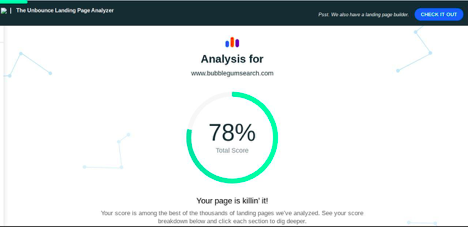
To test specific performance and functionality-based elements of your web or landing pages, the Unbounce Landing Page Analyzer is a powerful tool:

On-page SEO analysis techniques - Unbounce landing page analyzer

By entering a specific URL and outlining your page’s target key terms, Unbounce’s intuitive algorithm will provide a report that offers an overall page score while drilling down into relevant UX-centric elements.

In addition to page speed performance, content relevance, and trust & security ratings, Unbounce’s on-page analyzer tool offers a score on Message Match.  

When it comes to SEO, content really is king. If your on-page copy is rich, engaging, and fulfills its promise, you will increase your chances of ranking well for relevant search terms exponentially.

As Unbounce quantifies all of these essential UX and performance-based elements, you can benefit from a clear-cut snapshot of the elements that are currently working well and what needs improvement.

As you can see from the example, the overall page score of 78% suggests that the Bubblegum Search homepage is well optimized for UX and SEO. The report also shows that while trust and Message Match is at 100%, the page could benefit from improved conversion-centric design.

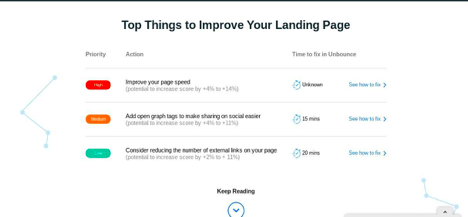
In addition to these invaluable insights, Unbounce’s page report also provides a color-coded priority list of detailed actions to help optimize overall page performance

on-page SEO analysis techniques - Unbounce site analysis

These data-driven insights are based on specific tactics and strategies you can use, designed to make your web pages more engaging, more functional, and as a result, optimized for improved SEO performance.

2. Multimedia and content enhancement

Not only does inspiring, value-driven content drive engagement but it also helps in creating a healthy, SEO-boosting backlink profile.

Compelling copy, eye-catching imagery, videos, and well-designed on-page multimedia content make powerful on-page SEO boosting assets.  

One of the most effective methods of analyzing the success of your on-page content, in terms of user engagement, is through heat mapping.

Heatmaps are essentially interactive data visualization tools that provide practical insight into how your website visitors interact with your web page and the content contained within it.

With heat mapping, you can learn about user intent and ultimately understand how to optimize your webpage content better for maximum SEO success.

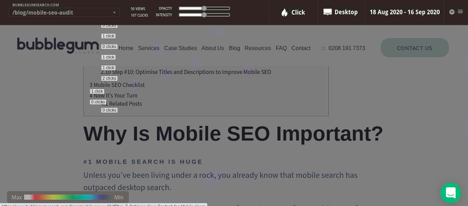
On-page SEO analysis techniques - Heat mapping

From the Mouseflow heatmap (screenshot above), you can gain a definitive snapshot of where users are focusing their attention, scrolling, and clicking when engaging with any of your pages. 

By focusing on click and scroll rates, you can see the percentage of visitors that drop off before ever seeing the curtain content lower down on the page.

If the content further down the page earns a lot of clicks or attention but a low percentage of views, positioning this copy higher up the page, for example, will help offer more value, increase user satisfaction, and boost dwell time, enhancing the overall performance of the content as a result.

When it comes to understanding the value and relevance of your on-page content, heat mapping is invaluable—and an Onpage SEO analysis technique worth your time and investment.

3. Mobile-first design optimization

We live in a time where there are more smartphones on the planet than humans

To succeed in today’s world, adopting a mobile-first approach is essential—and if you fail to optimize your website’s content for tablets and smartphones, your SEO rankings will suffer.

While many CMS’ like WordPress optimize your website content for the mobile experience relatively swiftly and simply, not every platform optimizes web pages for every screen size. 

And, by making sure that every aspect of your website is 100% optimized for mobile, you will boost your Mobile SEO rankings while driving more organic traffic to your website.

To understand the specific actions you must take to optimize your on-page content for mobile devices, analytical tools like Window Resizer (a Chrome extension that will help you get your screen resolutions just right) and WooRank will perform audits and provide data on the specific elements of your website that need changing to enhance your content, functionality, and user experience or fix existing errors, which include:

  • Mobile-only 404 links
  • Design elements and images that don’t fit the screen
  • Unplayable multimedia content
  • Poorly formatted text
  • Blocked JavaScript, CSS, and image files
  • Slow loading times

While an experienced web developer will carry out many of the responsive design-based improvements and fix any technical errors, by using mobile optimization analysis software, you can pinpoint any issues on mobile or tablet and work with them collaboratively to ensure the best possible outcome.

Bonus

To achieve complete mobile optimization success, check out our mobile SEO audit checklist.

By exploring these on-page SEO analysis techniques, you will connect with actionable metrics, data, and insights that will make your online offerings more engaging, boosting your brand authority and improving your organic search rankings in the process.

Invest in on-page SEO analysis techniques and you will remain relevant, adaptable, and visible in a digital landscape that is ever-changing. Don’t get left behind—the time to act is now.

Do you have any practical Onpage SEO tips of your own? Please share them with us by leaving a comment below.

Matt Cayless is an SEO Consultant at Bubblegum Search. He is an expert in Search Engine Optimisation having worked on campaigns for some of the world’s biggest brands and has a passion for helping SMEs grow online. When he’s not chasing the Google algorithm he can be found training for his next marathon. You can find him on Linkedin.

This marketing news is not the copyright of Scott.Services – please click here to see the original source of this article. Author: Matt Cayless

For more SEO, PPC, internet marketing news please check out https://news.scott.services

Why not check out our SEO, PPC marketing services at https://www.scott.services

We’re also on:
https://www.facebook.com/scottdotservices/
https://twitter.com/scottdsmith
https://plus.google.com/112865305341039147737

The post Three uncommon on-page SEO analysis techniques (That move the needle) appeared first on Scott.Services Online Marketing News.


source https://news.scott.services/three-uncommon-on-page-seo-analysis-techniques-that-move-the-needle/

Display Topic Targeting: 3 Reasons Why You Should Do It

Between social media and some of the new tools Google has been rolling out, we’ve been able to get greater insight into who our customers are rather than simply what they’re searching for.

ppc rocket takeoff

Topics are something that often seem to escape the hype of things like in-market audiences, custom audiences, and whatever the next big thing Google rolls out. While they do have their limitations, when used properly they can be a powerful tool in finding out what your customers like.

I’ve been experimenting more by layering seemingly relevant topics onto my already created Display & YouTube campaigns in an effort to find that next little bit of performance advantage. It’s something quick to do and you’ll likely be surprised by the topics in there if you haven’t looked recently.

What is Topic Targeting?

We’ll slow down here and provide a definition of what topic targeting is. Topics are exactly what they sound like, categories of webpages that have content related to specific things. There is everything from the mundane “reference” off to the exotic “world localities”.

Google Ads Topics

Not everything is going to be relevant to your business but these topics may have some big overlap to what your customers also like: a business like Bass Pro may find some large overlap in the Outdoors topic which can be segmented down to fishing, hiking/camping, and hunting.

Why Should You Use Them?

Topic targeting is not going to be a make or break strategy for you but it’s something that can provide an incremental improvement or better arm your entire marketing department. Here are three broad but tangible action items you can work towards with topics.

Bid Modifiers

This is likely going to be your starting point after layering on a bunch of different topics in observation mode. Simply take a look at performance and see what is working and what isn’t. From there you can bid a little higher in areas or place some less emphasis on others.

Overall, these smaller changes should add up and allow you to better get in front of your target customer when they’re either ready to click or convert.

 Exclude Site Categories

Along with a normal placement analysis, this is something that can really help refine who you’re getting out in front of it. Some of my favorites to exclude include Gossip/Tabloid News, Pets (too distracted by dogs), and Music/Audio. These are pretty basic things you can do to help ensure that you’re showing on websites that people aren’t using to escape from the monotony of life from. 

You can take this a step further and really think about it from a brand safety standpoint too. If you’re advertising for the most delicious cookie in the world, you may use some discretion and not advertise on topics related to obesity or diabetes. Don’t forget the always popular family gathering topic of politics too!

Find Matches – Expansion Opportunities

Taking topics a step further, you may find some connections you never knew existed that can open the doors to other types of advertising. Maybe your locally grown pickle business is seeing a big overlap with people who like folk/traditional music. Maybe you want to test out Spotify advertising to people listening to those genres.

If your company sponsors a sports team you may use that to market towards users that are also interested in that sport in your area. They’ll likely be familiar with your brand and you can reinforce that partnership through a whole separate medium.

You’ll have to get creative, but these are things you can take to other parts of the marketing department and present some cold hard numbers for. That may be that extra little boost needed to get more budget and expand into a new marketing channel.

Final Thoughts

While seemingly mundane, topic targeting can be anything from a small incremental adjustment that improves CPA to the spark the launches a whole new strategy or marketing channel.

At the very least, I suggest taking some time and layering as many relevant topics onto your Display and YouTube campaigns as possible to start the data gathering process. Pro Tip: It’s a great way to feel creative on a Friday with the weekend peaking around the corner at you.

This marketing news is not the copyright of Scott.Services – please click here to see the original source of this article. Author: Mike Matta

For more SEO, PPC, internet marketing news please check out https://news.scott.services

Why not check out our SEO, PPC marketing services at https://www.scott.services

We’re also on:
https://www.facebook.com/scottdotservices/
https://twitter.com/scottdsmith
https://plus.google.com/112865305341039147737

The post Display Topic Targeting: 3 Reasons Why You Should Do It appeared first on Scott.Services Online Marketing News.


source https://news.scott.services/display-topic-targeting-3-reasons-why-you-should-do-it/