Don’t let anything stand between you and your professional goals: Join thousands of your peers online, October 6-8, for MarTech… for free!
Register now to train with senior-level marketers who have overcome some of the most pressing marketing challenges and are ready to share what it takes to succeed. Here’s a sneak peek at what you’ll learn:
How To Structure Your Marketing Ops Team And Stack For Success — with Kelly Jo Horton, Principal Engineer, Marketing Operations & Technology, ROOM
Bridging Data Analytics & Tech SEO — with Matthew Edgar, Partner & Consultant, Elementive
Conversational Marketing Orchestration: How To Humanize The Digital CX — with Jeff Eckman, CEO, Blue Green, and Rinoti Amin, Director of Growth, Engagement & Retention, Malwarebytes
The Beauty Of The Beast: How To Optimize Your Monstrous Martech Stack — with Helen Abramova, Marketing Technology Lead, Verizon, and Matthew Gomez, Sr. Manager Marketing Operations Walden University
Using Privacy To Build Strong Customer Relationships — with Susan Raab, Managing Partner, Customer Data Platform Institute
Efficient And Unified Enterprise Workflow To Enable Marketing — with Steve Scotkin, Senior Director, Marketing Technology, Thomson Reuters
You’ll also access exclusive keynotes from Scott Brinker, Brian Solis, and other surprise speakers. The agenda will be posted next week!
Don’t miss this opportunity to connect with marketing experts, leading solution providers, and the MarTech community — all from the comfort and safety of your own computer. Register now!
Can’t attend live? Register anyway! All sessions will be available for viewing on-demand after the event.
Lauren Donovan has worked in online marketing since 2006, specializing in content generation, organic social media, community management, real-time journalism, and holistic social befriending. She currently serves as the Content Marketing Manager at Third Door Media, parent company to Search Engine Land, Marketing Land, MarTech Today, SMX, and The MarTech Conference.
As the most-viewed site globally, YouTube is a must-visit destination for marketers and content creators looking to increase audience reach.
While it is possible to optimize YouTube SEO to score top results, without an understanding of the YouTube algorithm, SEO alone won’t manifest videos on a potential viewer’s suggested video list.
YouTube’s product chief underlined the reality of the impact of suggested-to-watch videos in an interview, noting 70% of a user’s time spent on the platform was dictated by the company’s suggested video algorithm.
70%. That number is huge.
To truly execute a successful YouTube marketing strategy, improve organic reach, and take advantage of that massive percentage, you need in-depth familiarity with the unique YouTube algorithm. Here are nine ways to increase your organic reach on YouTube.
The YouTube Algorithm’s Evolution
What began as a venture capital-funded technology startup in 2006 is now our go-to spot for all things video.
Although YouTube itself has undergone significant changes over the past fifteen years, its algorithm has, by far, been its most dynamic feature.
Before 2012, YouTube charted video success by the number of views alone, regardless of the length of viewing. This singular YouTube algorithm led to a profusion of clickbait videos that relied upon misrepresentative headlines and thumbnails to earn views, with most audience members jumping ship immediately.
Today, we still see the roots of the platform’s infancy in the current YouTube algorithm, which draws heavily on view duration as a component of a video’s ranking.
How Does the YouTube Algorithm Work?
While YouTube’s stated mission is to give everyone a voice and a window to explore the world, one of YouTube’s lower-ranking goals is to engage viewers for extended amounts of time, maximizing the number of advertisement interactions.
Why does this secondary goal matter? Because YouTube suggests videos that satisfy this goal of increased exposure to advertiser content.
YouTube uses an algorithm based on three main qualifiers: relevance, engagement, and quality.
To benchmark relevance, YouTube explores the pairing of title, description, tags, and content with an individualized search query.
Engagement aggregates the number of responses from users, including watch time, engagement, and frequency.
Quality rating is determined by a channel’s ability to demonstrate trustable authority.
In addition to these three qualifiers, YouTube’s algorithm also draws on a user’s historical views and a video-specific assigned score, one that weighs both novelty and frequency of channel uploads, among other attributes.
This combination of statistics allows YouTube to recommend videos that speak directly to a viewer’s interests, continuing a narratively static viewing material chain.
These videos will appear in six different locations on the YouTube platform:
Search results
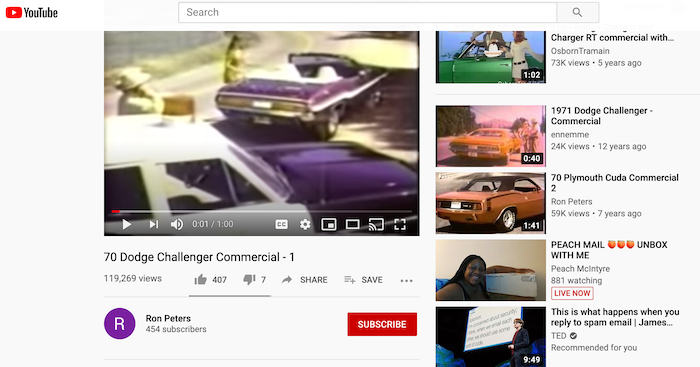
Recommended Streams (as shown in the screenshot on the right side in the below screenshot)
Notifications
Channel Subscriptions
Trending Streams
YouTube Home Page
Much like any search algorithm, YouTube’s ranking system is in constant flux, evolving and adapting in an ongoing attempt to better define and satisfy user engagement.
How do I Improve my Organic Reach on YouTube?
Armed with a concrete understanding of how the YouTube algorithm works, it’s time to break down how you can harness your newfound knowledge to increase your organic reach.
1. Keywords and Metadata
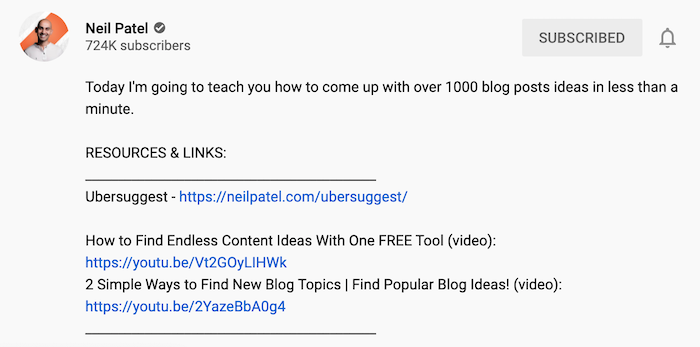
YouTube made it explicitly clear in their algorithm explanation that content-relevant keywords, descriptions, captions, and tags all matter when you’re optimizing videos for search. Make sure you do your keyword researching using a tool like Ubersuggest to make sure you’re mentioning terms users are looking for.
By writing compelling, keyword-rich titles and descriptions, you increase your chances of attracting audience members’ attention and increasing your video’s search visibility.
Check out this post if you need to brush up on SEO basics.
2. Optimized Description
The quote “you never get a second chance to make a first impression” is true of YouTube just as much as life.
Ensure audience engagement by crafting attention-getting copy that not only attracts your potential audience but also harnesses your keywords’ power.
YouTube slants toward the verbose, advocating long descriptions, so don’t be afraid to go the extra wordy mile with them.
Although your prospective viewer will only interact with the first few lines of the description unless they select the “show more” option, those few short lines are valuable real estate when it comes to attracting your audience.
3. Video Transcription
Closed captions not only help those with accessibility needs, but allows users to watch videos in silence.
To make the most of closed captions, upload self-created subtitles. By uploading these yourself, you ensure that, when these captions are indexed for search, they are more accurate than automatically-generated ones, in many cases.
4. Whole-Video Views
Because YouTube ranks videos by engagement, longer watch times mean more opportunities to earn the coveted suggested video inclusion.
If you’re struggling with viewer attrition rates, you’re going to want to tighten focus on your videos’ first few seconds and ensure you:
match the description with the first few seconds of video content, and
snag a viewer with an impossible-to-ignore hook.
Don’t forget to study your audience retention graphs and pay attention to what those metrics are telling you.
These quick fixes help you further engage your audience, extending watch time, and earning your video a higher score via the YouTube algorithm.
5. Conversational Conclusions
Rather than simply ending your video, use various tactics to influence your audience’s next view.
By directing viewers to another video on your channel, you increase interaction and likelihood that they’ll return to interact with future content, both of which satisfy the YouTube algorithm’s engagement portion.
To direct your audience, use watermarks, end screens, and cards, all of which can be clicked and linked to your next video, ensuring continued viewing of your channel and content.
6. Subscriptions
When viewers subscribe to your channel, you automatically increase your organic reach. To increase your number of subscribers, consistently create great content, videos viewers are dying to see.
While consistently creating great content may be easier said than done, it’s essential to building your channel. Create a channel trailer, reach out to influencers, and engage with all comments left on your videos.
If you’re looking for additional strategies to increase your subscribers, check out our YouTube Marketing Guide.
7. Serial Viewers
By crafting videos that continue a conversation, viewers are helpless to resist watching the next in the series.
To keep viewers on your channel, you can create playlists of videos with similar content: these are collections that will attract and sustain viewership.
8. Cross-Promote Content
Social channels are free advertising for your YouTube channel. Promote your videos on all your social accounts, website, and in your email marketing—anywhere you have an audience.
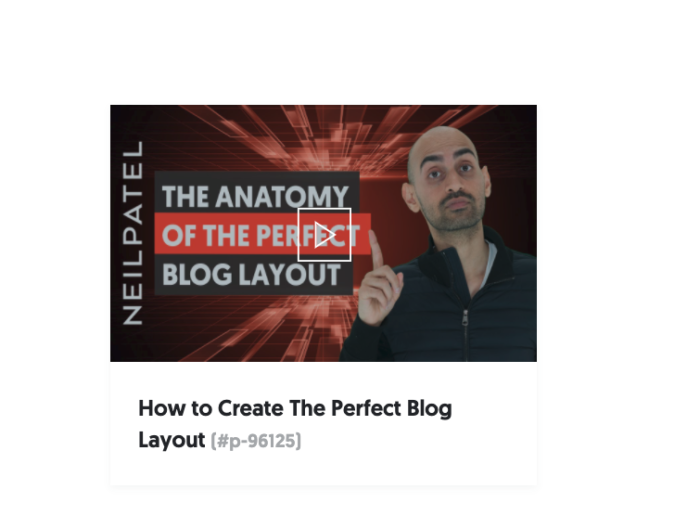
An example of a recent YouTube video shared on this blog.
You can also publish a blog post with the video and a summary or transcription.
9. Actionable Analytics
These numbers don’t just exist to make you feel good; they tell you what’s working well and when, and to identify who is watching what and when.
Conversely, these numbers also tell you what isn’t working, which is inarguably the more influential insight. By identifying what isn’t working, you can try new strategies and content, attempting to delight your audience and improve your reach through different approaches.
By digging deep into YouTube analytics, you can unearth realities about your videos and your audience, allowing you to tailor your creation process to suit the needs of the audience you’re trying to reach.
Conclusion
With over one billion hours of video watched per day on YouTube, it’s undeniable content creators and marketers need to take advantage of the platform to curate and grow their audiences.
By understanding how YouTube suggests videos, content creators and marketers can make their videos work harder and use its nuances to your benefit.
How you changed how you upload videos to satisfy the YouTube algorithm?
Zazzle Media’s second annual “State of SEO survey” has assessed the value and ROI of SEO, looking at its impact in securing funds or resources.
The data suggested that 60% of marketers find that resources and a shortage of budget are the main reasons they don’t spend more on organic search activity. However, almost a third of surveyed marketers still don’t know how to measure the impact of SEO on their results.
The survey reviewed 70% of in-house marketers and 30% of agency heads from various companies. It called for marketers to develop a better understanding of attribution models, measurement tools, brand value, and purpose when it comes to spending more on SEO.
The main reasons cited for marketers struggling to secure investment are competitor awareness, revealing that marketers are too aware of their competitor’s activity, even noting that their branded keywords were being targeted by their competitors.
Whitepaper
The report noted that data-led objectives can act as investment enablers as they can easily quantify and measure consumer traffic. They also help marketers prove ROI, by reviewing how marketing practices are improving year on year.
Yet the survey revealed that there is still a lack of understanding around best practices for marketers to use. A quarter of those surveyed called for clearer guidelines on best practice from Google Webmasters, revealing that there is, in fact, a knowledge and skills gap around SEO.
Share this article
Related articles
Zazzle Media’s head of search and strategy, Stuart Shaw, said
“As an industry, we’ve needed to educate, educate, educate – at almost every level of client infrastructure. That challenge still remains, in fact, it probably changes monthly but now with more noise than ever.
However knowledge has always been power in this industry, keeping up with updates, marketing news and best practice guidelines across Google and Bing can be the difference in the results marketers need to secure that extra budget.”
You can download the full results of The State of SEO here, and check out the top-line stats on the infographic below.
Whitepapers
Related reading
What if some parts of your SEO could run on autopilot? Last week BrightEdge Autopilot was announced to automate SEO tasks. More on Self-driving technology.
Amine Bentahar discusses his upcoming session, “Optimizing for position 0: Everything you need to know about voice search,” at the Search Summit 2019.
An in-depth illustrated guide of the Google Ads extensions that were rolled out in the past ten years. Samples of the top four ad extensions included.
Topic linking comes under the wider term, internal linking. Tips and a case study on how to strategically use topic clusters to increase SEO rankings.
I have been editing guest posts for the marketing industry for ten years, and obviously, a lot has changed over the last decade. Unfortunately, many people are brought into to write for companies and are not aware of the issues that will impact the success of, or lack thereof, a guest blog post today.
In this article, I am going to break down what you need to know about search engines and content quality in 2020 and beyond in the hopes that you can create content that will be successful in more ways than one. Here are the main topics I am going to cover:
Traditional Guest Blogging is a Thing of the Past
Guest blogging used to be a way to rank, be seen, create a good reputation, and for many, to get backlinks. All of this was easy to do, but it is not anymore. Ranking is difficult due to the level of competition, expertise, and the wide variety of things search engines are evaluating.
Personal branding and building a reputation through writing is only possible now if you are willing to go above and beyond.
Link building isn’t so simple anymore. Google started penalizing over links, discussing their views on guest blogging, and breaking down Link Schemes to avoid for the masses; hence, don’t do it! The use of nofollow was recommended, and honestly, many started seeing the clear benefits of creating “quality content.”
Google has been giving recommendations on linking in guest blogs for a decade, and they are still answering questions today.
If you are sending guest blogging pitches where you are demanding a follow backlink in exchange for the article, you shouldn’t. Editors that know SEO will ignore those emails — and those that don’t, you could actually hurt them in the long run.
So next, let’s look at what Google has been trying to tell us for years about what kind of content they are looking for, so you can create something that will rank while meeting your goals.
What Google Says and How it Should Guide Your Guest Blogging
I could review every algorithm and core update we know of, but many others have done that, and it isn’t what you need. I am going to quickly explain the critical points expressed recently that will give you insights on what you MUST consider before you start guest blogging.
Keep in mind, Google is all about providing quick, helpful, high-quality, and accurate information to its users that matches the intent of the individual’s query. Over the last decade, they have made this goal very clear.
The Panda Update
This one is a bit old, but it still applies today. The Panda update in 2011 was designed to reduce low-quality and thin content in the search results and replace it with helpful and unique content. When I say unique, I mean not repetitive or duplicated. So, this update alone tells you that 9 years ago, Google wanted people to stop writing crap, yet as an editor today, I still see people pushing useless articles.
I always wonder, “Why?????” It is a waste of time, money, and effort, and there is no return. Why keep repeating a pattern that doesn’t work?
Questions to Ask Yourself Before Guest Blogging:
Who does your article benefit?
Who would want to read it?
If the article is only for your benefit (links, branding, etc.), why would anyone want to publish it?
What information provided will be unique and different from what Google has already ranked?
Is this topic saturated in the SERPs?
Fact: If you are hoping to build links or build a reputation, low-value content will never get you what you want.
BERT and Intent: With Tips You Need
In Oct 2019, Google announced they were applying BERT models to search. They said,
BERT models can consider the full context of a word by looking at the words that come before and after it— particularly useful for understanding the intent behind search queries.
Search intent is the ultimate goal of the person using a search engine.
Before writing, think about what is the person I want to reach trying to accomplish?
Perhaps they need an answer to a question, find an item, or find a guide or tutorial to help them complete a task. You need to determine the intent of the person that will be reading it and provide any and all information needed to match their intent.
If you are writing something with no thought of the reader’s intent, then your chances of success are low.
Look at the intent of each of the pages that are outranking you.
Before begin creating a guest post for anyone, you should examine the pages that rank for the same topic, and take notes on the intent behind them. And intent changes rapidly. Once a query is answered, the intent will shift to what could be a next step or action; consider the initial intent and the intents that may follow.
E-A-T and YMYL: Step Up Your Game
Google released its complete Search Quality Evaluator Guidelines in 2015, and they outlined two critical factors regarding how Google looks at pages and articles
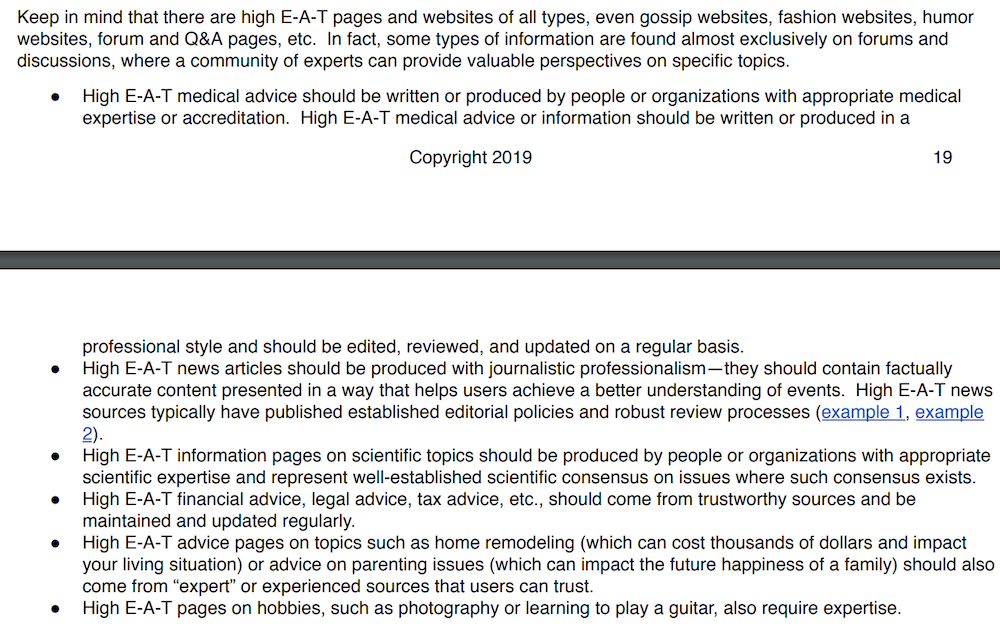
In the 2019 version of the guidelines, E-A-T is mentioned 135 times, and it explains in detail what they are looking for in any kind of content. Here is just one section:
What is Google saying over and over again?
They want experts writing content that is trustworthy for their readers. Why? Because bad advice can result in problems and tragedies.
Think about it, who will write with expertise and authority, a novice content writer discussing roof construction, or a roofing contractor with 15 years of experience? Someone with expertise is going to be more authoritative and cover the bases that matter in content.
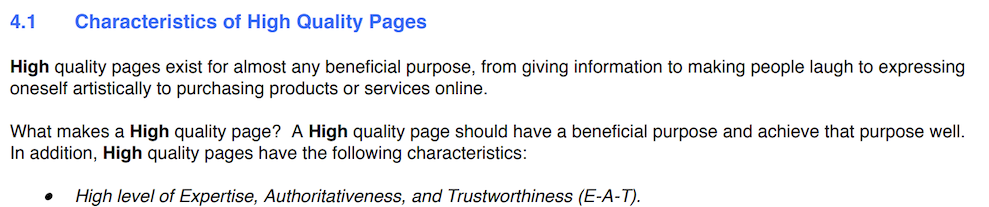
Below they explain what they are looking for in high-quality pages (which tend to rank better).
Google wants you to provide value to their readers, and if you are a guest blogger, the two sections above from the guidelines should be a massive part of the direction you use when creating content.
Who do you have that can write with authority on a specific topic for another website?
What insights must you gain from experts before you start writing?
Google stated in the guidelines, “Think about the topic of the page. What kind of expertise is required for the page to achieve its purpose well? The standard for expertise depends on the topic of the page.” Plan carefully.
YMYL — Your Money Your Life
Google doesn’t want content that could hurt their readers. Google states:
We have very high Page Quality rating standards for YMYL pages because low quality YMYL pages could potentially negatively impact a person’s happiness, health, financial stability, or safety.
— Google Search Quality Evaluator Guidelines
Which is a better choice for writing an open heart surgery recovery guide?
A content writer that just graduated from college.
A heart surgeon with 20 years of experience.
I am not saying that new content writers can’t create good content; I am just saying that they rarely succeed at ranking high-quality content on serious issues related to health, happiness, and money without direct and significant input from an expert.
An Editor’s Perspective
Over the last 10 years, I have declined thousands of SEO guest articles on the expertise aspect alone. I can read something and quickly determine whether or not the writer actually does SEO or was paid to write SEO articles for blogs in the hopes of brand awareness.
Facts can always be found, but expertise and authority are the beauty behind “words”, and they shine very brightly.
I prefer an expert no one has ever heard of that provides value versus a popular writer who doesn’t really “know” the nitty-gritty things that matter. And based on articles that rank well, it appears Google does as well.
Personal Branding in Guest Blogging
I am adding this section here because expertise and authority are critical for personal branding, and as you saw, it is what Google wants.
There is no better way to stand out in any industry than to create amazing pieces of content that screams knowledge and authority. You need to have unique points and tips that are better than the top writers out there.
You should go beyond explaining a concept and anticipate what people will want to know next. What do they need to know, but don’t know it yet? What experiences do you have that could help them avoid potential pitfalls from the start? What are the ways they can save time and money?
Inform and educate, impress the reader with your knowledge, and make sure you have a home base (website) where people can find you, not just the company you work for. A lot of brands will be mad at me for saying this, but the truth is jobs don’t last forever. You need a brand outside of your job as well!
You can’t make a huge name for yourself with one blog post; it will take a while. But, if you make sure every guest post you create is educational, authoritative, and useful to readers, you are a hundred steps ahead of most people.
Guest Blogging to Build a Brand: What Won’t Work
We all understand needing to increase brand awareness, and guest blogging can assist with that, but ONLY if you do it the right way.
If you want anyone in your company to be published on a large and well-respected blog, you have to avoid the following:
1. Mentioning your company name/product/service in the blog post.
Doing this comes across as self-promotional and tells the editor, the reader, and Google that the only point of the post is to serve yourself, not the reader. The place for your company info is your bio UNLESS you were asked to write about something you offer.
2. Adding links to your site that are not relevant to the article.
No editor wants to present their reader with links that appear self-promotional, and no editor wants to risk making Google think they are engaging in a link scheme or selling links.
Natural links are not a problem, but what appears as unnatural can result in a manual action or penalty.
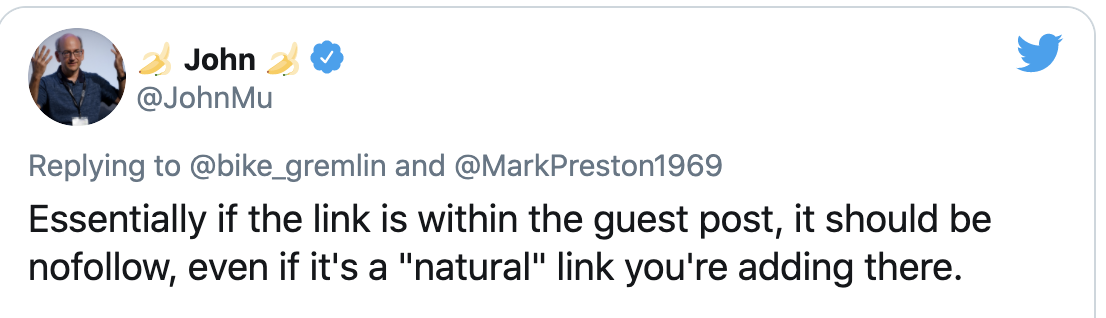
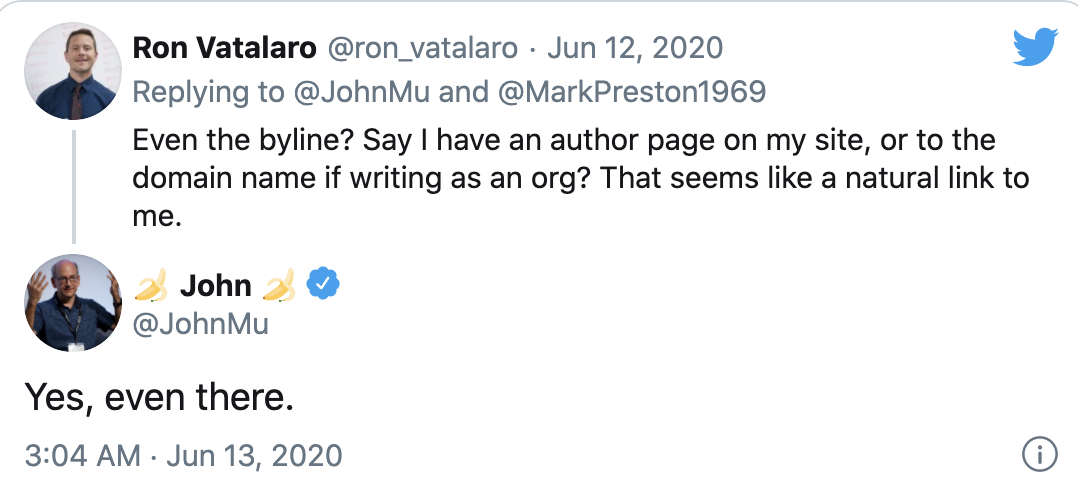
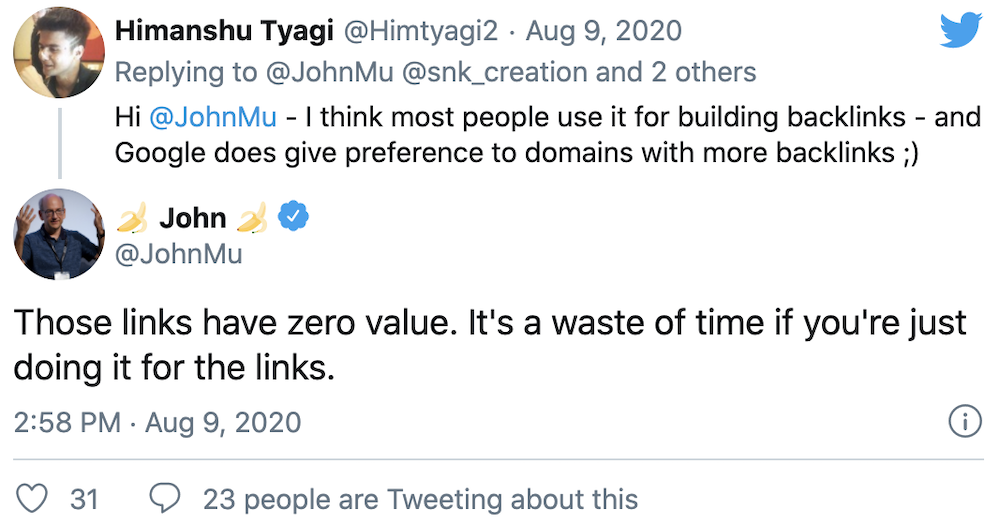
Remember what John Mu said above regarding links. Google is pretty clear on what they want on guest blog posts — nofollow links. So don’t use guest blogging as a link building strategy. He also implied that blog links have no value:
If you have relevant and high-quality resources on your site that could benefit the reader, a link to them can be a good thing. While it most likely won’t be a follow link, it could send a lot of traffic your way and help with brand awareness.
3. Bragging about your company or a tool/service you offer.
This strategy doesn’t help the reader or the site you want to be published on. It isn’t about you; it is about their site, their readers, and creating trust in your brand.
You don’t need to brag about yourself in content. If you create something amazing, the publisher will brag for you on their website, on their social accounts, and maybe in their newsletters. Odds are, since you want to be on their site, they will have a lot of followers and a large audience.
Just make sure your bio features your brand and an author who can answer questions in comments and social media quickly and authoritatively. Remember, no one ever built trust by bragging.
What Does Work: Authority and Superior Quality
Impress an audience on a new blog with your knowledge and expertise. Your guest blogging content needs to be superior in grammar, flow, and organization. The quality of the piece is critical. Answer questions, define terms, examine pain points, and provide solutions.
Side Note on Flow: In February, I spoke to Google’s Gary IIlyes personally about content, and he emphasized the importance of flow and transition in writing. He specifically mentioned a flow from sentence to sentence and from paragraph to paragraph. So focus on this when writing.
Write to impress, to educate, and to create trust. Each person that reads it has the potential of becoming a fan of your work. If they share your content, their followers see you and your brand. As you gain new followers, you want to share posts that are just as authoritative from your blog.
You want to be present and timely with comments on blog posts and in social shares. The quicker you answer a question, the better it makes you look. And truthfully, when an audience gets to interact with an author one-on-one, they build a relationship that is not easily forgotten.
Choosing a Topic to Write About
Where to Start
Keep in mind that large and influential blogs often have content plans and goals. While other blogs are open to a variety of ideas within their niche — it is your job to know their niche and to find out what the blog is looking for in guest posts.
The first thing you should do is look for writing guidelines and carefully review what the blog is asking for. If the site took the time to write these guidelines, this is what they want, so pay close attention.
Here is an example of our old guidelines page when we accepted blog posts. I cannot explain how many emails I have received in the last three years that offered to write blog posts on topics totally unrelated to our blog. We have also received endless emails with articles that didn’t match our guidelines at all.
Don’t waste your time or an editor’s creating a guest post that doesn’t match what the publisher is looking for.
Doing Your Own Research
If you can find a ranking gap for the blog you want to be published on, you have an edge.
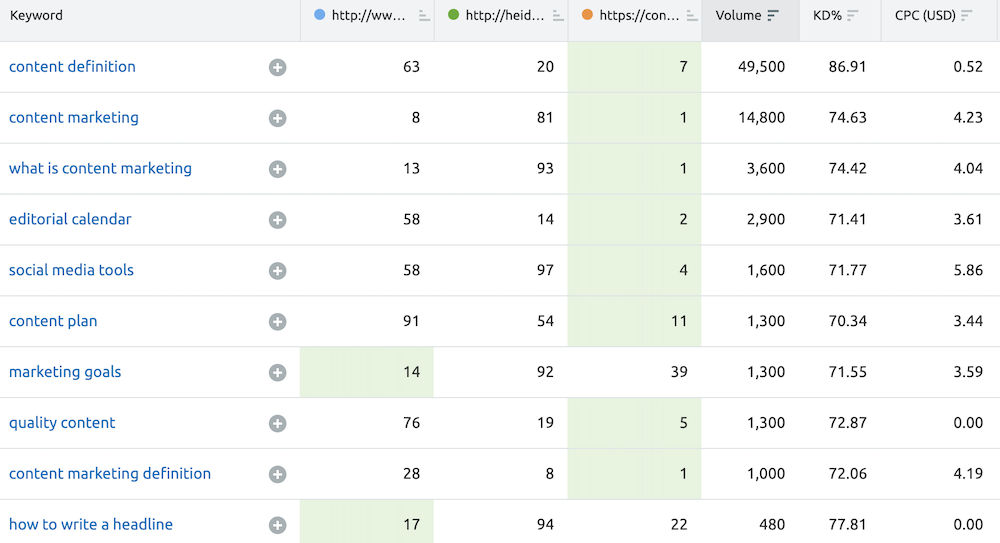
You can use a tool like the Keyword Gap tool to find a gap between the blog and its competitors. If competing blogs are ranking highly for a search term, and the site you want to be on does not, perhaps you could help fill that gap.
Topic Research for Ideation
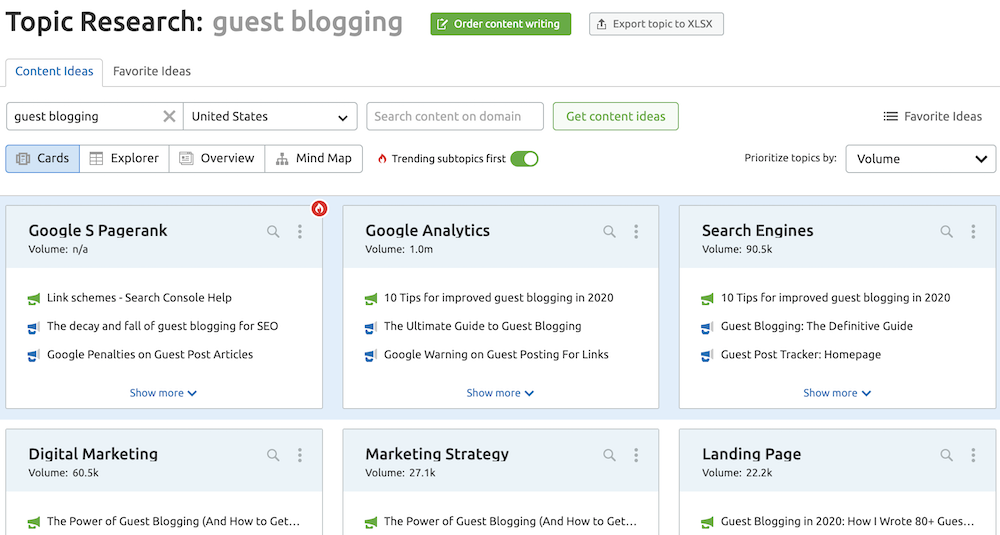
My favorite tool for blogging research is the topic research tool. You just enter a keyword and see recent topics related to your keyword.
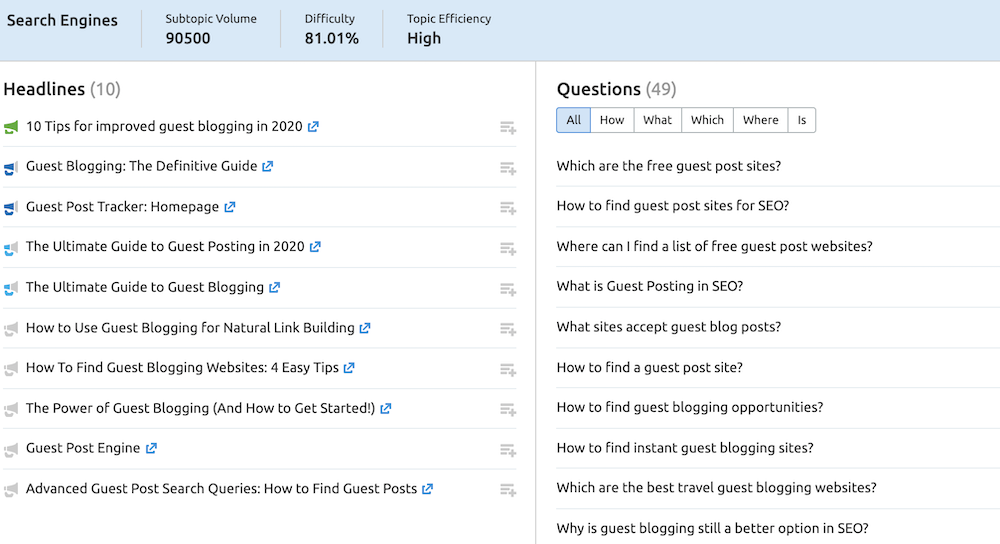
You can click on each topic card and get recent headlines and real-time questions people are asking on the topic.
By looking at recently published articles, you can see what has been done well and what has been missed, and then figure out a plan to create something better. The questions listed will help you find the questions people need an answer to and provide insights to intent.
Email Outreach: Focus on Real and Personal Communications
I do not suggest templated outreach to editors. I can tell you that those are the emails that often get missed or ignored the most. Often, a template email comes across as disingenuous, and it seems as though no effort to understand the blog has been made.
Friendly and honest communication is critical to be seen and remembered.
I recommend creating a more personal email where you do one of (or a combination of) the following:
Explain who you are, what you like about the blog, why you want to contribute, and what value you think you could bring. Ask what they are looking for and where your expertise lies.
Explain your expertise and the types of articles you typically write about. Ask the editor if there are any topics they are looking for specifically you can help with.
Keyword Gap, you have two options. One, give them two-three titles related to the keyword, explain why you have the knowledge and expertise to cover the topic.
Or two, explain your expertise and the gaps you found. Suggest some ways you think you could help the site rank for it and ask if you could collaborate with editors so you could both create something outstanding together.
My recommendation — stop with the cold outreach emails. I know people have been saying this for years, but the emails haven’t stopped. I want to see someone who knows our blog well (style and type of content) and is a true expert in the topic they are pitching.
Going Beyond: Standing Out Amongst Millions of Guest Posts
There are some writers that impress more than others, and their carefully planned efforts mean that the site they want to rank for has a better shot at gaining rankings. FYI, editors LOVE that! Here are some things that have impressed me that you could use to impress an editor and get your content published:
Includeclear and easy to read screenshots in how-to posts. Don’t make the editor retake images for you; many won’t, so they could reject outright, or you are forcing them to take time sending you emails and making requests. Avoid wasting your time and theirs.
Produce an informative, high-quality video that can add to the content: Good clarity, quality sound, and additional information the reader could use and share.
Plans for SERP features — Those with plans and requests for formatting to get a position 0, People Also Ask, or carousel placement show they have gone the extra mile, and that they want to help my site be successful.
Unique quotes from respected experts — Quotes from experts are always good, but when a writer goes to an expert and gets a timely and relevant quote for a specific article, that is really impressive.
Using the brand/blog — whoever you are hoping to be published by, integrate their successes and blog posts in yours. Examples include links to relevant articles, screenshots of positive reviews, or a mention of something they have done that is impactful.
Images and infographics — Good editors know the amount of work it takes a writer to create high-quality content. See if they have a design team to help with images and perhaps an infographic that would benefit both you and them. If they don’t, check out Canva for quick ways to create impactful imagery.
Optimize images — When naming images, keep image SEO best practices in mind. Reduce the size of images for editors, and use Alt Tags when submitting via a CMS.
A list of quotes for social — Provide editors with some 2-3 good points they could include with social shares. When you share, say something like, “I have some ideas for social shares that might save you time. These are some of the best points in the article…”.
Tips for After Your Guest Post is Published
You need this article to do well, and while the publisher is going to promote the post, there are things you should do as well.
Be responsive in comments — be ready to answer any questions and respond to positive comments; this will make you stand out amongst other authors.
Track the post on social platforms and respond to comments when it makes sense.
Promote the post on your social channels as well, not just the week it is published. Come up with different social shares and share them throughout the year while tagging the publisher.
Keep it evergreen — Things change, like statistics, algorithms, procedures, and legal issues. When you see something has changed, email the publisher with updates that could be added to the article to ensure the article remains relevant and trustworthy (remember E-A-T and YMYL).
I am a firm believer that guest blogging is a fantastic way to build a personal brand and to create awareness for a larger brand, but as with everything, it is “how” you do it that will determine whether an effort is successful or not.
Google Ads and Microsoft Advertising have always been near mirror images of each other when it comes to search engine marketing. Generally, Google is the innovator and Microsoft follows along with similar updates a few months later. Even though there are some differences between the two, many advertisers set up their ad accounts in similar manners. Considering this fact, Microsoft Ads allows for a connection to your Google account which creates the ability to transfer your Google search structure over into their platform. This is a massive time-saver knowing one does not need to import campaigns from Excel files individually. Below is a foolproof guide to this transfer process and it includes a few tips to get the most out of your transfer.
The First Steps To Transfer A Google Ads Account Into Microsoft Ads
Enter the Microsoft Ads UI and go the account where the transfer is needed
Select “create a campaign”
In the research and other tools section on the right, select “Import from Google Adwords” (catch up with the times Microsoft – it’s Google Ads)
Select the Google account you need the transfer from
Select “Continue”
Your next selection is either importing everything existing in Google or specific campaigns/ad groups. The latter will be used 95% of the time for most digital advertisers
Make sure “show paused campaigns and ad groups” are selected below the list of campaigns to see everything in your account
Select “Continue”
The Detailed Steps You Cannot Afford To Overlook When Transferring Your Google Campaign Into Microsoft Ads
Now we are at the more detailed stages of the transfer process. Here, advertisers must pay close attention to the changes that they will allow Microsoft Ads to make to their transferred campaigns/ad groups.
The first section “What to Import” has 2 advanced options to expand which deal with the import and updates to existing items. Please pay attention to these 2 additional drop downs as they can make your life easier down the road.
For the first advanced option dropdown, “Items not previously imported into Microsoft Advertising” I generally have all but one of the selectors chosen: negative keyword lists. This is due to Google and Microsoft Ads having slightly different settings for those lists. Instead of importing those, I manually upload them later.
For the second advanced option dropdown, “Updates to existing items”, I keep the same settings as above and remove the selection for negative keyword lists.
Moving down to “Bids and Budgets”, here you have the option to either increase all of your bid and budget minimums to match the Microsoft Ads minimums or you can manually override your presets from Google.
Next, we have the “Other Options” section which is where you can save the most time during the transfer process
The gist of this section is “find and replace” across your LPs, tracking templates, and campaign naming conventions. If you use “google” in your tracking or naming conventions, you can find and replace “google” with “microsoft” or “bing”
Starting with “Landing Page URLs” and “Tracking Templates” you can use this section to automatically update aspects of your URLs via find and replace
“Campaign Options” allows for the same name updates.
But it also has a few extra crucial selectors
The most important being to select “Pause newly imported campaigns” so that the campaign does not start serving without your final checks.
The next 2 important selectors involve previous paused campaigns or ads. Select both “Include paused campaigns when importing new items” and “Include paused ads when importing new ads” to ensure that everything you want to transfer over does, even if it’s paused in Google.
Select “Continue”
Finally, the schedule. Most of the time advertisers will choose to run now. However, the options exist to run the transfer at the time of your choosing.
That’s it! The transfer process is meant to make life easier and help advertisers save time with structures that they already have in place on the Google side of things. The biggest piece of advice to draw from this process is to take your time and read through all of the settings selectors as you work down the sections. A few wrong selections can throw the entire transfer out of balance and send you back to step 1.
Gary Illyes from Google has confirmed that Googlebot does indeed support Brotli compression. Brotli is a data format specification for data streams compressed with a specific combination of the general-purpose LZ77 lossless compression algorithm, Huffman coding and 2nd order context modelling. Brotli is a compression algorithm developed by Google and works best for text compression.
Gary said on Twitter he spoke with the Googlebot team and they confirmed with him that Googlebot does support this compression format.
More importantly, the tweet looked incredibly tasty:
Who asked me a few weeks ago whether Googlebot supports brotli compression?
Brotli is fairly new, it was initially released on October 15, 2013, with a stable release only on October 28, 2018. You can learn more about it on Github.
 Don’t let anything stand between you and your professional goals: Join thousands of your peers online, October 6-8, for MarTech… for free!