Wednesday, 1 January 2020

Facebook shows users more details about data used to target ads

Facebook is introducing new details to its “Why I’m seeing this ad” feature for users. It now shows the interests and categories used to target the ad and how the ad targeting information was collected — meaning, the website or Facebook Page a user may have visited. The tool links to options to hide ads from an advertiser or remove ad targeting data from their profiles.

Facebook Ad Preferences (a page within User Settings) also has been updated to include two sections: One displaying the advertisers who have uploaded a list with the user’s information, and another that lists businesses that have uploaded and shared lists with the user’s information.

“In this section, you’ll see the business that initially uploaded a list, along with any advertiser who used that list to serve you an ad within the last 90 days,” writes Facebook Product Manager Sreethu Thulasi.

Ad Preference pages will list an advertiser’s phone number or email address as well.

Why we should care

Facebook’s efforts to be more transparent with users regarding their advertising practices requires the company to pull back the curtain on many advertisers’ ad targeting strategies. The move means marketers need to be using legitimate resources to collect data and create audience lists.

There is always the chance a user may not be happy with an advertiser targeting them, even if their information was collected appropriately. If more and more users begin taking advantage of Facebook’s ad targeting controls, advertisers could see a drop in reach for their campaigns.

The reality is social platforms are shifting, forcing advertisers to reconsider their strategies. Savvy marketers understand the need for more transparency in terms of ad targeting, and that an ad platform that delivers an honest, authentic experience can be good for both consumers and brands alike.

More on the news

  • Facebook first launched “Why am I seeing this ad” feature more than five years ago, giving users the option to hide specific ads in their feed.
  • Earlier this year, Facebook began showing users how advertisers and third parties use their contact information to target ads on Facebook.
  • In April, Facebook added even more information to the “Why am I seeing this ad” feature, adding the upload date of a Custom Audience used to target the ad and the agencies or marketing partners that worked with the advertiser to create the ad.

About The Author

Amy Gesenhues is a senior editor for Third Door Media, covering the latest news and updates for Marketing Land, Search Engine Land and MarTech Today. From 2009 to 2012, she was an award-winning syndicated columnist for a number of daily newspapers from New York to Texas. With more than ten years of marketing management experience, she has contributed to a variety of traditional and online publications, including MarketingProfs, SoftwareCEO, and Sales and Marketing Management Magazine. Read more of Amy’s articles.

This marketing news is not the copyright of Scott.Services – please click here to see the original source of this article. Author:

For more SEO, PPC, internet marketing news please check out https://news.scott.services

Why not check out our SEO, PPC marketing services at https://www.scott.services

We’re also on:
https://www.facebook.com/scottdotservices/
https://twitter.com/scottdsmith
https://plus.google.com/112865305341039147737

The post Facebook shows users more details about data used to target ads appeared first on Scott.Services Online Marketing News.


source https://news.scott.services/facebook-shows-users-more-details-about-data-used-to-target-ads/

Tuesday, 31 December 2019

Quora, Pinterest ads pixel integrations now available in Google Tag Manager

Quora’s Google Tag Manager integration.

Pinterest and Quora are now approved Google Tag Manager vendors, making it easy for marketers to manage their Pinterest and Quora Pixels via Google’s platform.

Why you should care

The native integrations for Quora and Pinterest makes it much easier to set up those pixels in Google Tag Manager (GTM) to track ad campaign performance from those channels. No more having to create a custom HTML tag in GTM.

Within GTM, you can set up your pixels from channels to track user behaviors such as viewing a piece of content, or adding items to the cart, without having to alter the code base.

Currently, Pinterest and Quora’s Google Tag Manager integrations only support tacking from websites not apps, according to Google’s supported tag manager list.

More on the news

  • Both Pinterest and Quora shared quick steps for adding each platform’s tags into your Google Tag Manager account: Pinterest instructions here. Quora instructions here.
  • Google Tag Manager currently supports more than 80 websites natively, including LinkedIn, Twitter, Adobe Analytics, Microsoft Ads and more.

About The Author

Amy Gesenhues is Third Door Media’s General Assignment Reporter, covering the latest news and updates for Marketing Land and Search Engine Land. From 2009 to 2012, she was an award-winning syndicated columnist for a number of daily newspapers from New York to Texas. With more than ten years of marketing management experience, she has contributed to a variety of traditional and online publications, including MarketingProfs.com, SoftwareCEO.com, and Sales and Marketing Management Magazine. Read more of Amy’s articles.

This marketing news is not the copyright of Scott.Services – please click here to see the original source of this article. Author: Amy Gesenhues

For more SEO, PPC, internet marketing news please check out https://news.scott.services

Why not check out our SEO, PPC marketing services at https://www.scott.services

We’re also on:
https://www.facebook.com/scottdotservices/
https://twitter.com/scottdsmith
https://plus.google.com/112865305341039147737

The post Quora, Pinterest ads pixel integrations now available in Google Tag Manager appeared first on Scott.Services Online Marketing News.


source https://news.scott.services/quora-pinterest-ads-pixel-integrations-now-available-in-google-tag-manager/

Why an SEO should lead your website migration

Why an SEO should lead your website migration

Change is a natural part of a business, particularly when it comes to your digital presence.

The need to rebrand, switch up the CMS (content management system), consolidate your resources or revamp the architecture and user journey of your website, is ultimately inevitable. And whatever the goal may be, it is not uncommon for all major initiatives to fall under the umbrella of a contemporary digital marketer.

How does Google feel about changes

One thing to keep in mind, however, is Google’s tendency to be less than accommodating towards major website changes, especially URL changes. And who can blame them? Whilst Google’s algorithm may be able to detect semantic differences between websites, it’s somewhat unrealistic to expect it to also realize that the similarities between store.hmv.com and hmv.com mean they’re both the same brand.

Therefore, without acknowledging this, many domain changes result in staggering losses of traffic and rankings, and suddenly the most well-known brand in an industry becomes non-existent within Google’s universe. It is therefore imperative to ensure the changes you’re making can be correctly comprehended by Google.

How to understand Google

Expecting a lonesome digital marketer to be a jack of all channels is quite unrealistic. But luckily you don’t need to be. There’s a whole industry of people who are dedicating their days to figuring out how to think exactly like Google, and they can help you avoid the risk of decimating your hard-earned keyword rankings (unless you’re doing black hat tactics, in which case, those rankings aren’t very hard-earned after all). This industry is SEO.

Three pillars of SEO

Before we dive into the value SEO, here’s a quick summary of the three key pillars:

  • Accessibility: Technical workings of the site. This includes everything that Googlebot takes into account when understanding your site’s code. Basically, all the tags and developer language that are telling the crawlers how the site should be interpreted.
  • Relevance: Content your visitors and Googlebot came for, including all of the text and metadata on your pages, blog posts, and even videos – everything your visitors see.
  • Authority: Backlinks from other sites, with each one counting as a “vote” of confidence, which Google takes into account when ranking.
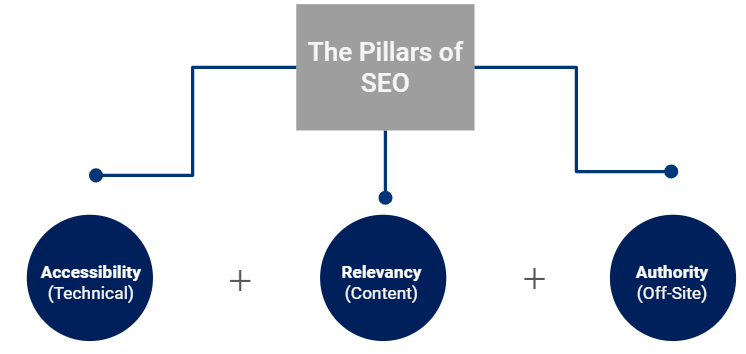
chart on the three pillars of SEO

So with that crash course, we can now connect the dots between SEO expertise and high-level migration requirements.

Why you need SEO

Whilst a website’s appearance is important, first and foremost it’s crucial to understand how you’re going to explain the changes you’re making to Google. We suggest a handwritten note:

“Dear Google,

Don’t worry, some things are changing but we still love you, so here is a comprehensive, incredibly large map of URL redirects detailing the new versions of the exact same pages you know and ranked the first time around.”

On a more serious note, however, here are five ways in which the expertise of an SEO professional can propel your website towards successful migration.

1. Taking the complexity out of URL mapping and redirects

Since a site’s internal linking and page equity is an essential part of SEO, we deal with redirect handling and URL mapping and all the complications that come along with it, all the time. Therefore, you have to make sure each redirect makes sense, and also that each page is able to take on the new status. Common issues at this stage can include:

  • Incorrectly implemented redirects (302 or the dreaded 307) that may undermine your intentions
  • Extremely long or even infinite redirect loops, which will cause Google to rage-quit the page or even your entire site
  • Redirects to irrelevant pages, which Google may not mind too much but will annoy your users

Just in case you’re not convinced, here’s a scary graph of what happens when you don’t do this properly.
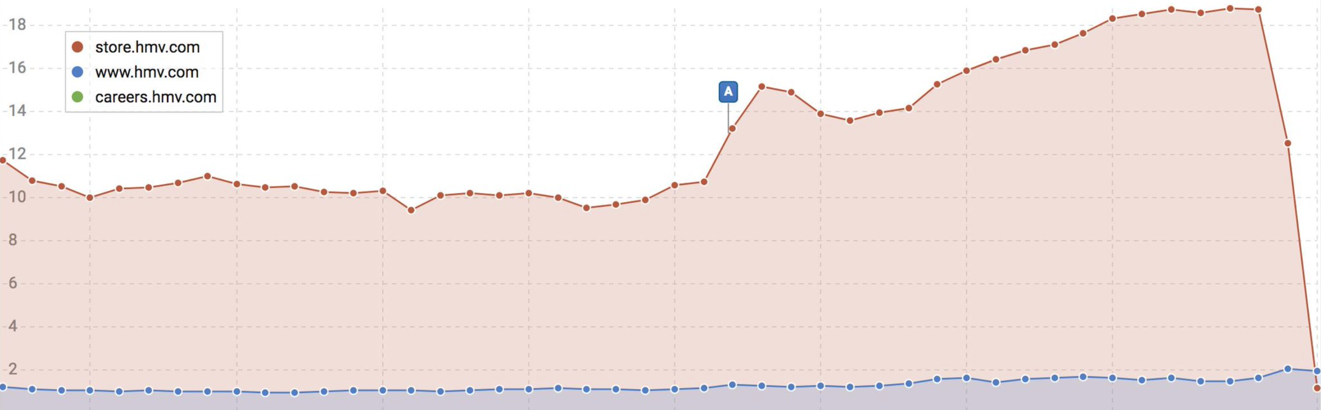
graph showing repercussions of bad URL mapping

Source: Croud

The process of telling Google what’s what extends beyond redirect mapping, it also includes on-page work. Specifically, the canonical tag.

Fun fact: 301 redirects don’t actually stop Google from indexing your pages, so if you left it at that, you would just end up with some poor rankings and some confused users. Luckily, your friendly neighborhood SEO knows all about the various ways to help encourage Google to drop your old page out of the index as it goes along your new site.

2. Understanding your website’s behavior

So, you’ve done all the mapping and have set up just how to introduce Google to your new site. While that’s very exciting, we do have to remember the “understanding” part of these first several weeks. The primary reason for site migration is to provide a new and improved site that will (hopefully) gain more traffic and drive more business. However, without understanding how your original site performed, it’s very difficult to establish if your new site is actually superior. This, therefore, highlights the importance of benchmarking.

Of course, you may know how much traffic your ad campaigns – and even your website in general – are pulling in, but you’ll need to know more than that to be successful. As SEOs, our aim is to understand your site as much as the search engines do, which as explained above, is much more than just content on your pages.

To paint the best picture of your website before you migrate, use several tools that provide a variety of key SEO data points:

  • Keyword rankings and their respective landing pages
  • Links to your site
  • Pages with 200 (and non-200) status codes
  • Crawl volume and frequency

By aggregating the different metrics and views of each tool, you can create a beautiful, detailed portrait of how your website behaves, and how it’s interpreted by both search engines and users. Astute benchmarking will allow for in-depth, helpful post-migration analysis, particularly for those metrics that can only be recorded at a particular moment. There’s no way to tell how fast your pages loaded, or how many pages returned non-200 status codes last week. If you don’t gather this information beforehand, you won’t be able to fully report the impact of the migration.

After you complete the migration, you can gather this data again to truly judge your results. Everyone will remember to check the new traffic statistics, and even the new rankings, but only an SEO will remember to check that those numbers make sense and you haven’t accidentally orphaned half of your product pages. SEOs will make sure users aren’t just on your site, but crawlers are too. With proper data at your disposal, you can set about making iterative improvements which will undoubtedly be necessary.

3. Migrating your tracking tools

All this talk about performance and results is for naught if you can’t actually track any of it. Much like Google’s search engine, Google tools aren’t so keen on supporting your site migration either. Therefore, you have to make sure you’re ready to start tracking the new site, ideally without losing your old data.

Dealing with various tracking tools and codes all the time, an SEO has to be a Google Analytics expert too (it’s commonly a requirement on most resumes). So how do you avoid a scenario in which either you have no historical data and can’t measure the success, or when you have two different accounts and have to do the calculations for performance comparisons by yourself? By making plans to migrate your tracking tools.

Ideally, you’ll use the same analytics tracking code for the migrating site, so that the old metrics can be directly compared to the new numbers once it takes place. Need some more persuasion?

Take a look at this graph detailing a successful site migration.
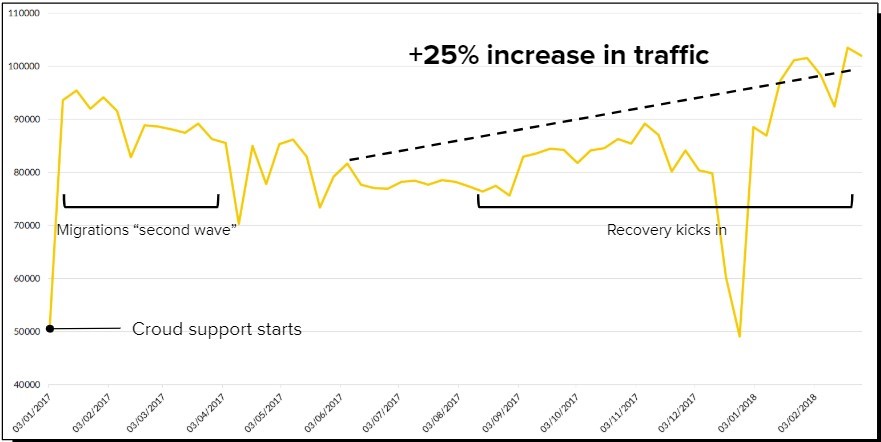
graph detailing a successful site migration

Source: Croud

 4. Testing and the importance of the human touch

So you’ve planned all your new pages, and your new site is built. What’s next? Hopefully, it’s built in a staging environment and not actually live. If it’s not, you run the risk of causing all sorts of issues with duplicate content and ranking cannibalization.

However, your SEO can easily take charge of this with a robots.txt directive (which will haunt them until the site is live and they can change it). Despite its purpose, a staging environment doesn’t always reflect the search engine’s behavior since it lives in isolation. There’s no way to track backlinks or see exactly what it will look like in a SERP at this time.

Often, Googlebot doesn’t even fully crawl staging environments, because it’s seen as time-wasting. Therefore, your SEO’s brain is your very best test.

Everyone will check that the pages are set up as planned, but your SEO will be the one who can thoroughly re-test each individual redirect at 2 am. This will likely be the last time that any mistakes will be recognized before launch, so it’s critical to make sure that every redirect behaves as expected and that they are all 301 status codes.

Lastly, you’ll need to make sure that a single XML file stays live on the legacy site, containing all the legacy URLs. This will be used to push Googlebot through the old URLs and onto the new site, expediting your meticulously-mapped redirects.

5. Launching and mitigating loss

Finally, you’re ready to flip the switch and the champagne bottles are out. So you turn on the new site, and congratulations – you’ve just lost 20% of your traffic.

No, really, congratulations. In case you forgot the daunting chart we shared earlier in this post, website migrations can cause damaging losses, and sites that don’t prepare accordingly, often never recover. However, if you’re smart and you hired an SEO expert to take charge of this project, they’ll have the task at hand.

Your traffic loss is a product of search engines and users not recognizing your new site – temporarily. Your SEO will have made sure everything is set up properly, so Googlebot is quickly figuring out that your new site contains all the same high-ranking, trustworthy content as on your old site. It’s still a little miffed at you for changing on it, so you may only get back on the second pages of results.

You’ll still have some further optimizations to do, but it’s much easier to go from page two to page one, rather than page ten to page one.

Just remember, we’re guiding this migration from an SEO perspective. Googlebot is basically a person, so as long as it can read the site, we assume that users will enjoy their experience too.

Kailin Ambwani is a Digital Associate at global digital agency Croud, based in their New York office.

Related reading

Google Sandbox Is it still affecting new sites in 2019
alexa.com search tools updates competitive analysis
How to run a successful competitor-focused paid campaign
Nine Google Ads hacks to improve your CTR and conversion rate

This marketing news is not the copyright of Scott.Services – please click here to see the original source of this article. Author: Kailin Ambwani

For more SEO, PPC, internet marketing news please check out https://news.scott.services

Why not check out our SEO, PPC marketing services at https://www.scott.services

We’re also on:
https://www.facebook.com/scottdotservices/
https://twitter.com/scottdsmith
https://plus.google.com/112865305341039147737

The post Why an SEO should lead your website migration appeared first on Scott.Services Online Marketing News.


source https://news.scott.services/why-an-seo-should-lead-your-website-migration/

Daily Search Forum Recap: December 31, 2019

Here is a recap of what happened in the search forums today, through the eyes of the Search Engine Roundtable and other search forums on the web.

Search Engine Roundtable Stories:

  • Google: XML Sitemaps Are Mixed Up & Used As An Energy Drink
    Google’s John Mueller said on Reddit that Google uses XML Sitemaps like an energy drink. John said “All sitemap files of a site are imported into a common, big mixing cup, lightly shaken, and then given to Googlebot by URL in the form of an energy drink.”
  • Google: Not Cloaking When Content In NoScript Missing Due To A Blocked Endpoint
    Mike King asked John Mueller of Google an interesting question around issues that come up with the web rendering engine and blocked endpoints with JavaScript rendering issues. Mike asked if it would be considered cloaking if Google does not end us seeing the content in the rendered version because of the blocked endpoint.
  • A Cheesy Video On Google’s URL Inspection Tool
    John Mueller and Martin Splitt from Google released a cheesy video, literally cheesy in many ways, around questions around the URL inspection tool. These are FAQs that you probably know the answers to already but the video is so funny to watch that you kind of want to watch it more than once.
  • Lists On Google Maps Search Carousel For Restaurants?
    Google is testing a new search user interface treatment for map results called “Lists on Google Maps.” This shows you a carousel of results from Google Maps, Google My Business listings, that you can scroll through and learn more about.
  • Google’s New Year’s Day Doodle For 2020
    It is a new year, 2020, in some places now and if you visit the Google home page in those locations you can see Google’s frog-themed New Year’s Day Doodle. The frog is also looking out at a city landscape, over the water, as the sunrises. It looks like an optimistic 2020, right?
  • A Sunset View From The Google Irvine Office
    Here is a photo I found on Instagram of a sunset looking out from the Google office building in Irvine, California. The person who posted this on Instagram wrote “beautiful sunset at work today” usin

Other Great Search Forum Threads:

Search Engine Land Stories:

Other Great Search Stories:

Analytics

Industry & Business

Local & Maps

Mobile & Voice

SEO

PPC

This marketing news is not the copyright of Scott.Services – please click here to see the original source of this article. Author: barry@rustybrick.com (Barry Schwartz)

For more SEO, PPC, internet marketing news please check out https://news.scott.services

Why not check out our SEO, PPC marketing services at https://www.scott.services

We’re also on:
https://www.facebook.com/scottdotservices/
https://twitter.com/scottdsmith
https://plus.google.com/112865305341039147737

The post Daily Search Forum Recap: December 31, 2019 appeared first on Scott.Services Online Marketing News.


source https://news.scott.services/daily-search-forum-recap-december-31-2019/

Here’s your sneak peek at the SMX East agenda

I just sat in on one of the coolest meetings… brainstorming the SMX® East agenda with the editors of Search Engine Land. This show is going to be bigger and better than ever, an absolute firehose of content: 70+ sessions covering everything modern search marketers like us need to know.

The team’s not done yet, but I can share this sneak peek with you now…

Woot! Rand Fishkin’s Opening Keynote

Rand will kick off the conference with Google: From Everyone’s Search Engine to Everyone’s Competitor.

All-You-Can-Learn Search Marketing Tactics

Somehow, the Search Engine Land editors managed to cram 70+ presentations into two intense days of training. And we’re shaking things up… complementing SEO and SEM classics with fresh sessions on search marketing essentials:

  • Conversion Optimization For The Long Run
  • Mobile First Indexing & Mobile Friendly SEO
  • Optimizing For Voice Search & Virtual Assistants
  • Refreshing Evergreen Content: How, When and Why
  • Selling Smarter With Search, Social & Marketplace Ads
  • JavaScript: The SEO’s Swiss Army Knife
  • Schema & Structured Data: “Hidden” Gold For SEOs
  • The Periodic Table Of SEM: 2019 Edition
  • The Periodic Table Of SEO Success Factors: 2019 Edition

…and that’s just a taste.

Clinics: Your Specific Questions, Answered!

Clinics are my favorite. They’re full-length sessions that are 100% Q&A – seriously. No PowerPoints. No presentations. No agenda. Just a panel of friendly experts sitting at a table ready to answer your questions. Want an account audit? They’ll pull up your site and have a look. Wondering about a new concept? They’ll take turns sharing advice. Have an ultra-specific question that hasn’t been answered in any other session? This is your chance to ask it. At SMX East, we’re hosting clinics on SEO, SEM, Social Ads, Google Analytics, and more!

Deep-Dive Workshops

Bless your brain if everything I described above left you thinking, “More, please.” For overachievers like you, we offer pre-conference, full-day workshops that dive deep into definitive pillars of search:

Stay tuned for more!

Just writing this left me equal parts exhausted and excited. And did I mention… that’s just the sneak peek(!?). There’s much more to come, including more sessions and keynotes, a ton of exhibitors, and exclusive community networking. I’ll reach out as soon as the complete agenda is live!

Ready to register? Smart move. You’ll save up to $900 off on-site rates if you book now. Check out our different pass types and pick the one that suits your goals and budget!

See you in NYC 🙂


About The Author

Lauren Donovan has worked in online marketing since 2006, specializing in content generation, organic social media, community management, real-time journalism, and holistic social befriending. She currently serves as the Content Marketing Manager at Third Door Media, parent company to Search Engine Land, Marketing Land, MarTech Today, SMX, and The MarTech Conference.

This marketing news is not the copyright of Scott.Services – please click here to see the original source of this article. Author:

For more SEO, PPC, internet marketing news please check out https://news.scott.services

Why not check out our SEO, PPC marketing services at https://www.scott.services

We’re also on:
https://www.facebook.com/scottdotservices/
https://twitter.com/scottdsmith
https://plus.google.com/112865305341039147737

The post Here’s your sneak peek at the SMX East agenda appeared first on Scott.Services Online Marketing News.


source https://news.scott.services/heres-your-sneak-peek-at-the-smx-east-agenda/

LinkedIn updates Campaign Manager, adds brand awareness, conversion campaign options

LinkedIn Campaign Manager objective options.

LinkedIn is adding three new features to its Campaign Manager advertising platform, along with an optimized click pricing option. The new features include Brand Awareness campaigns that charge by impressions, enhanced integration with its website conversion tracking capabilities and ads for LinkedIn Talent Solutions customers to help with recruitment measures.

Brand Awareness campaigns. The new Campaign Manager Brand Awareness feature offers advertisers a top of funnel campaign option designed to help advertisers increase their “share-of-voice” on the platform. Brand Awareness campaigns are charged by impressions (CPM: cost per thousand).

Enhanced Website Conversion capabilities. LinkedIn has enhanced its website conversion capabilities by building “tighter integration” with its conversion tracking tools, according to Senior Product Manager Amita Paul

“You can create campaigns that are optimized for specific actions on your website, like purchases, downloads or event registrations,” Paul said.

Ads for LinkedIn Talent Solutions customers. LinkedIn is opening up Campaign Manager to its LinkedIn Talent Solutions customers, giving HR and recruitment professionals the ability to runs ads aimed at delivering more completed job applications via either LinkedIn or the customer’s website.

Optimized Click Pricing. After rebuilding Campaign Manager to include an objective-based workflow process, LinkedIn is now introducing optimized click pricing to align with an advertiser’s objectives.

Advertisers that select “website visits” as their objective will only be charged for clicks that take users to the advertiser’s landing page. Advertisers running social engagement campaigns will be charged for any social engagement with the ad — likes, comments, shares, etc.

Why we should care. LinkedIn is strategically building out its advertising platform for marketers managing high volume campaigns, steadily rolling out new advertising features over the past year, including the redesign of its Campaign Manager to be objective-based. These latest updates fall in line with LinkedIn’s goal to create an objective-based ad platform.

“Objective-based Buying generated 300% more sign-ups than standard bidding over an equivalent amount of time,” said LinkedIn ad expert and B2Linked Founder A.J. Wilcox, “Objective-based Buying generated more conversions than any other similar time period compared it to, all the way back to 2015.”


About The Author

Amy Gesenhues is a senior editor for Third Door Media, covering the latest news and updates for Marketing Land, Search Engine Land and MarTech Today. From 2009 to 2012, she was an award-winning syndicated columnist for a number of daily newspapers from New York to Texas. With more than ten years of marketing management experience, she has contributed to a variety of traditional and online publications, including MarketingProfs, SoftwareCEO, and Sales and Marketing Management Magazine. Read more of Amy’s articles.

This marketing news is not the copyright of Scott.Services – please click here to see the original source of this article. Author:

For more SEO, PPC, internet marketing news please check out https://news.scott.services

Why not check out our SEO, PPC marketing services at https://www.scott.services

We’re also on:
https://www.facebook.com/scottdotservices/
https://twitter.com/scottdsmith
https://plus.google.com/112865305341039147737

The post LinkedIn updates Campaign Manager, adds brand awareness, conversion campaign options appeared first on Scott.Services Online Marketing News.


source https://news.scott.services/linkedin-updates-campaign-manager-adds-brand-awareness-conversion-campaign-options/

The major deals and integrations that shaped technology for markters in 2019

At the start of 2019, martech expert Scott Brinker predicted it would be a buyer’s market for marketing tech merger and acquisition deals, ahead of what will be a “Second Golden Age of Martech.” Brinker’s forecast was spot-on with the martech industry seeing 246 mergers and acquisitions in the first half of 2019 alone, according to Statista — a dramatic increase from the 162 over the same period in 2018.

It wasn’t only software companies taking part in the martech M&A deals — this year we saw a trend of brands scooping up martech solutions as well. In March, McDonald’s bought Dynamic Yield to personalize digital experiences across its drive-thrus, kiosks and mobile app. A few months later, Nike bought the predictive analytics platform Celect to help forecast how and when consumers purchase certain styles.

While brands were picking up martech solutions to broaden their digital capabilities, social platforms also invested in their fair share of marketing technology: LinkedIn acquired identity resolution platform Drawbridge; Twitter purchased machine learning startup Fabula AI; and Facebook picked up Grokstyle, a visual technology company originally aimed at retailers.

These were the acquisitions and integrations that will continue to shape the ways marketers engage with technology in nearly every aspect of their jobs to serve and attract customers throughout their journeys.

Major martech acquisitions in 2019

  • Salesforce expanded its data visualization capabilities with the acquisition of Tableau for $15.7 billion. The deal delivered more robust tools for users, helping marketers better extract data from the Salesforce CRM platform.
  • Google, looking to enhance its cloud analytics offerings, bought Looker for $2.6 billion. With a client list that included the likes of Buzzfeed, Hearst, King, WPP Essesnce and Yahoo, Looker was a unified data and predictive analytics platform designed for enterprise-sized clients to analyze large datasets across clouds.
  • Microsoft acquired e-commerce advertising vendor PromoteIQ, bringing the automated product marketing platform into its advertising division. The company enabled brand manufacturers to run sponsored ads on participating retailers’ e-commerce sites and offered analytic dashboards tracking campaign performance for retailers and advertisers.
  • Cision expanded its social toolset with the purchase of Falcon.io, adding social management and social listening features to its earned media stack. The deal furthered Cision’s goal to deliver a comprehensive PR solution for marketers and PR professionals.
  • Oracle added new loyalty solutions to its Customer Experience portfolio with the purchase of CrowdTwist, a customer loyalty platform. The deal allowed Oracle to integrate CrowdTwist’s technology into its Responsys, Eloqua and CX Unity platforms.
  • The social media management platform Sprinklr bought Nanigans’ social ad business, raising the total amount of ad spend Sprinklr manages to more than $1.5 billion. The deal included the addition of Nanigans’ data management, predictive analytics, optimization, campaign management and granular real-time reporting for ad business across Facebook, Instagram and Twitter.
  • Campaign Monitor, which is owned by CM Group, went on a buying spree, purchasing two enterprise marketing solutions: Sailthru, a cross-channel email marketing platform, and Liveclicker, a personalization solution for email marketers. The acquisitions helped round out CM Group’s email marketing platform offerings which already included Delivra and Emma.
  • WP Engine, a WordPress digital experience platform, bulked up its capabilities when it acquired its competitor Flywheel. The deal brought Flywheel’s more than 28,000 clients to WP Engine’s platform and highlighted the growing consolidation trend within the martech industry.
  • Similar to the Sprinklr-Nanigans deal, the video cloud solution Brightcove bought Ooyala’s online video platform business, expanding Brightcove’s video management capabilities and significantly growing its customer base. Brightcove confirmed it was acquiring the online video platform side of Ooyala’s business for $15 million.
  • Automattic Inc., the company behind WordPress, purchased blogging platform Tumblr from Verizon Communications for an undisclosed amount. While financial details were not shared, Automattic’s CEO said it was the largest acquisition the company had ever made — both in price and headcount. At the time of the acquisition, Automattic executives said the company was looking at multiple ways to fold Tumblr’s services and functionality into the WordPress platform.
  • Episerver, a digital experience platform, increased its personalization capabilities with the acquisition of Idio, a content intelligence and predictive analytics solution. Shortly after announcing the Idio acquisition, Episerver also purchased Insite Software, a B2B commerce solution.
  • The martech platform Cheetah Digital acquired Wayin Inc., adding so-called “zero-party data” capabilities to its solution. Wayin’s technology, which was integrated into Cheetah Digital’s Marketing Suite and Loyalty platforms, allow marketers to create content like interactive quizzes, questionnaires and games that are aimed at collecting first-and zero-party data from consumers who opt-in to participate.
  • In a move to further its reach into Europe, the multichannel message notification provider Urban Airship bought its EU competitor Accengage. The deal reportedly strengthened Urban Airship’s GDPR compliance capabilities and increased its volume to more than 90 billion notifications per month, a figure that includes in-app notifications, browser-based notifications, mobile wallet engagements, SMS, Facebook Messenger and email notifications.
  • In its first major acquisition in more than two years, Hubspot acquired the integration as a service provider PieSync. The deal gave HubSpot users the ability to sync their data within the HubSpot system in real-time, making it possible to retrieve the most current customer information across whatever apps they have integrated with HubSpot.

Major martech integrations in 2019

Another big trend in the martech industry: integrations across advertising, chat, email and data solutions. Multiple martech platforms expanded their core offerings by partnering with compatible solution providers, integrating analytics dashboards to enhance their data capabilities and adding native connections to remove friction for marketers and advertisers. Here are a number of notable integrations that happened this year:

  • Shopify continued to build out capabilities for e-commerce marketing with new partnerships, adding Apple Business Chat to Shopify Ping, advertising integrations with Facebook, Google, SnapChat and Microsoft as well as email partnerships with Seguno, Omnisend and SMSBump for cross-channel marketing.
  • Adobe’s solution integrations this year included deeper partnerships with Microsoft, Drift, Roku and ServiceNow to bolster its ABM, OTT and customer service solutions. A tie-in for Adobe’s Experience Platform with SAP’s Qualtrics was added in May to help users gather and measure customer feedback across channels.
  • Email automation provider iPost added an integration with Adobe’s Magento commerce cloud to inform email personalization with Magento behavioral and transactional data.
  • Salesforce expanded its partnership with Microsoft, naming Microsoft Azure the public cloud provider for Marketing Cloud. Salesforce also said it planned on adding Microsoft Teams integrations for Salesforce Sales and Service Clouds in the coming months.
  • The CDP Lytics launched an integration with Salesforce Marketing Cloud to enable users to view customer insights and execute campaigns between the two platforms. (Lytics also announced an integration with the suite of products in the Google Marketing Platform for ad targeting, analysis and optimization.)
  • HubSpot partnered with Supermetrics, giving users new multi-portal analytics and reporting solutions. With HubSpot’s Google integrations already in place, users can now export the analytics gather via Supermetrics into Google Sheets, Google Data Studio and Excel.
  • Adding its name to a long list of companies upping their messaging abilities, LogMeIn added WhatsApp and WeChat integrations to its Bold360 live chat customer engagement platform. LogMeIn reported it was working to add more channels, including Apple Business Chat and Google Business Messaging.
  • Aiming to improve its ABM capabilities, Oracle Eloqua added a Metadata integration. By integrating Metadata’s technology into its platform, Oracle Eloqua made it possible for B2B users on the platform to automate their social ad campaigns against target accounts in bulk. The integration also made it possible for users to retrieve opt-in inbound leads from ABM campaigns and push them into Oracle Eloqua lists automatically.

Equity firms take their share

One more noticeable shift we saw happening in the industry this year was a number of equity firms taking ownership of marketing technology companies — putting a spotlight on the financial value of established martech platforms.

  • Vista Equity Partners purchased the web management and digital experience company Acquia in a deal valued at $1 billion. The acquisition happened not long after Acquia had purchased two digital experience solutions: Mautic and Cohesion.
  • IBM agreed to sell the remainder of its marketing and commerce software solutions, including the Watson Marketing portfolio, to Centerbridge Partners. The equity firm reported it plans to use the newly acquired solution to form a standalone company that will deliver marketing automation tools, customer experience analytics, AI-powered content management system, personalized search and more.
  • San Antonio-based venture finance and equity firm Scaleworks acquired internal site search provider SearchSpring, a search navigation platform and merchandising technology for DTC companies and websites. The deal represents the firm’s first foray into the e-commerce industry.
  • After spending the last five years gobbling up a number of martech companies, Cision entered an agreement to be acquired by the private equity firm Platinum Equity for $2.74 billion. Gartner analyst Andrew Frank said he believed the deal demonstrates how the industry is moving toward a more solid consolidation phase.

The high volume of marketing technology acquisitions, along with new integrations across martech systems, points to an overarching trend of growth in all-in-one platforms — a move likely to benefit marketers in the long run. As more platforms consolidate and integrate their capabilities, fragmented platforms lacking key features could become a thing of the past.


About The Author

Amy Gesenhues is a senior editor for Third Door Media, covering the latest news and updates for Marketing Land, Search Engine Land and MarTech Today. From 2009 to 2012, she was an award-winning syndicated columnist for a number of daily newspapers from New York to Texas. With more than ten years of marketing management experience, she has contributed to a variety of traditional and online publications, including MarketingProfs, SoftwareCEO, and Sales and Marketing Management Magazine. Read more of Amy’s articles.

This marketing news is not the copyright of Scott.Services – please click here to see the original source of this article. Author:

For more SEO, PPC, internet marketing news please check out https://news.scott.services

Why not check out our SEO, PPC marketing services at https://www.scott.services

We’re also on:
https://www.facebook.com/scottdotservices/
https://twitter.com/scottdsmith
https://plus.google.com/112865305341039147737

The post The major deals and integrations that shaped technology for markters in 2019 appeared first on Scott.Services Online Marketing News.


source https://news.scott.services/the-major-deals-and-integrations-that-shaped-technology-for-markters-in-2019/