Monday, 30 September 2019

IAB Tech Lab releases new specs for ad seller transparency: Sellers.json and SupplyChain object

Two new specs aimed at addressing ad fraud and increasing transparency from the buy-side of the digital advertising ecosystem are out for public comment from the IAB Tech Lab: Sellers.json and the OpenRTB SupplyChain object.

The 30-day public comment period ends May 10.

What is OpenRTB SupplyChain object? The SupplyChain object will show buyers all the parties involved in selling or reselling a given bid request. It consists of a set of nodes, with each node representing an entity participating in the bid request sale. The complete chain of entities involved in (and paid for part of) the sale are then discoverable to the buyer.

“This information can be important to buyers for any number of reasons including transparency of the supply chain, ensuring that all intermediaries are entities that the buyer wants to transact with and that inventory is purchased as directly as possible,” per the spec.

It can be used with OpenRTB 2.5 and OpenRTB 3.0.

What is Sellers.json? It’s a file that allows ad buyers (DSPs) to see and verify the final seller of a given bid request — as long as the seller is ads.txt authorized. It’s like an inverse companion to Ads.txt, which publishers post to their domain to list authorized sellers of their inventory.

It also makes visible the identities of all intermediaries that participated in the sale of a bid request. It allows publisher name and domain attributes to be looked up and cached offline rather than supplied with every bid request. Each seller has a seller_id, which is the same ID that appears in an ads.txt file, SupplyChain.nodes and typically in the Publisher.id property of an OpenRTB request.

Ad systems place the sellers.json file on their root domain and any relevant subdomains. For example, http://indexexchange.com/sellers.json. The IAB Tech Lab advises “Every advertising system listed in an ads.txt file and any advertising system that is referencedfrom a SupplyChain object node should also publish a Sellers.json file” on their domains.

Why we should care. These two technical specifications build on the ads.txt imitative that launched two years ago, and apps-ads.txt for app developers, to help combat invalid traffic, ad fraud and counterfeit inventory on open exchanges. With the trio of specs, there are now tools for the sell-side (SSPs), the buy-side (DSPs) and intermediaries.

“Growth in the global digital advertising ecosystem requires trust, and sellers.json and the SupplyChain object provide essential visibility into the supply chain, enabling buyers to curate media sources,” said Dennis Buchheim, senior vice president and general manager, IAB Tech Lab. “Used together, these technologies help enable a more transparent, more efficient advertising environment. I encourage everyone to provide feedback to the Tech Lab, and adopt as soon as the specs are finalized.”

This story first appeared on MarTech Today. For more on marketing technology, click here.


About The Author

Ginny Marvin is Third Door Media’s Editor-in-Chief, managing day-to-day editorial operations across all of our publications. Ginny writes about paid online marketing topics including paid search, paid social, display and retargeting for Search Engine Land, Marketing Land and MarTech Today. With more than 15 years of marketing experience, she has held both in-house and agency management positions. She can be found on Twitter as @ginnymarvin.

This marketing news is not the copyright of Scott.Services – please click here to see the original source of this article. Author: Ginny Marvin

For more SEO, PPC, internet marketing news please check out https://news.scott.services

Why not check out our SEO, PPC marketing services at https://www.scott.services

We’re also on:
https://www.facebook.com/scottdotservices/
https://twitter.com/scottdsmith
https://plus.google.com/112865305341039147737

The post IAB Tech Lab releases new specs for ad seller transparency: Sellers.json and SupplyChain object appeared first on Scott.Services Online Marketing News.


source https://news.scott.services/iab-tech-lab-releases-new-specs-for-ad-seller-transparency-sellers-json-and-supplychain-object/


How to write SEO-friendly alt text for your images

How to write SEO-friendly alt text for your images

One of the biggest problems digital marketers face is nuances to crafting high-quality SEO rich content.

A great area of opportunity for marketers is their SEO alt text for images. We’ve all been to websites and the image is replaced by a red “X”, or it’s just a blank box. Wouldn’t it be great if you could benefit from that image box for an increased search engine ranking?

That’s where alt text comes in.

Alt text is just a way to describe what is going on in the image while actively increasing your ranking through smart, thoughtful placement of SEO keywords. We are going to look at ways you can improve your image alt text while keeping your content search engine friendly.

Research keywords before you start

It’s important that you look carefully into which keywords you’re going to use before you start creating content including your alt text. Google’s Keyword Planner tool can help you make educated decisions about which words are best suited for your website, depending on your niche.

When you’re researching keywords, the best practice is to look for words that feature high search volume but low competition. The reason for this thought process is simple.

High volume, high competition keywords result in an uphill battle that you may not win. If there are plenty of people searching for the words you pick, but a bunch of reputable websites who have a high domain authority, you’re going to have a much harder time reaching the top of the search engine results.

At the same time, low competition, low search keywords mean your website probably will not get the traffic you need to thrive. The happy medium is words that are popular, but not dominated by highly authoritative sites. The success of your keywords is going to reflect not just in your content or title, but in your alt text, making this an important starting point.

Supplement your alt text with primary keywords

It’s worth pointing out that alt text is important, but it should never take priority over your researched and currently implemented SEO. You would never want to rearrange your pre-arranged keywords to make the alt text keywords fit.

Instead, try to find images that compliment the keywords you’ve already selected. When you work backward from your alt text images, you could end up with a page that is more focused on the images instead of the content throughout.

The only exception to this rule is if your content is image heavy. Companies that implement slideshows, photo galleries, and the likes may benefit more from working backward from their images instead of the other way around.

Connect the content to the image text

Another common mistake that SEO marketers make is they don’t directly link the alt text to the content they create. Alt text, as mentioned, is just text that describes what’s going on in the image. If you want to make a strong connection with your audience and the search engine results, make sure you make a connection between the text in your content, the image, and the alt text.

For example, if your piece of content was about website design, your content should include text within the piece that explains the image. In this fictional piece, let’s say your keyword is “expert web design”, you’re going to need to include an image that emphasizes your point, explains the image in the content, and the alt text should include the keyword.

Keep it short

Since the main purpose of alt text is to inform the reader of what the image shows if they can’t view it, your alt-text should never drag on. Simply explain what the image shows using your keywords as the primary descriptor and additional text as needed.

The recommended alt-text length is about 125 characters. Some browsers only create one line of alt-text and allocate the size of the image to the length of the one line. The result of a long alt text line is not just “search engine confusion”, but also reader confusion when they cannot finish the line of text from within the image because it was cut off by the browser they are using.

If you find that your alt text is always longer than 125 characters, your point is probably better off posted in the actual content of the article instead of the alt image text.

Examples of SEO-friendly alt text

First, let’s take a look at the source code:

”alt-text-goes-here”

In this example, the “image.gif” is the image that is displayed to those who can properly see the image. Those who can’t see the image will instead see the text you include where it says “alt-text-goes-here”.

Here are some better examples to give you an idea of what a good SEO-friendly piece of alt text looks like.

Example one

You own a pet shop and your display picture is a kitten in a basket at your pet shop. Your source code should look something like this:

”Pet

The goal is to make your alt-text clean, concise, and friendly to the keywords you decided to target in your piece.

Example two

Now let’s say you have an online car accessory shop. You sell things like seat covers, floor liners, and air fresheners. On your air freshener page your alt text will look like this:

”Air

In the example above, you’re targeting air fresheners, new cars, cars in general, and car accessories.

Example three

Finally, you have a membership site that sells marketing tips to your audience. You have an infographic of marketing statistics everyone should know in 2019. How will your alt-text look in this situation? Since you obviously can’t fit every stat in your alt-text, you might say:

”New

Piecing it together

There’s no doubt that alt text plays a crucial role in an online world consumed by the importance of keywords. If you want to make the most of your alt text, keep these tips in mind and remember that the online world is constantly evolving.

As your website grows in size and authority you may have to make changes to your SEO keywords for future articles, and therefore for your alt text. The good news is, this allows you to pull off some interesting split tests to see which keywords are ranking well for you, and which ones are pulling in lackluster results.

One thing is clear, don’t underestimate the power of alt text as it relates to your readers and your search ranking. It may not be the most important factor, but correctly creating optimized images and alt text is an important piece of the puzzle.

Syed Balkhi is an entrepreneur, marketer, and CEO of Awesome Motive. He’s also the founder of WPBeginner, OptinMonster, WPForms, and MonsterInsights. Syed can be found on Twitter 

Read next:

Related reading

Complete guide to Google Search Console
Google tests AR for Google Maps Considerations for businesses across local search, hyperlocal SEO, and UX
Doing backlink building like a ninja
Luxury marketing search strategy series

This marketing news is not the copyright of Scott.Services – please click here to see the original source of this article. Author: Syed Balkhi

For more SEO, PPC, internet marketing news please check out https://news.scott.services

Why not check out our SEO, PPC marketing services at https://www.scott.services

We’re also on:
https://www.facebook.com/scottdotservices/
https://twitter.com/scottdsmith
https://plus.google.com/112865305341039147737

The post How to write SEO-friendly alt text for your images appeared first on Scott.Services Online Marketing News.


source https://news.scott.services/how-to-write-seo-friendly-alt-text-for-your-images/

In the battle for mobile engagement, branded apps hold untapped value

Consumers spend an overwhelming majority of their mobile internet time within apps. Recognizing this trend, the world’s biggest brands have developed apps as tools for providing services (like checking a bank balance) or making a purchase (through an e-commerce store). But many of these apps have untapped potential. Beyond basic transactions, branded apps can be used as powerful video delivery mechanisms that increase engagement and brand loyalty.

Especially as email open rates decline, apps can serve as a new way to connect with consumers with greater efficiency. Customers who have taken the time to download a brand’s app onto their device are some of the most loyal customers a brand has. This advocacy is ripe for brands to mine.

When a brand has an app and separately has video content, produced either for TV spots, social media or their website, there’s no reason these ingredients can’t be combined. The result is a powerful in-app content marketing hub that keeps the best customers engaged and keeps the brand top-of-mind. Some companies, like Nike and Red Bull, are already doing this well. To effectively market in a mobile world, brands need to think of their apps as mobile video mailboxes.

The fight for user attention

To better understand the underutilized value of branded apps, it helps first to recognize just how hard it is to reach consumers through more traditional TV and video channels. TV still comes first for so many marketers, and they invest their budget in a series of spots that will run for 30 or 60 seconds on the air. But with cord-cutting on the rise, it’s harder and harder to achieve the level of penetration TV advertisers achieved in the past. While audiences have switched to digital video, reaching them isn’t necessarily easier in that channel: 65% of consumers skip pre-roll video ads when given the option. With mobile viewership on the rise, brands must find new ways to keep their loyal customers truly engaged.

Maximizing efficiency

The efficiency imperative is front and center for most brands, and leveraging apps as another way to promote already-created video content delivers on that. By using their apps, marketers don’t have to buy media to retarget the consumers who love their brand. Instead, they can recycle content that they already have and hand it directly to the consumers who will be most receptive to its messaging.

The biggest obstacle is that the app developers and media teams are very likely working toward separate goals, and in many organizations, they may not be communicating regularly if they communicate at all. But investing time into connecting these disparate departments can yield great results for the company as a whole.

Constructing a content hub

Apps are purpose built. Airline apps are for purchasing tickets and checking in. Consumers download the AmEx app to access their credit card accounts. If the app development team is focused solely on that goal, there’s no reason to include a video player within the app, and no reason to consider content. No one explicitly downloads a banking app because they want to watch a three-minute video on smart investing tactics. But that doesn’t mean that customers aren’t interested in such content. A recent study from Hubspot found that 68% of consumers say video is their favorite way to learn about new products and services. Brands with a narrow focus can easily miss opportunities to increase spend and grow brand loyalty.

Brand’s don’t need to reinvent the wheel, but they can add functionality to make their apps something better. Users already love the AmEx app – it has a 4.9-star rating in the Apple App Store, based on 910,000 ratings. What if the app included video to promote different rewards packages and destinations that are available to cardholders? Or videos about their card features, to inspire consumers to spend a bit more? Heck, it could even host a library of the brand’s famous Jerry Seinfeld TV ads from years past, which have tens of thousands of views online, thanks to user uploads.

Pushing these videos directly to a user’s device and sending them screen notifications to tell them there’s something new for them to watch in the app is an easy, effective and innovative way to engage users. They can now watch these short videos during downtime: on a commute, standing in line at the store, waiting at the doctor’s office and other moments when they’re looking for content to entertain them.

Brands that relied so heavily on TV advertising in the past are still learning how to market appropriately in a mobile world. The video they’re producing to recruit new customers can live in the branded apps, doing double duty to re-engage loyal customers. Rather than have app and ad teams live in silos, brands need to think about how they can best combine resources to efficiently and nimbly engage with consumers in the modern, mobile-first world.


Opinions expressed in this article are those of the guest author and not necessarily Marketing Land. Staff authors are listed here.


About The Author

Daniel Hurwitz boasts more than 20 years of experience in digital marketing/media, AdTech, EdTech and HealthTech and is well versed in technology solutions to support mobile and video. A start-up specialist, Hurwitz led Sales at Evergage, GoNoodle and MapMyFitness (acquired by Under Armour in 2013). His writing has been featured on publications including PhocusWire, Martech Advisor and SalesTechStar.

This marketing news is not the copyright of Scott.Services – please click here to see the original source of this article. Author: Dan Hurwitz

For more SEO, PPC, internet marketing news please check out https://news.scott.services

Why not check out our SEO, PPC marketing services at https://www.scott.services

We’re also on:
https://www.facebook.com/scottdotservices/
https://twitter.com/scottdsmith
https://plus.google.com/112865305341039147737

The post In the battle for mobile engagement, branded apps hold untapped value appeared first on Scott.Services Online Marketing News.


source https://news.scott.services/in-the-battle-for-mobile-engagement-branded-apps-hold-untapped-value/

Daily Search Forum Recap: September 30, 2019

Here is a recap of what happened in the search forums today, through the eyes of the Search Engine Roundtable and other search forums on the web.

Search Engine Roundtable Stories:

Other Great Search Forum Threads:

Search Engine Land Stories:

Other Great Search Stories:

Analytics

Industry & Business

Links & Promotion Building

Local & Maps

Mobile & Voice

SEO

PPC

Note: This story was pre-written before the Rosh Hashanah holiday. I am currently offline for the holiday and unable to respond to comments on this site, social, media or other platforms.

This marketing news is not the copyright of Scott.Services – please click here to see the original source of this article. Author: barry@rustybrick.com (Barry Schwartz)

For more SEO, PPC, internet marketing news please check out https://news.scott.services

Why not check out our SEO, PPC marketing services at https://www.scott.services

We’re also on:
https://www.facebook.com/scottdotservices/
https://twitter.com/scottdsmith
https://plus.google.com/112865305341039147737

The post Daily Search Forum Recap: September 30, 2019 appeared first on Scott.Services Online Marketing News.


source https://news.scott.services/daily-search-forum-recap-september-30-2019/

Pro Tip: Partnerships are critical in securing your martech stack

It seems we can’t make it more than a couple of weeks without hearing about a major company that’s suffered a major incident or breach, but for the second year in a row, the ChiefMartec Roles and Responsibilities survey shows that both data privacy/compliance reviews and security reviews were at the bottom of the responsibilities list for marketing technology and operations teams.

  • IDC discovered that 40% of breaches originate with authorized users accessing unauthorized systems.
  • In research conducted by Vanson Bourne, IT professionals rank marketing among the most likely to operate in an insecure manner.
  • According to Gartner, by 2020, 100% BODs for large enterprises will expect updates on cybersecurity and tech risk.

As marketing technologists we can do better, but not alone. 

Establish a process for working across teams

Setting the stage for partnership may be time-consuming, but the outcome will serve as the bedrock of your partnership. Collaborative procedures help manage new technology requests more effectively and create a forum to learn from each other. Martech teams become better security stewards and serve as advocates for IT teams when working with marketing stakeholders.

Processes will differ by company, but here’s an idea to get started: 

  • Marketing identifies a business need and submits a request with the “what” and “why” to the martech team 
  • Martech/IT teams review the request together to determine business priority, resource sizing and IT scope 
  • Output is provided to marketing leadership for prioritization 
  • Procurement teams work to provide vendors for a proof of concept 
  • Work with security to assess risk associated with vendor; recommendation provided to IT 
  • Upon IT and security approval, IT and martech teams coordinate a plan to implement the technology 
  • Martech and IT teams work closely throughout development, testing, implementation, onboarding and ongoing maintenance. 

Create a security culture driven by business requirements

Partnering with IT and security teams before purchasing new tech can help you secure your martech stack, ensure safe implementations and integrations, enable productivity and save your company from expensive privacy regulation violations. If you’re not sure whether or not your stack is safe, it’s time to find your friends in IT and security.

Pro Tip is a special feature for marketers in our community to share a specific tactic others can use to elevate their performance. You can submit your own here.


Opinions expressed in this article are those of the guest author and not necessarily Marketing Land. Staff authors are listed here.


About The Author

A lifetime learner and an innate problem-solver, Jorge Garcia found his home in the marketing technology industry. His 10-plus years in sales, sales management, program management, marketing analytics, and marketing operations roles with large organizations have prepared him for the unique mix of problems a marketing technologist faces. He hopes his energy and zeal for technology will attract fellow martech enthusiasts looking to push the industry forward. Jorge is a senior manager of marketing technology at Akamai Technologies, a Cambridge-based company that secures and delivers digital experiences for the world’s largest companies. His natural curiosity for improvement opportunities and passion for discovering innovative solutions means that in a given week he might perform a preliminary security assessment, present tech strategy to leadership, facilitate an integration review, and build a sync architecture all before Wednesday!

This marketing news is not the copyright of Scott.Services – please click here to see the original source of this article. Author:

For more SEO, PPC, internet marketing news please check out https://news.scott.services

Why not check out our SEO, PPC marketing services at https://www.scott.services

We’re also on:
https://www.facebook.com/scottdotservices/
https://twitter.com/scottdsmith
https://plus.google.com/112865305341039147737

The post Pro Tip: Partnerships are critical in securing your martech stack appeared first on Scott.Services Online Marketing News.


source https://news.scott.services/pro-tip-partnerships-are-critical-in-securing-your-martech-stack/

Launching a new product? New Instagram tests launch day ‘Buy on Instagram’ reminders

Instagram is testing product launch reminders in Stories and posts.

Instagram wants to be more than a place for product discovery. It wants to deliver an all-inclusive commerce experience that brands develop entire product plans around.

Its latest test, announced Monday, is aimed at giving brands tools to build excitement around upcoming products their fans will be able to buy on the platform. Users can opt in to get reminders to buy the products on Instagram when they’re released.

Product launch tag. A “Set Reminder” call to action is available in posts to allow users to set reminders for the launch date and time and preview product details in Instagram. Users will then get a reminder on their phones just ahead of the launch.

Product launch sticker. A new sticker is also available in Stories, as shown on the left in the example above.

Why we should care. This test is aimed at complementing Instagram’s in-app e-commerce checkout capability that launched in March. Checkout is available to a limited set of brands as well as a small group of influencers via Shopping for Creators. Adidas, Levi’s, Soul Cycle and Warby Parker are among the 20 or so brand participating in the closed checkout beta.

“We see adoption [of Checkout] improve month to month. With new features like product launch reminders, we expect to see engagement increase as we can create simple, immersive and user-obsessed experiences adidas creators love,” said adidas SVP Digital Scott Zalaznik in a statement.


About The Author

Ginny Marvin is Third Door Media’s Editor-in-Chief, managing day-to-day editorial operations across all of our publications. Ginny writes about paid online marketing topics including paid search, paid social, display and retargeting for Search Engine Land, Marketing Land and MarTech Today. With more than 15 years of marketing experience, she has held both in-house and agency management positions. She can be found on Twitter as @ginnymarvin.

This marketing news is not the copyright of Scott.Services – please click here to see the original source of this article. Author:

For more SEO, PPC, internet marketing news please check out https://news.scott.services

Why not check out our SEO, PPC marketing services at https://www.scott.services

We’re also on:
https://www.facebook.com/scottdotservices/
https://twitter.com/scottdsmith
https://plus.google.com/112865305341039147737

The post Launching a new product? New Instagram tests launch day ‘Buy on Instagram’ reminders appeared first on Scott.Services Online Marketing News.


source https://news.scott.services/launching-a-new-product-new-instagram-tests-launch-day-buy-on-instagram-reminders/

Survey: Less than 10% of marketers to focus on Digital PR in 2019

Less than 10% of marketers to focus on Digital PR in 2019, wise or unwise

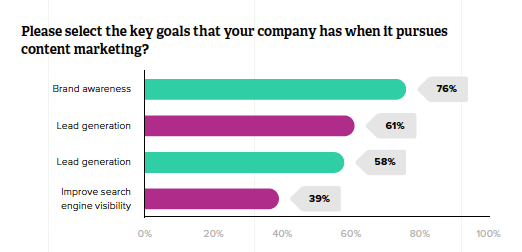
Zazzle Media has released their annual State of Content Marketing 2019 survey, which found that less than one in ten marketers (9%) will be focusing on Digital PR in 2019.

Despite this, over three quarters (76%) state that brand awareness is a key performance indicator for them.

Zazzle's content marketing survey

Not only this, but 25% of content marketers will be ceasing to participate in offline PR activity as it has been perceived as an ineffective channel for them over the recent years.

It seems there is an apparent disconnect between marketers’ desired goals and the tactics they need to carry out to achieve these.

So why are marketers seemingly less concerned about off-page distribution, and why should you make a case for Digital PR to hold a key position in your marketing activities?

Brand awareness

Whilst the creation of written blog content will appeal to people on the site, we need a mechanism that is going to drive these people towards the site first.

Digital PR can help users find your site in a more organic way rather than in a targeted advertorial manner.

Zazzle's survey responses about content marketing efforts

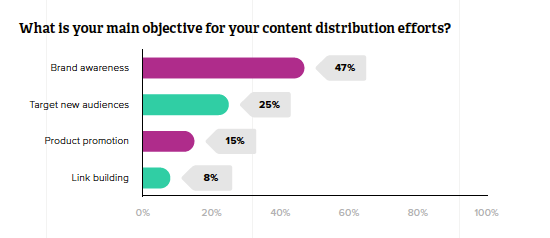
The survey found that a quarter of marketers want to target new audiences through content distribution, but without Digital PR this will prove to be a difficult task.

Brand protection

PR allows you to control narratives and get involved with industry conversations which you would otherwise be unable to participate in. The digital aspect also allows you to receive real-time coverage updates which mention your brand’s name and put out an immediate response in an attempt to stem or enhance any positive or negative feedback. Protecting your brand, especially in the SERPs, is a powerful tool for PRs.

Read next: Organic reputation management & brand protection

Link building

A major perk of creating Digital PR campaigns is that they usually come with linkable assets that have a chance of being cited within media coverage.

Link building is an activity which has a reputation of relying on black-hat tactics for success, paying for links, directories, and the others. Digital PR allows you to avoid all these techniques and the risks associated with them and build some legitimate links from high authority publications.

Read next: Five proven content formats to maximize link acquisition with digital PR.

Managing director of Zazzle Media, Simon Penson, commented on the statistics:

“Brand awareness has appeared as one of 2019’s core focuses when it comes to brands content marketing efforts. Whilst this can be achieved through a number of marketing techniques, Digital PR is one of the strongest means of getting your name out there to new audiences.

2019 is shaping up to be an exciting year for content marketing, and Digital PR could be the key to giving your brand new audiences and visibility.”

What do you think of these findings? Let us know your thoughts on the results in the comments.

Kirsty Daniel is a Digital Marketing Executive at Zazzle Media. She can be found on Twitter .

Related reading

on-page SEO essentials
how to increase conversions: ideas, tools, and examples
achieving 80% email open rate
content formats proven to maximize link acquisition for digital pr

This marketing news is not the copyright of Scott.Services – please click here to see the original source of this article. Author: Kirsty Daniel

For more SEO, PPC, internet marketing news please check out https://news.scott.services

Why not check out our SEO, PPC marketing services at https://www.scott.services

We’re also on:
https://www.facebook.com/scottdotservices/
https://twitter.com/scottdsmith
https://plus.google.com/112865305341039147737

The post Survey: Less than 10% of marketers to focus on Digital PR in 2019 appeared first on Scott.Services Online Marketing News.


source https://news.scott.services/survey-less-than-10-of-marketers-to-focus-on-digital-pr-in-2019/