Monday, 30 September 2019

Survey: Less than 10% of marketers to focus on Digital PR in 2019

Less than 10% of marketers to focus on Digital PR in 2019, wise or unwise

Zazzle Media has released their annual State of Content Marketing 2019 survey, which found that less than one in ten marketers (9%) will be focusing on Digital PR in 2019.

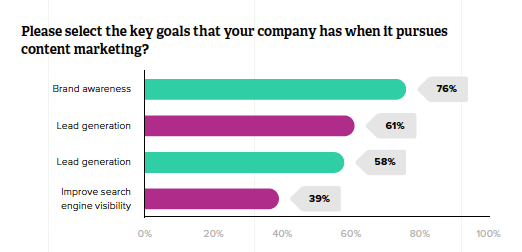
Despite this, over three quarters (76%) state that brand awareness is a key performance indicator for them.

Zazzle's content marketing survey

Not only this, but 25% of content marketers will be ceasing to participate in offline PR activity as it has been perceived as an ineffective channel for them over the recent years.

It seems there is an apparent disconnect between marketers’ desired goals and the tactics they need to carry out to achieve these.

So why are marketers seemingly less concerned about off-page distribution, and why should you make a case for Digital PR to hold a key position in your marketing activities?

Brand awareness

Whilst the creation of written blog content will appeal to people on the site, we need a mechanism that is going to drive these people towards the site first.

Digital PR can help users find your site in a more organic way rather than in a targeted advertorial manner.

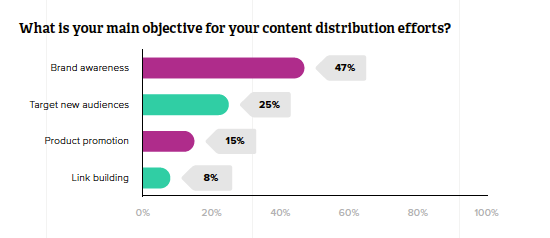
Zazzle's survey responses about content marketing efforts

The survey found that a quarter of marketers want to target new audiences through content distribution, but without Digital PR this will prove to be a difficult task.

Brand protection

PR allows you to control narratives and get involved with industry conversations which you would otherwise be unable to participate in. The digital aspect also allows you to receive real-time coverage updates which mention your brand’s name and put out an immediate response in an attempt to stem or enhance any positive or negative feedback. Protecting your brand, especially in the SERPs, is a powerful tool for PRs.

Read next: Organic reputation management & brand protection

Link building

A major perk of creating Digital PR campaigns is that they usually come with linkable assets that have a chance of being cited within media coverage.

Link building is an activity which has a reputation of relying on black-hat tactics for success, paying for links, directories, and the others. Digital PR allows you to avoid all these techniques and the risks associated with them and build some legitimate links from high authority publications.

Read next: Five proven content formats to maximize link acquisition with digital PR.

Managing director of Zazzle Media, Simon Penson, commented on the statistics:

“Brand awareness has appeared as one of 2019’s core focuses when it comes to brands content marketing efforts. Whilst this can be achieved through a number of marketing techniques, Digital PR is one of the strongest means of getting your name out there to new audiences.

2019 is shaping up to be an exciting year for content marketing, and Digital PR could be the key to giving your brand new audiences and visibility.”

What do you think of these findings? Let us know your thoughts on the results in the comments.

Kirsty Daniel is a Digital Marketing Executive at Zazzle Media. She can be found on Twitter .

Related reading

on-page SEO essentials
how to increase conversions: ideas, tools, and examples
achieving 80% email open rate
content formats proven to maximize link acquisition for digital pr

This marketing news is not the copyright of Scott.Services – please click here to see the original source of this article. Author: Kirsty Daniel

For more SEO, PPC, internet marketing news please check out https://news.scott.services

Why not check out our SEO, PPC marketing services at https://www.scott.services

We’re also on:
https://www.facebook.com/scottdotservices/
https://twitter.com/scottdsmith
https://plus.google.com/112865305341039147737

The post Survey: Less than 10% of marketers to focus on Digital PR in 2019 appeared first on Scott.Services Online Marketing News.


source https://news.scott.services/survey-less-than-10-of-marketers-to-focus-on-digital-pr-in-2019/

Vista Equity Partners acquires Acquia for $1 billion

Private equity firm Vista Equity Partners has entered an agreement to purchase web management and digital experience company Acquia in a deal valued at $1 billion.

The news follows two strategic acquisitions this year by Acquia — Mautic and Cohesion — which are expected to help the company expand its digital experience offerings.

Why we should care

Acquia has been working to expand its portfolio through product development and acquisitions. We can anticipate Acquia will continue to strengthen its focus on portfolio development and expansion while Vista Equity Partners takes over the company’s operations.

The private equity firm is well known for acquiring undervalued technology companies and turning them around for a large profit. A recent example is Vista Equity Partners’ 2016 purchase of Marketo for $1.8 billion. It sold Marketo to Adobe for $4.75 billion in 2018.

According to Scott Liewehr, principal analyst at Digital Clarity Group, Vista buys companies and centralizes their operations to allow the companies to focus on growth. “Vista, as a PE firm, tends to make money on companies by standardizing their operations to cut costs. It runs the portfolio companies more like divisions of a larger company than independent entities,” Liewehr said.

More on the news

  • Once the deal is finalized, Acquia will continue to operate independently.
  • Acquia has raised $173.5 million in funding
  • Vista Equity Partners current portfolio consists of 60 companies with over 70,000 employees.
  • Another Vista Equity Partners, Ping Identity, was purchased by the equity firm 2016, went public just last week.

About The Author

Jennifer Videtta Cannon serves as Third Door Media’s Senior Editor, covering topics from email marketing and analytics to CRM and project management. With over a decade of organizational digital marketing experience, she has overseen digital marketing operations for NHL franchises and held roles at tech companies including Salesforce, advising enterprise marketers on maximizing their martech capabilities. Jennifer formerly organized the Inbound Marketing Summit and holds a certificate in Digital Marketing Analytics from MIT Sloan School of Management.

This marketing news is not the copyright of Scott.Services – please click here to see the original source of this article. Author:

For more SEO, PPC, internet marketing news please check out https://news.scott.services

Why not check out our SEO, PPC marketing services at https://www.scott.services

We’re also on:
https://www.facebook.com/scottdotservices/
https://twitter.com/scottdsmith
https://plus.google.com/112865305341039147737

The post Vista Equity Partners acquires Acquia for $1 billion appeared first on Scott.Services Online Marketing News.


source https://news.scott.services/vista-equity-partners-acquires-acquia-for-1-billion/

From SEO to CMO: Self driving technology and the path to C-Suite

From SEO to CMO: Self driving technology and the path to C-Suite

There is an incredibly exciting trend happening in the SEO community where more and more marketers are taking on more responsibility across multiple facets of digital marketing.

As digital marketing develops more nuanced and targeted execution, marketers see ways to diversify their skillsets and impacts on their organizations.

For search marketers, there has never been a better time to take advantage. According to BrightEdge data from CEO Jim Yu, more SEOs are taking on broader roles and having a bigger impact  – with 51 percent of customers expanding the role of SEO across all digital marketing and 23% become CMOs in recent years.

Last week at Share19, hundreds of digital marketers, SEOs, and content strategists gathered to collaborate towards a common goal – to driving growth and revenue to their businesses and progress their SEO and digital marketing careers. Attendees learned new and advanced techniques for keyword research, learned about the career journeys of chief marketing officers at Fortune 500 brands and were the first to hear the big news that BrightEdge is releasing technology that literally puts SEO on autopilot.

Self-driving SEO: Impossible or possible?

As marketers, we all get frustrated with lack of resources — not having enough time and people to have the impact we want. No doubt, right now you are competing for resources and fighting with barriers to communication with your web dev team, your IT team, and your paid search team. Doing the same thing day in and day out can get mundane – especially for those with a bias towards the creative.

Last year alone Google did 3,234 launches, 595,429 search quality tests, 44,155 side-by-side experiments, and 15,096 live traffic experiments. Simply, keeping up to date with change is a task unto itself. Add to that day-to-day content issues, broken links, algorithmic changes, and mobile issues, and you can see why sometimes progress is elusive.

What if it were possible for some parts of your SEO to run on autopilot? Just imagine if all those repetitive yet necessary tasks that are integral to SEO could be running in the background, freeing you up to focus on higher-impact initiatives?

With an average of  53.5% of website traffic coming from organic search, it is clear that there is a huge opportunity for marketers to automate and optimize their most important marketing channels with speed, precision, and scale.

Last week BrightEdge Autopilot was announced to tackle just that and automate SEO tasks so that they don’t require a human touch. Made possible through a series of technology investments and the recent acquisition of mobile technology developed by Trilibis, marketers can now auto-optimize mobile and fully automate the most critical and time-consuming of SEO tasks.

Within six months of deployment, over 1,000 brands are now using BrightEdge Autopilot to power Self-driving SEO.

Intelligent automation: Performance and scale

So, automation takes our jobs away right? This is a comment and objection we hear not just in this space but across the industry. Sure, if you are happy doing the same things day in and day out and have no desire to get the best results for you and your customer then fine, automation may not be for you.

For those who see the opportunity to spend more time on higher-level work, automation is here to help marketers do more with less and execute more quickly. Routine SEO and content tasks can be implemented with little effort, allowing you to focus on high-impact activities and accomplish more personal and professional objectives. In order to progress in a predominantly technically oriented space, you have to embrace technology.

Automated grammar and spelling checks may have eliminated a few proofreading jobs, but it improved the accuracy and quality of documents and allowed writers to invest more time in the research and articulation of their ideas. Assisted driving automation helps keep you safer on the roads and likewise, automated SEO keeps your site and content safer for Google and makes it more easily discoverable by your audience.

According to Yu, BrightEdge Autopilot technology is already delivering on automation performance promises with:

  • 60% increase in page views per visits​
  • 21% more keywords on page one rankings​
  • 2x increase in conversions​
  • PPC channel impact – 28% improvement in the “Ad Quality Score”​

Campbell’s Global SEO Manager, Amanda Ciktor was able to share the impact of automation with BrightEdge Autopilot showcasing a 204% traffic lift year-over-year.

With one day of implementation work Amanda and her team were able to compress 75,000 images and within a few weeks saw:

  • Move 4,000 keywords to page one
  • Improve faster mobile page load speed for 35% of pages
  • Improve overall load time by five seconds

In fact, brands across numerous industry verticals have seen dramatic performance improvement with up to 65%.

SEO and the CMO

According to Gartner’s CMO survey, SEO is one of the four digital workhorses that account for 25% of marketing investments. And, by 2023 autonomous marketing systems will issue 55% of multichannel marketing messages based on marketer criteria and real-time consumer behavior, resulting in a predicted 25% increase in response rates.

SEO, Automation, and the CMO were three themes that stood out at the launch of BrightEdge Autopilot at Share19 last week. The finale of the event was a roundtable discussion featuring marketing luminaries, including Kelly Hopping, Chief Marketing Officer for Gartner Digital Markets, Lauren Fyrefield, Chief Marketing Officer for WorldStrides and Armin Molavi, Vice President of Global Media Strategy of Hilton Brands.

As the CMO role becomes more results-focused and data-driven, we have seen a change in the skillset and perspective from one that is more brand and positioning-oriented to one that is more technical and technology stack-oriented. This draws on the natural skills SEOs use in generating profitable organic traffic. The problem for SEOs is that they can get buried in tactical execution. Automation allows them to free up time for planning, strategy, and relationship building that will help elevate their visibility and consideration for advancement.

From listening to everyone on the panel it was clear that was a linear progression path to the CMO position developing. A commitment to

1. Embracing technology innovation

2. Drives growth and revenue

3. Fuels digital career growth

As one CMO panelist put it “we are constantly looking at ways to get smarter, automate and scale. We manage everything in-house so if we are not automating, getting smarter then we can’t scale.”

Automation is definitely helping marketers, and especially those who want to unleash more creativity and, who knows, become the next CMO or CDO.

The underlying theme is to pursue opportunities and leverage technology to help you do that.

Andy Betts is a chief marketer, consultant, and digital hybrid with more than 20 years of experience in digital, technology and marketing working across London, Europe, New York, and San Francisco. He can be found on twitter @andybetts1.

Whitepapers

Related reading

How changing domains challenge SEO
digital marketing for B2B manufacturing
Luxury marketing search strategy, Part 3: Content creation
SEO survey 2019 - Stats on competitor research

This marketing news is not the copyright of Scott.Services – please click here to see the original source of this article. Author: Andy Betts

For more SEO, PPC, internet marketing news please check out https://news.scott.services

Why not check out our SEO, PPC marketing services at https://www.scott.services

We’re also on:
https://www.facebook.com/scottdotservices/
https://twitter.com/scottdsmith
https://plus.google.com/112865305341039147737

The post From SEO to CMO: Self driving technology and the path to C-Suite appeared first on Scott.Services Online Marketing News.


source https://news.scott.services/from-seo-to-cmo-self-driving-technology-and-the-path-to-c-suite/

September Updates to Paid Advertising Platforms

In this monthly post, we bring you the latest from all of the major platforms.

Google Ads

What: Accelerated delivery to be removed in favor of Standard Delivery

Details: Originally planned for September 17th, Standard delivery will become the only ad delivery option for Search and Shopping campaigns on October 7th, 2019. Accelerated delivery, a popular option for accounts struggling to spend current budgets, will no longer be available.

Impact: Standard delivery is the preferred option for most accounts, therefore many advertisers will see little to no impact. For those utilizing accelerated budgets, slight bid and budget adjustments may be needed to maintain current spend levels.

What: Google adds the ability to optimize for conversion value with Enhanced CPC (eCPC)

Details: Google’s recently rolled out smart bidding strategy Maximize Conversion Value has now been expanded into eCPC.

Impact: eCPC works as a middle ground between manual bidding and automated bidding. Previously, the algorithm made dynamic bid changes to maximize conversions when certain behavioral or demographic indicators demonstrated a higher likelihood of such an action. The new option will benefit advertisers more focused on revenue as opposed to conversion volume.

What: Add store visit to Smart Bidding

Details: Advertisers who utilize store visit measurement within Google Ads can now incorporate into their smart bidding strategies.

Impact: Brick and mortar clients now have a direct method for optimizing towards foot traffic within their smart bidding strategies. This option is now available to all advertisers in Search and Shopping Campaigns.

What: Items missing Unique Product Identifiers in Google Shopping will no longer be disapproved

Details: Previously, correct unique product identifiers (UPIs) were vital for ensuring that Google recognizes your products. Common UPIs include Global Trade Item Numbers (GTINs), Manufacturer Part Numbers (MPNs) and brand names. These are no longer needed for delivery within Google Ads.

Impact: Advertisers have grown accustomed to combatting disapprovals for ads with an incorrect or missing UPI. These items will now be eligible to serve in Shopping Ads. It should be noted that the performance of items without correct UPIs may be limited. Comparable items with correct UPIs will receive higher priority.

What: Optimization score is now available in Google Ads Mobile App

Details: Starting September 13, optimization score became visible in the Google Ads Mobile App.

Impact: Google’s mobile optimization score is intended to help advertisers prioritize growth opportunities. Previously the score was only available on desktop. Now, an advertiser can review and implement recommendations anywhere their phone can go.

Microsoft Advertising

What: Microsoft rolled out a product negative keyword conflicts report

Details: The report quickly demonstrates which of your product ads are being blocked by negative keywords.

Impact: Negative keywords are a must for any account to drive high ROI. That said, there can be unintended consequences when rolling out certain negative keywords via non-exact match types. Previously, these issues would be more likely to go unnoticed and therefore exclude relevant traffic. The new report will provide an efficient and effective method for advertisers to audit the impact of negative keywords on their product ads.

What: Microsoft announces a new audience targeting solution

Details: New audiences targeting solutions are coming via an open beta that combines secure customer data with new Microsoft technology to pinpoint ideal customers when they’re ready to buy.

Impact: Options such as similar audiences are expected to help increase conversion rates and lower cost-per-acquisition.

Facebook

What: Facebook to remove the Discover Tab from Messenger App

Details: The Discover tab was designed to help extend Messenger’s purpose beyond a messaging app. Specific interest categories were presented to users to help them find nearby places or businesses to message.

Impact: Removal of the Discover tab simplifies the messenger app and eliminates a lower-performing ad product.

Instagram

What: Instagram testing Shopping Posts as Ads

Details: The update grants select businesses the ability to run their existing shopping posts as ads in Ads Manager.

Impact: These ads showcase products through the shopping format and move people through the path to purchase with a familiar experience.

Search Ads 360

What: Search Ads 360 introduces auction-time bidding for Google Search Campaigns

Details: Google Search Ads 360 has added auction-time bidding for bids on Google Search which effectively brings the Smart Bidding options present within Google Ads to your Google Search Campaigns.

Impact: Currently, a Search Ads 360 bid analyzes campaign performance approximately every 6 hours. Auction-time bidding analyzes account history and other important audience signals to predict when a conversion is likely to occur from an ad click. Essentially, the dynamic response of the automated strategy has been upgraded from often to immediate.

Quora

What: Quora Gets More Visual

Details: Quora has introduced full-width image ads.

Impact: The updated format gives more prominence and real estate to the ad creative. The expectation is for higher engagement thanks to more captivating creative.

Did we miss any major monthly updates? Not covering a certain platform close enough? Feel free to let me know on Twitter @Will_Larcom

This marketing news is not the copyright of Scott.Services – please click here to see the original source of this article. Author: William Larcom

For more SEO, PPC, internet marketing news please check out https://news.scott.services

Why not check out our SEO, PPC marketing services at https://www.scott.services

We’re also on:
https://www.facebook.com/scottdotservices/
https://twitter.com/scottdsmith
https://plus.google.com/112865305341039147737

The post September Updates to Paid Advertising Platforms appeared first on Scott.Services Online Marketing News.


source https://news.scott.services/september-updates-to-paid-advertising-platforms/

Competitor content analysis: Here’s what you can learn

It’s 10 pm – do you know where your competitors are?

Like the effect those PSAs had on parents in the 80’s and 90’s, this message likely brings up feelings of concern and uncertainty, especially if you’re a brand fighting for your spot in the marketplace.

Competitor analysis is an integral part of running a successful business and this holds true for online brands as well, particularly when it comes to search marketing and SEO. While it may take quarterly or even annual studies to discover when you’re losing market share to the competition in terms of positioning or share of mind, you can see your competition start to outrank you in the search results immediately.

Since search engines largely rely on algorithms to determine the results they show searchers, these results are constantly updating, and if you’re standing pat with SEO, you’re losing ground.

To mitigate these losses – as well as find growth opportunities – you need to monitor competitor strategies, and one of the best places to start is with their content.

Analyzing competitor content to identify content gaps

Keeping an eye on the competition is important because it can help you find gaps within your own content strategy and where your pages might be missing the mark.

Start by identifying your competitors’ top pages. One way to find these pages is to use a tool like Screaming Frog to see which pages have the most internal links pointing to them. Internal links signal importance to search engines, so these are the pages your competitor has flagged as their most important. Review these pages to see if there are any relevant pages you need to add to your site.

Another great way to find missed opportunities through competitor content is to identify which pages are driving organic traffic to competitor sites. Tools such as SEMrush or Ahrefs make it easy to identify top pages based on what percentage of organic traffic they earn. 

If you see a page that is responsible for a substantial percentage of your competitor’s traffic – and you don’t cover that subject on your site – it may be worth exploring what it would take to create your own page on the topic. Furthermore, if your competitor’s content is thin, poorly structured, or you are otherwise confident you can create something equal or better, you’ve just found a prime opportunity to capture more search visitors.

Analyze your competitors’ top pages, and the keywords associated with those pages, then examine your own content to see if there are any gaps you could fill to create new sources of organic traffic.

Competitor content analysis for content improvement

Analyzing competitor content can also empower you to improve your existing pages.

As you analyze your competitors’ top pages, don’t just focus on keywords – scrutinize the structure and organization of the page to understand why it might be performing so well.

Does the page go in-depth and perhaps it’s ranking based on thoroughness? Or is the page answering a specific question quickly and succinctly? Or does it do both?

These are important questions to answer if you want to understand why their page is ranking, and more importantly, how you can improve the performance of your pages.

You should also pay attention to the formats and types of content used. Is the content broken up with images or screenshots? Do they use bullet points and sub-headers to make the page easy to scan? Is video or audio present on the page? Again, these are your competitor’s top pages, and that short video they’ve embedded on their page might be the difference between their content’s performance and yours.

However, don’t stop at your competitor’s page. Go examine the corresponding search results where they rank and analyze the other pages featured there. While these pages might be from brands you don’t consider traditional competitors, these are the pages you’re competing with for visibility in search. Also, these pages can provide further insight into how you can tweak and improve your existing content.

Other information you can glean from competitor and current ranking pages includes:

  • Primary intent that search engines associate with the given topic.
  • Relevant and related sub-topics or questions.
  • Associated SERP features (rich snippets, knowledge graph, local packs, etc.)
  • And credible external sources and relevant citations.

With this information, you will have all the tools necessary to update your page to best answer the query you’re targeting. 

At this point, the only thing standing between your content and page one rankings might be backlinks. However, with backlink tools like Majestic and Moz you can identify the sites linking to those top pages – if you work to improve your page to the level of quality of the ranking pages, it’s likely these sites would be open to linking to your page as well.

Leveraging competitor content for linkable asset ideation

Speaking of backlinks, analyzing competitor content can help you generate ideas for link-worthy content too.

Before, you were scrutinizing competitor pages based on organic traffic, but many of the tools I’ve discussed here will also help you identify your competitors’ top pages based on backlinks. Just as you analyzed their top trafficked pages to understand why they rank so well; you can analyze these top linked pages to understand why they attract so many backlinks.

This analysis provides you with a host of topics that generate links and interest within your niche. You can also dig into the backlink profiles of these pages to learn how they are linked to gain insight into what types of pages and websites would want to link to this content.

For example, your competitor may have executed an original study that produced one interesting statistic that is being cited by numerous websites. It’s likely you won’t be able to replicate that study – and if you do, other sites are more likely to find your competitor’s site when searching for a citation – but you can analyze their study and identify what made it interesting to springboard ideas for tangential or supportive research.

Of course, improving on their idea, also known as the skyscraper technique, is an option as well, but this approach typically requires significant investment.

The key to this analysis is identifying linkable topics and pivoting them to be unique while maintaining the attributes that made your competitor’s pages link-worthy.

Benefits of competitor content analysis

Content marketing continues to be an integral part of successful digital marketing and SEO as search engines constantly provide the advice to “create good content.” However, consistently generating quality content ideas and executing them well is difficult, particularly if your goal is to rank your content in competitive SERPs.

Fortunately, your competitors are here to help! Through competitor content analysis you can learn:

  • Which pages and topics your competitors identify as important.
  • How your competitors earn organic traffic from search.
  • Where gaps exist within your current content marketing strategy.
  • Which low-investment content opportunities are available.
  • Ways to improve existing content for better search performance.
  • Which topics generate interest and backlinks within your niche.
  • And how and why websites link to content within your space.

Understanding your competitors’ content strategies will help you outperform them where it matters most, in the search results.


Opinions expressed in this article are those of the guest author and not necessarily Marketing Land. Staff authors are listed here.


About The Author

Andrew Dennis is a Content Marketing Specialist at Page One Power. Along with his column on Search Engine Land, Andrew also writes about SEO and link building for the Page One Power blog, Linkarati. When he’s not reading or writing about SEO, you’ll find him cheering on his favorite professional teams and supporting his alma mater the University of Idaho.

This marketing news is not the copyright of Scott.Services – please click here to see the original source of this article. Author:

For more SEO, PPC, internet marketing news please check out https://news.scott.services

Why not check out our SEO, PPC marketing services at https://www.scott.services

We’re also on:
https://www.facebook.com/scottdotservices/
https://twitter.com/scottdsmith
https://plus.google.com/112865305341039147737

The post Competitor content analysis: Here’s what you can learn appeared first on Scott.Services Online Marketing News.


source https://news.scott.services/competitor-content-analysis-heres-what-you-can-learn/

Google Notification Of Removal Of Snippets For European Press Publications

Google now has to comply with the new French law and remove snippets from their search results for European press publications. Google wrote about it in French over here. With that, some publishers are getting notified of this removal via Search Console.

The Search Console notifications are in English and read. Site name was designated a European press publication by Search Console. It goes on to read:

Dear website owner,

Google systems have designated domain.tld a European press publication, as designed by EU Directive 2019/790 on copyright and related rights in the digital single market. In the wake of a new copyright law transposing this Directive in France, this designation removes the display of text snippets, video previews, and thumbnail images from your property or properties in France. This is an advance notification; changes in Google Search will not occur until late October 2019.

If you would like these previews to be displayed in search results for your property, you can use HTML tags to customize how Google Search displays your content to Search users. Alternatively, if you think this designation is incorrect, you can change it as described below.

Here is a screen shot of the email:

Maybe this bug we saw where Google was not showing anything but URLs, was a test to see how this may look in France?

Forum discussion at Twitter.

This marketing news is not the copyright of Scott.Services – please click here to see the original source of this article. Author: barry@rustybrick.com (Barry Schwartz)

For more SEO, PPC, internet marketing news please check out https://news.scott.services

Why not check out our SEO, PPC marketing services at https://www.scott.services

We’re also on:
https://www.facebook.com/scottdotservices/
https://twitter.com/scottdsmith
https://plus.google.com/112865305341039147737

The post Google Notification Of Removal Of Snippets For European Press Publications appeared first on Scott.Services Online Marketing News.


source https://news.scott.services/google-notification-of-removal-of-snippets-for-european-press-publications/

Search Buzz Video Recap: Google De-Indexing Bug Fixed, Google Discover Report, Google Assistant Ads & More

This week, we saw a lot of the Google ranking tools go nuts but it is probably related to the indexing bug. Google said after 6 days of trying they finally fixed the de-indexing bug. Google launched a new Google Search Console report to show you your Google Discover traffic, we can call it position minus one. Google Search Console launched a new search appearance filter for AMP Stories and Android Apps. Google also removed the non consolidated version of the performance report. Google dropped the sort by date filter for web search but added before: and after: search operators. With Google+ going away, Matt Cutts wants Google to bring back the + search operator. Google also has potential bugs with the rich results and mobile friendly status. Google is testing a more modern version of GoogleBot that can render the more modern web. Google cache is out dated but Google says don’t worry about it. Should Google index all of the web and not cherry pick the best to index? Google says if you are personalizing the experience of a user, tweak the content on the page versus redirect the user to a new page. Google posted SEO advice on Vue.js web apps. Google launched images in their sitelinks on mobile. Google Assistant has officially launched a new design this time with search ads. That was this past week in search at the Search Engine Roundtable.

Make sure to subscribe to our video feed or subscribe directly on iTunes to be notified of these updates and download the video in the background. Here is the YouTube version of the feed:

For the original iTunes version, click here.

Search Topics of Discussion:

Please do subscribe via iTunes or on your favorite RSS reader. Don’t forget to comment below with the right answer and good luck!

This marketing news is not the copyright of Scott.Services – please click here to see the original source of this article. Author: barry@rustybrick.com (Barry Schwartz)

For more SEO, PPC, internet marketing news please check out https://news.scott.services

Why not check out our SEO, PPC marketing services at https://www.scott.services

We’re also on:
https://www.facebook.com/scottdotservices/
https://twitter.com/scottdsmith
https://plus.google.com/112865305341039147737

The post Search Buzz Video Recap: Google De-Indexing Bug Fixed, Google Discover Report, Google Assistant Ads & More appeared first on Scott.Services Online Marketing News.


source https://news.scott.services/search-buzz-video-recap-google-de-indexing-bug-fixed-google-discover-report-google-assistant-ads-more/